Related Research Articles

Itchan Kala is the walled inner town of the city of Khiva, Uzbekistan. Since 1990, it has been protected as a World Heritage Site.
The Pahlavon Mahmud complex, Pahlavon Mahmud mausoleum or Polvon ota mausoleum is a memorial monument in Khiva, Khorezm. The mausoleum complex has a total area of 50x30m, and was originally built in 1664 as a miraculous dome over the grave of Pahlavon Mahmud. Pahlavon Mahmud (1247-1326) was a local poet who emerged from humble craftsmen, and was also famous for his heroic strength as an unbeatable wrestler, and his ability to heal people. His tomb has been and is still considered a sacred place by representatives of Uzbeks, Turkmens, Karakalpaks and other peoples. This complex is also known in Khiva as “Hazrati Pahlavon Pir”.
The Shohimardon complex is an architectural monument in Khiva city of Khorazm Region of Uzbekistan. The construction of the complex was completed in the 19th century, and currently it is located in the “Shixlar” neighborhood.
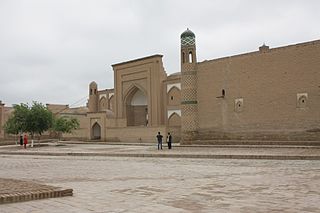
Arab Muhammadhan Madrasah is an architectural monument, part of Itchan Kala, in Khiva, Khorazm Region, Uzbekistan. Today, the monument is located at 27 Zargarlar Street, Itchan-Kala neighborhood.
Yusuf Yasovulboshi Madrasah is an architectural monument in Khiva, Khorezm region. The madrasa was built in 1906, and today it is located at 30, Zargarlar Street, Itchan Kala neighborhood.
Shergazikhan Madrasah is an architectural monument in Khiva (1719-1726). It is one of the many buildings in the Itchan Kala. According to the sources, it was built in 1719–1726 with the funds and decree of the Uzbek ruler Shergazikhan (Shir Ghazi Khan). It is located in the center of Itchan Kala, at the entrance to the Pahlavon Mahmud complex. The construction of the structure began during Shergozikhan's campaign to Khurasan. Khan's body was buried in a small room built in the west of the madrasah.
Matniyoz Devonbegi Madrasah is an architectural monument in the city of Khiva, Khorazm Region. The madrasah was built in 1871, and today it is located at 19, Pahlavon Mahmud Street, "Itchan Kala" neighborhood of Khiva. The historical object "Itchan Kala" state museum-reserve belongs to the state property based on the right of operational management.
Abdurasulboy Madrasah is a former madrasa in Khiva, Uzbekistan. It was built according to the order of Mirzabashi Abdurasulboy in 1906. In 1990, it was included in the list of UNESCO World Heritage Sites as a part of Itchan Kala. Currently, it is used as a sozana embroidery workshop and exhibition space.
Khojash Mahram Madrasah is an architectural monument in the city of Khiva, Khorazm Region of the Republic of Uzbekistan. The madrasah was built in 1839 by Khojash Mahram. Today, the madrasah is located at 11, Pahlavon Mahmud street, Itchan Kala, next to the Pahlavon Mahmud complex.

Khojamberdibi Madrasah is an architectural monument in the city of Khiva, Khorazm Region of the Republic of Uzbekistan. The monument, was originally built in 1688; it was rebuilt in 1834 and got its present appearance. Today, the madrasah is located at 22, Zargarlar street, Itchan Kala neighborhood.
Talib Makhsum Madrasah is an architectural monument in Khiva, Khorazm Region, Republic of Uzbekistan. The madrasa was built in 1910 at the expense of Talib Makhsum (Makhdum), a member of khan family of Khiva Khanate. Today, the monument is located at 22 Islam Khoja Street, "Itchan Kala" neighborhood.
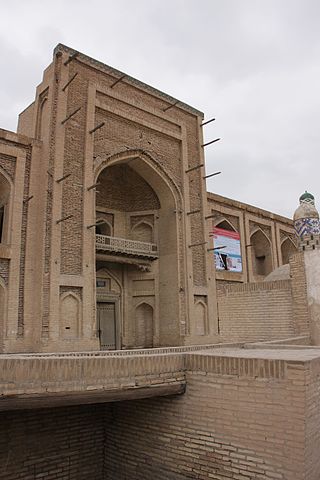
Amir Tora madrasah is a cultural heritage object located in the historical center of Khiva region in Uzbekistan. It was taken under state protection as an architectural monument. It is located in the northern part of the Itchan Kala.
Sheikh Kalandar Bobo Complex is an architectural monument in Khiva, Khorazm Region, Republic of Uzbekistan. The construction of the complex began in the 16th century and was completed in 1894. Today the complex is located at 36, Ismailov Street, "New Life" neighborhood.
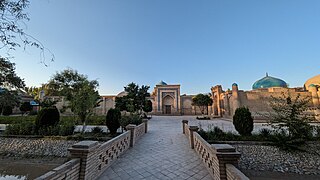
Said Mahruyjan Complex is an architectural monument in the Khiva city, Khorazm Region of the Republic of Uzbekistan. The complex consists of a madrasa, a monastery, etc. built in 1884 around the tomb of Said Muhammad Mahruyjan. Today it is located at 84, Amir Temur Street, "Mevaston" neighborhood.
Dost Alam madrasah is an architectural monument in Khiva, Khorezm region of the Republic of Uzbekistan. This historical object, located within the architectural monument of Itchan Kala, was built in 1882. Today, it is located at "Itchan Kala" MFY, Zargarlar Street,26.

Kazi Kalyan madrasah is an architectural monument (1905) in Khiva, Uzbekistan. The madrasah is part of the Itchan Kala. The Kazi Kalyan Madrasah is part of the monuments of the Itchan Kala Museum-Reserve. The structure is located between Juma Mosque (Khiva) and Matniyoz Devonbegi Madrasah. It was built in 1905 by the chief judge of Khorezm, Mohammad Salih Okhund.
Polvonqori madrasah is an architectural monument in Khiva, Khorazm Region of the Republic of Uzbekistan. The madrasa was built in 1905 with the funds of Khiva merchant Polvonqori. Today, the monument is located at 24, Polvonqori street, "Kumyaska" neighborhood.
Otajonboy Madrasah is an architectural monument in Khiva, Khorazm Region of the Republic of Uzbekistan. The madrasa was built in 1884 at the expense of Otajonboy, a rich man from Khiva. Today it is located at 23, Pahlavon Mahmud street, "Itchan Kala" neighborhood.
Musa Tora Madrasah is an architectural monument in the city of Khiva, Khorazm Region of the Republic of Uzbekistan. Today, the madrasa is located at 8, Boyochchilar Street, "Itchan Kala" neighborhood, in the central part of Itchan Kala. The monument was built in 1841 at the expense of funds of Musa Tora, the grandson of Olloquli Khan.
The Muhammad Amin Inoq Madrasa is an architectural monument in Khiva city of Khorezm region of the Republic of Uzbekistan. The madrasa dates back to the 18th century (1785) and is currently located in the “Ichan qal’a” quarter, Zargarlar street, house 34. It was built by Muhammad Amin inoq and stood out in the center of Ichan qal’a.
References
- 1 2 "Mozori Sharif madrasasi" . Retrieved 2023-10-24.
- ↑ "Тарихий, бадиий ёки ўзга маданий қимматлилиги туфайли гаров ва ипотека қўлланилиши мумкин бўлмаган объектлар рўйхати (ЎзР ВМ 05.12.2014 й. 335-сон қарорига илова) | Majburiyatlar va shartnomalar toʻgʻrisidagi umumiy qoidalar | Oʻz kuchini yoʻqotgan hujjatlar | Fuqarolik va oila qonunchiligi | OʻzR KonunchiligiMaʼlumotlar tizimi "Tarixiy, badiiy yoki oʻzga madaniy qimmatliligi tufayli garov va ipoteka qoʻllanilishi mumkin boʻlmagan obʼektlar roʻyxati (OʻzR VM 05.12.2014 y. 335-son qaroriga ilova)" | NRM.uz". nrm.uz. Retrieved 2023-10-24.
- ↑ "MODDIY MADANIY MEROSNING KO'CHMAS MULK OBYEKTLARI MILLIY RO'YXATINI TASDIQLASH TO'G'RISIDA". Archived from the original on 2023-10-13. Retrieved 2023-10-24.
- 1 2 "Xiva - Mozori Sharif madrasasi" . Retrieved 2023-10-24.
- ↑ OʻzME. Birinchi jild. Toshkent, 2000-yil