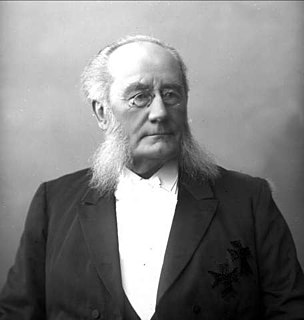
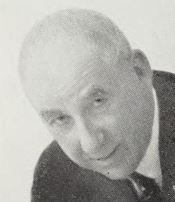
Axel Otto Dahl (9 June 1864–1938) was a Norwegian engineer and sportsman.
He was born at Nøsted in Lier as a son of Claus Frimann Dahl (1825–1913) and Gjerthrud Johanne Marie Thams (1840–1885). [1] [2] His paternal great-grandfather was counsellor of justice, Christian Lerche Dahl. [1] In May 1911 he married Hildur Fredstad, daughter of a tanner in Kristiania. They had a daughter and a son. [3]

Lier is a municipality in Buskerud county, Norway. The administrative centre of the municipality is the village of Lierbyen. The municipality of Lier was established on 1 January 1838. The area Åssiden was transferred from Lier to the neighboring municipality of Drammen on 1 July 1951.
He attended Aars og Voss from 1879, and finished his secondary education with the examen artium in sciences at the university in 1883. He attended the Norwegian Military Academy and graduated in 1885, and in the army he reached the ranks of Second Lieutenant in 1885, Premier Lieutenant in 1892, Captain in 1897 and Major in 1907. In 1885 he enrolled in Kristiania Technical School whence he graduated in 1888. From 1889 to 1890 he studied at Berlin Institute of Technology. [1]
Examen artium was the name of the academic certification conferred in Denmark and Norway, qualifying the student for admission to university studies. Examen artium was originally introduced as the entrance exam of the University of Copenhagen in 1630. The University of Copenhagen was the only university of Denmark-Norway until The Royal Frederick University in Christiania was founded in 1811.
The University of Oslo, until 1939 named the Royal Frederick University, is the oldest university in Norway, located in the Norwegian capital of Oslo. Until 1 January 2016 it was the largest Norwegian institution of higher education in terms of size, now surpassed only by the Norwegian University of Science and Technology. The Academic Ranking of World Universities has ranked it the 58th best university in the world and the third best in the Nordic countries. In 2015, the Times Higher Education World University Rankings ranked it the 135th best university in the world and the seventh best in the Nordics. While in its 2016, Top 200 Rankings of European universities, the Times Higher Education listed the University of Oslo at 63rd, making it the highest ranked Norwegian university.

The Norwegian Military Academy (Krigsskolen), in Oslo, educates officers of the Norwegian Army and serves as the King's Royal Guard. The academy was established in 1750, and is the oldest institution for higher education in Norway. The current commandant is Colonel Erlend Bekkestad.
He worked for the Prussian state railway administration in Berlin until 1891, then returned to Norway and worked at the Hamar–Sel Line in Gudbrandsdalen for the Norwegian State Railways. He went on to found the company Norsk Kleber- og Skiferforretning in February 1897, and was its manager from May 1897 to November 1901. [1] He then worked in the Public Roads Administration of Kristiania, and from 1906 in Kristiania Port Authority. [4]

The term Prussian state railways encompasses those railway organisations that were owned or managed by the State of Prussia. The words "state railways" are not capitalized because Prussia did not have an independent railway administration; rather the individual railway organisations were under the control of the Ministry for Trade and Commerce or its later offshoot, the Ministry for Public Works.
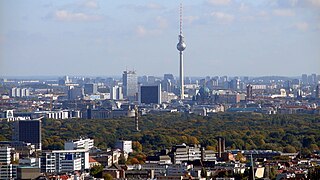
Berlin is the capital and largest city of Germany by both area and population. Its 3,748,148 (2018) inhabitants make it the second most populous city proper of the European Union after London. The city is one of Germany's 16 federal states. It is surrounded by the state of Brandenburg, and contiguous with its capital, Potsdam. The two cities are at the center of the Berlin-Brandenburg capital region, which is, with about six million inhabitants and an area of more than 30,000 km², Germany's third-largest metropolitan region after the Rhine-Ruhr and Rhine-Main regions.

Gudbrandsdalen is a valley and traditional district in the Norwegian county of Oppland. The valley is oriented in a north-westerly direction from Lillehammer and the lake of Mjøsa, extending 230 kilometers (140 mi) toward Romsdalen. The river of Gudbrandsdalslågen (Lågen) flows through the valley, starting from Lesjaskogsvatnet and ending at Mjøsa. The Otta river flowing through Otta valley is a major tributary to Lågen. The valleys of the tributary rivers such as Otta and Gausa (Gausdal) are usually regarded as part of Gudbrandsdalen. The total area of the valley is calculated from the areas of the related municipalities. Gudbrandsdalen is the main valley in a web of smaller valleys. On the western side there are long adjacent valleys: Ottadalen stretches 100 km from Otta village, Gausdal some 50 km from Lillehammer and Heidal some 40 km from Sjoa. Gudbrandsdalen runs between the major mountain ranges of Norway including Jotunheimen and Dovrefjell-Rondane.
He was well known in sportsman circles. He was a founder of the skiing club SK Ull in 1883. [5] He was the secretary-general of the Norwegian Trotting Association for ten years, and edited the harness racing calendar Norsk Travkalender. [4] He was a judge in conformation dog shows, as an expert on scent hounds. [6] He was the deputy chairman of Norsk Kennelklub from 1915 to 1922, and chaired the scent hound club from 1910 to 1915. [3] He made a name as an expert in hunting with dogs. In 1926 he issued the book Jaktprat og bikkjeprat to a favourable review in Aftenposten . [7]

Skiklubben Ull was a Norwegian Nordic skiing club based in Oslo. Founded in 1883, Skiklubben Ull attracted several skilled sportsmen who between 1883 and 1891 won six Ladies' Cups and one King's Cup in national skiing events. The sporting facilities belonging the club were located in Vestre Aker, with the ski jumping hill Ullbakken near Frognerseteren being opened in 1884. The prestigious Husebyrennet was staged there once. Members of SK Ull were later instrumental in moving this prestigious contest to the hill Holmenkollbakken.

The Norwegian Trotting Association is the sports federation organizing horse racing in Norway. It is an umbrella for the 13 regional federations and 185 local chapters with 17,000 members. Tote betting takes place at eleven harness race courses and one gallop races course, Øvrevoll Galoppbane, all owned by the association. The betting is organized through the association-owned company Norsk Rikstoto. In 2009 the association organized 556 race days, with 4,652 races taking place in 2008. It organizes 5,500 active racehorses, 200 professional trainers, 60 assistant trainers and 3,000 amateur trainers.

Harness racing is a form of horse racing in which the horses race at a specific gait. They usually pull a two-wheeled cart called a sulky, occupied by a driver, although in Europe, jockeys riding directly on saddled trotters is also conducted.