The topic of this article may not meet Wikipedia's general notability guideline .(February 2018) (Learn how and when to remove this template message) |
It has been suggested that this article be merged into Maya Berović . (Discuss) Proposed since February 2018. |
| "Pauza" | ||||
|---|---|---|---|---|
| Single by Maya Berović | ||||
| from the album TBA | ||||
| Released | 5 March 2016 | |||
| Format | MP3 single | |||
| Genre | ||||
| Length | 3:19 | |||
| Label | Toxic Entertainment | |||
| Songwriter(s) |
| |||
| Maya Berović singles chronology | ||||
| ||||
"Pauza" (English: "Pause") is a song recorded by Bosnian pop recording artist Maya Berović. It was released on 5 March 2016 as the lead single from her upcoming sixth studio album produced by the label Toxic Entertainment. [1] [2] The song was written by Vuksan Bilanović with music by Damir Handanović. [3] It was produced and recorded in Belgrade.
Bosnia and Herzegovina, sometimes called Bosnia–Herzegovina, and often known informally as Bosnia, is a country in Southeastern Europe, located within the Balkan Peninsula. Sarajevo is the capital and largest city.
Maja Berović, professionally known as Maya, is a Bosnian Serb singer. She debuted in 2007 as a turbo-folk singer. Since 2014 she has acquired enormous popularity, becoming one of the leading regional performers, mainly due to her collaboration with Bosnian rappers Jala Brat and Buba Corelli.
Damir Handanović is a Serbian pop-folk composer, pianist, hit-maker, arranger, and producer. Damir produced numerous hits for bestselling artists from former Yugoslavia, including Ceca, Saša Matić, Severina Vučković, Dragana Mirković, Nataša Bekvalac, Ana Nikolić, Maya Berović, Milan Stanković and others. He is also a music editor at RTV Pink. Handanović is the son of folk singer and composer Hašim "Paško" Handanović.
Berović was heavily criticized [4] [5] for her transition from the Ijekavianto dialect of the Bosnian language to ekavian. "Pauza" was the first song in which she sings in the ekavian dialect, used in Serbia. She has stated that this is because her songwriters are from Serbia's capital Belgrade and the difference in dialect had made previous songs difficult to rhyme. [6]
The dialects of Serbo-Croatian include the regional varieties of Serbo-Croatian as a whole or as part of its standard varieties: Bosnian, Croatian, Montenegrin and Serbian. They are part of the dialect continuum of South Slavic languages that joins the Macedonian dialects to the south, Bulgarian dialects to the southeast and Slovene dialects to the northwest.
The Bosnian language is the standardized variety of Serbo-Croatian mainly used by Bosniaks. Bosnian is one of three such varieties considered official languages of Bosnia and Herzegovina, along with Croatian and Serbian, and also an officially recognized minority or regional language in Serbia, Montenegro, and the Republic of Kosovo.
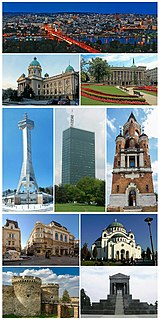
Belgrade is the capital and largest city of Serbia. It is located at the confluence of the Sava and Danube rivers and the crossroads of the Pannonian Plain and the Balkan Peninsula. The urban area of the City of Belgrade has a population of 1.23 million, while nearly 1.7 million people live within its administrative limits.
Severina Kojić, known professionally as Severina, is a Croatian pop singer, songwriter and actress. In 2006, the Croatian weekly Nacional listed her among the 100 most influential Croats, calling her "the only bona fide Croatian celebrity".
Svetlana Piljkić, professionally known as Seka, is a Bosnian-born Serbian pop-folk singer.
Kemal Monteno was a Bosnian recording artist and singer-songwriter whose career stretched from the 1960s to the 2010s.
Selma Bajrami is a Bosnian pop-folk singer. Her professional music career began when she was a teenager with the release of her first studio album When There Are No More Tears... in 1998. Since, she has become one of the regions leading pop stars with multiple hits and eight albums. Bajrami lives in Vienna, Austria.
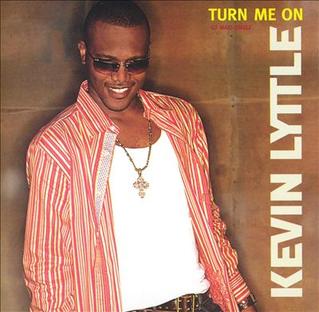
"Turn Me On" is the debut single by Vincentian singer Kevin Lyttle. It was the lead single from his self-titled debut album. The song was originally a soca ballad recorded in 2002 and released in 2003, remade into a dance hit for the US release. Featuring Spragga Benz in the radio remix, "Turn Me On" became a worldwide hit, peaking within top 10 in fifteen countries. Album was mastered by Bb Ludwig of Gateway Mastering.

Pišanje uz vetar is the fifteenth studio album from Serbian and former Yugoslav rock band Riblja Čorba, released in 2001.
Maja Sarihodžić, known by her stage name Maya Sar, is a Bosnian singer-songwriter. Sar represented Bosnia and Herzegovina in the 2012 Eurovision Song Contest with the song "Korake ti znam". Her debut album Krive riječi was released 1 June 2013.

Djevojka sa juga is the fourth studio album by Bosnian pop star Maya Berović. It was released 17 October 2012 through City Records in Bosnia and Herzegovina and Serbia. Girl from the South is Berović's first project with City, after signing with them in early 2012. She said that she was "extremely satisfied" with her new labels support of her music, after being dropped by Grand Production for low product sales in 2008.
Opasne vode is the fifth studio album by Bosnian pop star Maya Berović. It was released 27 October 2014 through City Records and Damir Handanović's record label DH Music. It is her second consecutive project with City Records.
Maya is the third studio album by Bosnian pop star Maya Berović. It was released under BN Music on 17 February 2011.
Crno zlato is the second studio album by Bosnian pop star Maya Berović. It was released December 2008 through the short-lived IN Music s.r.o. in Bosnia and Herzegovina and Serbia.
Život uživo is the debut studio album by Bosnian pop star Maya Berović. It was released August 2007 through the record label Grand Production in Bosnia and Herzegovina and Serbia.

"Leti ptico slobodno" is a song recorded by Bosnian pop star Maya Berović. It was released 25 June 2012 and served as the lead single from her fourth studio album Djevojka sa juga. The song was written by Dragiša Baša.
Jasmin Fazlić, known by his stage name Jala Brat, is a Bosnian rapper and producer. He is best known for collaborating with another Bosnian rapper, Buba Corelli, with whom he founded their record label IMPERIA. The duo is also held responsible for the success of the singer Maya Berović, as they wrote and produced her biggest hits. Jala also represented Bosnia and Herzegovina in the Eurovision Song Contest 2016 by co-writing and performing "Ljubav je" together with Dalal Midhat-Talakić, Deen and Ana Rucner, which failed to qualify to the final.

Pakt s Đavolom is a collaborative album by Bosnian rappers Jala Brat and Buba Corelli. It was released 13 December 2014 through Tempo Production and the RedEye Vision Studio. It is their second project together following the EP Sin City (2013).
Amar Hodžić, known by his stage name Buba Corelli is a Bosnian rapper known for his fast paced delivery.He got his rapper name from his old best friend who had nickname "Buba" and from his favorite band named "corelli" that split.
Balkan ballads is an umbrella term for several emotional, slow music styles in the Balkan region of Southeastern Europe. Balkan ballads, similar to other ballads, often deal with various themes related to love while using Balkan string instruments such as the šargija, as well as the clarinet, trumpet, accordion, fiddle, guitar and bass guitar. Balkan ballads are distinct from traditional ballads by including a fusion of pop music, folk music and sentimental ballads. Singers usually perform in their native languages.

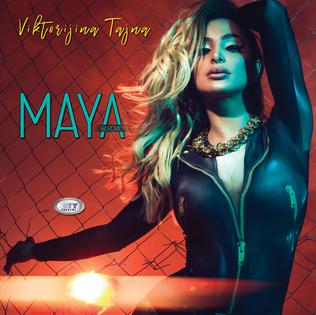
Viktorijina tajna is the sixth studio album by Bosnian pop star Maya Berović with rappers Jala Brat and Buba Corelli. It was released 2 July 2017 through City Records and Jala Brat and Buba Corelli's's record label Imperia.
Elena Kitić, professionally known as Elena, is a Serbian R&B recording artist.

"Mafia" is a song recorded by Bosnian rappers Jala Brat and Buba Corelli. It was released on 15 April 2018 as a single from their upcoming third studio album produced by their record label Imperia. The song was written by Jala Brat and Buba Corelli. It was produced and recorded at Imperia Studios in Sarajevo, Bosnia and Herzegovina.