Dating sims, or romance simulation games, are video game subgenre of simulation games with romantic elements.
A bishōjo game or gal game, is "a type of Japanese video game centered on interactions with attractive girls".

A Game of Thrones: The Card Game is an out-of-print collectible card game produced by Fantasy Flight Games. It is based on A Song of Ice and Fire, a series of novels written by George R. R. Martin. The first set was Westeros Edition and was released in August 2002. It has since won two Origins Awards. The game's primary designer is Eric Lang, the lead developer is Nate French, with Damon Stone serving as associate designer.

Kingdom Hearts: Chain of Memories is an action role-playing video game co-developed by Square Enix and Jupiter, and published by Square Enix in collaboration with Disney Interactive in 2004 for the Game Boy Advance. The game serves as an intermediary between the two larger-scale PlayStation 2 games in the Kingdom Hearts series. It was one of the first GBA games to incorporate full motion video (FMV).
Metagame, Hypergame, or game about the game, is an approach to a game that transcends or operates outside of the prescribed rules of the game, uses external factors to affect the game, or goes beyond the supposed limits or environment set by the game.
LCD games are electronic games played on an LCD screen. Since the release of the Zelda Game & Watch game in August 1989, several LCD games based upon the theme of The Legend of Zelda have been licensed by Nintendo to be released for both Japanese and foreign markets. While Zelda was both developed and manufactured by Nintendo, later LCD games would only be licensed by Nintendo. The Legend of Zelda game watch is an LCD wristwatch game produced by Nelsonic as part of their Nelsonic Game Watch series, and Zelda no Densetsu: Kamigami no Triforce is an LCD fighting video game licensed by Nintendo and produced by Epoch Co. for the Barcode Battler II platform, and released only in Japan.
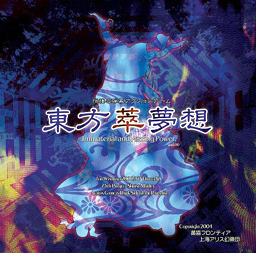
Touhou Suimusou ~ Immaterial and Missing Power., commonly abbreviated as IaMP in English speaking circles, is a versus fighting game collaboratively developed by Twilight Frontier and Team Shanghai Alice released in 2004. It is the first spinoff in the Touhou series, and it is numbered as the 7.5th installment as the game's events place between Perfect Cherry Blossom (seventh) and Imperishable Night (eighth), although it was released after Imperishable Night. After the success of Immaterial and Missing Power, the game was followed up with Scarlet Weather Rhapsody in 2008, the first of several Touhou fighting game sequels.
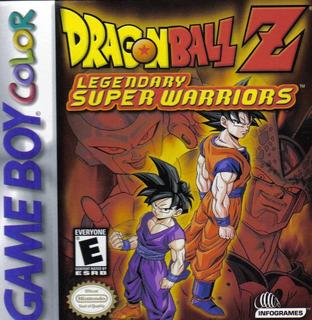
Dragon Ball Z: Legendary Super Warriors is a turn-based fighting game released for the Game Boy Color. It is played with the use of in-game cards for attacks, techniques and support items. The game's story takes place from the start of Dragon Ball Z, the Saiyan Saga, and runs until the end of the Buu Saga. The game also includes two extra stories involving Future Trunks's timeline. The game boasts a large array of characters for a Game Boy Color game, featuring all of the Ginyu Force, Super Saiyan forms of all characters that reach it, as well as the fusion characters Vegito and Gotenks.

Ape Academy 2 is the sequel to the PlayStation Portable party game Ape Escape Academy.

Battle Hunter, known in Japan as Battle Sugoroku: Hunter and in Europe as The Hunter, is an anime-styled tactical role-playing game, released for the PlayStation in 1999. It was released in Japan as part of the SuperLite 1500 series of budget games. The game revolves around a player-controlled hunter that must compete with three other hunters in order to win a relic, and makes heavy use of traditional RPG conventions such as dice and tile-based movement.
The Sims Stories is a series of video games from The Sims series released between 2007 and 2008, based on a modified version of The Sims 2 game engine. The modified game engine is optimized for play on systems with weaker specifications, such as laptops. As such, its system requirements are lower than that of The Sims 2, but it can still be played on desktops.

Rocky Legends is a fighting video game, it is the sequel to the 2002 video game Rocky. It was released in 2004, by Venom Games. The game is based on the Rocky franchise.

Dragon Ball Z: Harukanaru Densetsu, known as Dragon Ball Z: Harukanaru Goku Densetsu in Japan and Dragon Ball Z: Goku Densetsu in Europe, is a card based role-playing video game for the Nintendo DS. The game takes place from the beginning of the Saiyan Saga to the end of the Cell Saga. Players choose from one of the four main character, Goku, Gohan, Piccolo, and Vegeta. Other characters also appear, but only as either enemies or support cards.

Urban Rivals is a massively multi-player online virtual trading card game. The game features over 2,000 characters with varying rarities and abilities to discover, collect and level up by fighting live against players from all over the world. It also has an active market, where players can buy cards from other players or put their own cards up for sale.

A dialogue tree, or conversation tree, is a gameplay mechanic that is used throughout many adventure games and role-playing video games. When interacting with a non-player character, the player is given a choice of what to say and makes subsequent choices until the conversation ends. Certain video game genres, such as visual novels and dating sims, revolve almost entirely around these character interactions and branching dialogues.
Sword Girls was a Korean digital collectible card game developed by Zeonix that was released in 2011. The game art was influenced by manga art style. The game also had an offline version in the form of a regular collectible card game published in 2012–2013. It has been defunct since 2017.

Hearthstone is a digital collectible card game released by Blizzard Entertainment in 2014, available for Microsoft Windows and macOS PCs and iOS and Android smartphones. The game is free-to-play, with players gaining in-game currency and card packs via winning matches and completing quests, while real-world money can be spent to acquire additional card packs and cosmetic items. The game has been critically well-received and financially successful, estimated in August 2017 to earn nearly US$40 million per month. As of November 2018, Blizzard has reported more than 100 million Hearthstone players. Blizzard has continued to expand the game with the addition of multiple expansions, adventures and game modes.

Eternal is a free-to-play online collectible card video game developed and published by Dire Wolf Digital. Eternal is available for iOS, Android, Xbox One, PCs using Steam and Nintendo Switch. The game features cross-platform play, allowing players to use any of the supported platforms to compete against each other. The game takes place in a Weird West fantasy setting. The game was in Steam early access in November 2016 and then had its official wide release in November 2018 that included support for the Xbox One. Eternal was released for the Switch on October 8, 2019.

Puyo Puyo Chronicle (ぷよぷよクロニクル) is a puzzle video game developed by Sonic Team and published by Sega for the Nintendo 3DS, to celebrate the 25th anniversary of the Puyo Puyo series. It is the first release featuring 3D models for characters instead of the traditional 2D.

Marvel Duel is a mobile collectible card game developed and published by NetEase in collaboration with Marvel Entertainment. It is a multiplayer game available for both Android and iOS, in which the players battle each other using cards representing characters from the Marvel Universe. Like NetEase's other Marvel title Marvel Super War, this game is not a global release and is only available in select countries, launching in Thailand, Indonesia, Philippines, and Malaysia and later expanding to Singapore, Taiwan, Hong Kong and Macau. The game is free-to-play with a game shop that sells packs and cards in addition to various cosmetic items.

