Related Research Articles

The Oxfordian theory of Shakespeare authorship contends that Edward de Vere, 17th Earl of Oxford, wrote the plays and poems of William Shakespeare. While historians and literary scholars overwhelmingly reject alternative authorship candidates, including Oxford, public interest in the Oxfordian theory continues. Since the 1920s, the Oxfordian theory has been the most popular alternative Shakespeare authorship theory.
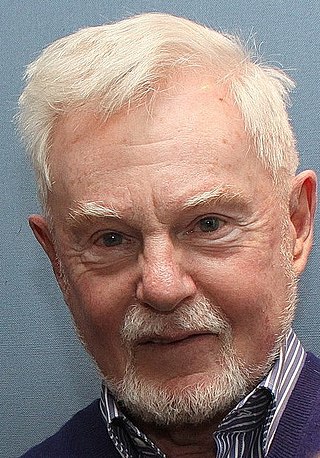
Sir Derek George Jacobi is an English actor. Jacobi is known for his work at the Royal National Theatre and for his film and television roles. He has received numerous accolades including a BAFTA Award, two Olivier Awards, two Primetime Emmy Awards, two Screen Actors Guild Awards, and a Tony Award. He was given a knighthood for his services to theatre by Queen Elizabeth II in 1994.

Irvin Leigh Matus was an independent scholar, autodidact, and author. He is best known as an authority on Shakespeare, but also wrote about aspects of Brooklyn's history such as the Vitagraph Studios, and developed a method of modelling baseball statistics. He was a scholar-in-residence at Shepherd University for the academic year 1992-1993. He was based in Washington, DC.

John Thomas Looney (luni) was an English school teacher who is notable for having originated the Oxfordian theory, which claims that Edward de Vere, 17th Earl of Oxford (1550–1604) was the true author of Shakespeare's plays.
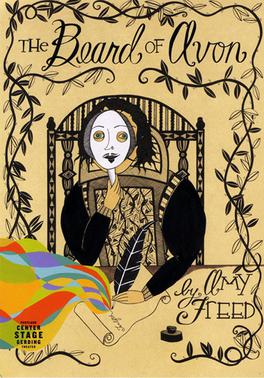
The Beard of Avon is a play by Amy Freed, originally commissioned and produced by South Coast Repertory in 2001. It is a farcical treatment of the Oxfordian theory of Shakespeare authorship, in which both Shakespeare and his wife become involved, in different ways, with secret playwright Edward de Vere and find themselves helping to present the works of several other secretive authors under Shakespeare's name, including Queen Elizabeth I herself.

The Shakespeare Fellowship was the name used by an organisation devoted to the Shakespeare authorship question. Originally it sought to represent all alternatives to the mainstream consensus that William Shakespeare authored the plays attributed to him, but it later became strongly identified with Oxfordian theory: promoting Edward de Vere, 17th Earl of Oxford, as the true author of the works of Shakespeare. The original organisation is now known as "The Shakespearean Authorship Trust".

The Prince Tudor theory is a variant of the Oxfordian theory of Shakespeare authorship, which asserts that Edward de Vere, 17th Earl of Oxford, was the true author of the works published under the name of William Shakespeare. The Prince Tudor variant holds that Oxford and Queen Elizabeth I were lovers and had a child who was raised as Henry Wriothesley, 3rd Earl of Southampton. The theory followed earlier arguments that Francis Bacon was a son of the queen. A later version of the theory, known as "Prince Tudor II" states that Oxford was himself a son of the queen, and thus the father of his own half-brother.
Charles Wisner Barrell was an American writer. He first became significant as an art critic, promoting realism. He later built a career as an early exponent of public relations and as a documentary film maker.
The Declaration of Reasonable Doubt is an Internet signing petition which seeks to enlist broad public support for the Shakespeare authorship question to be accepted as a legitimate field of academic inquiry. The petition was presented to William Leahy of Brunel University by the actors Derek Jacobi and Mark Rylance on 8 September 2007 in Chichester, England, after the final matinee of the play I Am Shakespeare on the topic of the bard's identity, featuring Rylance in the title role. As of 23 April 2016, the 400th anniversary of Shakespeare's death and the original self-imposed deadline, the document had been signed by 3,348 people, including 573 self-described current and former academics. As of December 2022, the count stood at 5,128 total signatures.

Note: In compliance with the accepted terminology used within the Shakespeare authorship question, this article uses the term "Stratfordian" to refer to the position that William Shakespeare of Stratford-upon-Avon was the primary author of the plays and poems traditionally attributed to him. The term "anti-Stratfordian" is used to refer to the theory that some other author, or authors, wrote the works.
The De Vere Society is a registered educational charity dedicated to the proposition that Edward de Vere, 17th Earl of Oxford was the author of the works of William Shakespeare. The society accepts there are many alternative views to this proposition and welcomes open debate. It was first registered as a society of Oxford University in 1987.
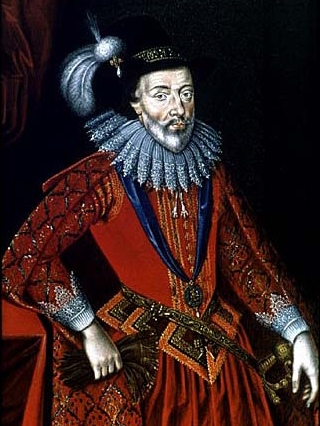
The Derbyite theory of Shakespeare authorship is the view that William Stanley, 6th Earl of Derby (1561–1642), was the true author of the works of William Shakespeare. Derby is one of several individuals who have been claimed by advocates of the Shakespeare authorship question to be the true author of Shakespeare's works.
The Shakespeare authorship question is the argument that someone other than William Shakespeare of Stratford-upon-Avon wrote the works attributed to him. Anti-Stratfordians—a collective term for adherents of the various alternative-authorship theories—believe that Shakespeare of Stratford was a front to shield the identity of the real author or authors, who for some reason—usually social rank, state security, or gender—did not want or could not accept public credit. Although the idea has attracted much public interest, all but a few Shakespeare scholars and literary historians consider it a fringe theory, and for the most part acknowledge it only to rebut or disparage the claims.
Roger A. Stritmatter is a Professor of Humanities at Coppin State University and the former general editor of Brief Chronicles, a delayed open access journal covering the Shakespeare authorship question from 2009 to 2016. He was a founder of the modern Shakespeare Fellowship, an organization that promotes Edward de Vere, 17th Earl of Oxford, as the true author of the works of William Shakespeare. He is one of the leading modern-day advocates of the Oxfordian theory of Shakespeare authorship, and has been called the “first professional Oxfordian scholar”.
Percy Allen (1875–1959) was an English journalist, writer and lecturer most notable for his advocacy of the Oxfordian theory of Shakespeare authorship, and particularly for his creation of Prince Tudor theory, which claimed that the Earl of Oxford fathered a child with Queen Elizabeth I.
Bernard Mordaunt Ward was a British author and third-generation soldier most noted for his support of the Oxfordian theory of Shakespeare authorship and writing the first documentary biography of Edward de Vere, 17th Earl of Oxford.
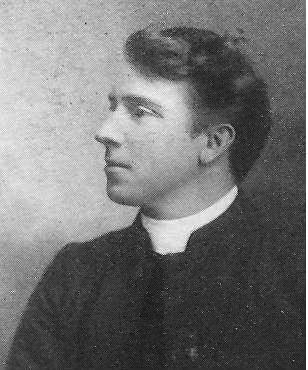
Edgar Innes Fripp was a Unitarian minister and English antiquarian who specialized in Shakespearean research in the archives of Stratford-upon-Avon, and the father of the artist Paul Fripp.
Richard Jerome Kennedy, is an American writer of children's books and a supporter of the Oxfordian theory of Shakespeare authorship. He was the first to suggest that John Ford was the author of the 578-line poem A Funeral Elegy which in 1995 had been touted by Donald Foster as being written by William Shakespeare.
References
- ↑ Alan H. Nelson and Paul H. Altrocchi, 'William Shakespeare, "Our Roscius",' in Shakespeare Quarterly, Volume 60, Number 4, Winter 2009, pp. 460-469 p.463,464
- ↑ Alan H. Nelson and Paul H. Altrocchi, 'William Shakespeare, "Our Roscius",' in Shakespeare Quarterly, Volume 60, Number 4, Winter 2009, pp. 460-469 p.464
- ↑ Paul Altrocchi, Alan H. Nelson,'The Roscius Annotation Revisited: Epicurean Discovery or Ambiguous Tidbit?', in Shakespeare Oxford Newsletter, March 22, 2007
- ↑ Paul H. Altrocchi, M.D. "Searching for the Oxfordian 'Smoking Gun' in Elizabethan Letters," in The Oxfordian, Volume VIII 2005 pp.110-122, note p.114
- ↑ Alan H. Nelson, Paul H. Altrocchi, 'William Shakespeare, "Our Roscius" in Shakespeare Quarterly, Volume 60, Number 4, Winter 2009, pp. 460-469, p.469.
- ↑ Paul H.Altrocchi 'Sleuthing an enigmatic Latin annotation," in "Shakespeare Matters", Summer 2003 pp.16-19
- ↑ Alan H.Nelson, 'William Shakespeare of Stratford-upon-Avon: "our Roscius",' 14 August 2003
- ↑ Katherine Duncan-Jones, "Shakespeare, the Motley Player," in The Review of English Studies, Oxford University Press 2009 p.729.