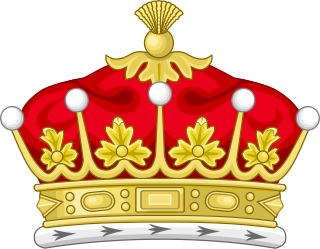
Earl of Winchilsea is a title in the Peerage of England held by the Finch-Hatton family. It has been united with the title of Earl of Nottingham under a single holder since 1729. The Finch family is believed to be descended from Henry FitzHerbert, Lord Chamberlain to Henry I. The name change to Finch came in the 1350s after marriage to an heiress by a member of the Finch family. In 1660 the 3rd Earl of Winchilsea was created Baron FitzHerbert of Eastwell, Kent, in recompense for his efficient aid in the Restoration of the Monarchy. The Herbert family of Wales, Earls of Pembroke, share common ancestry but bear differenced arms. A later member of the family, Sir William Finch, was knighted in 1513. His son Sir Thomas Finch, was also knighted for his share in suppressing Sir Thomas Wyatt's insurrection against Queen Mary I, and was the son-in-law of Sir Thomas Moyle, some of whose lands Finch's wife inherited. Thomas's eldest son Moyle Finch represented Weymouth, Kent and Winchelsea in the House of Commons. In 1611 he was created a baronet, of Eastwell in the County of Kent.
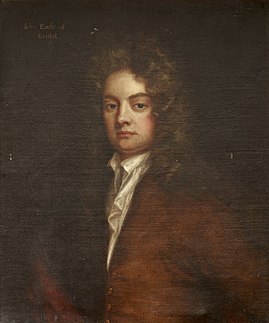
John Hervey, 1st Earl of Bristol was an English politician.

Viscount Cobham is a title in the Peerage of Great Britain that was created in 1718. Owing to its special remainder, the title has passed through several families. Since 1889, it has been held by members of the Lyttelton family.
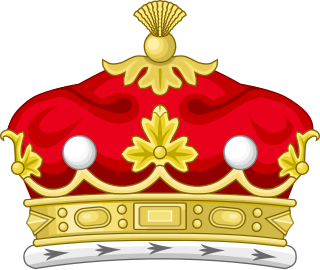
Marquess of the County of Bute, shortened in general usage to Marquess of Bute, is a title in the Peerage of Great Britain. It was created in 1796 for John Stuart, 4th Earl of Bute.
Marquess of Linlithgow, in the County of Linlithgow or West Lothian, is a title in the Peerage of the United Kingdom. It was created on 23 October 1902 for John Hope, 7th Earl of Hopetoun. The current holder of the title is Adrian Hope.
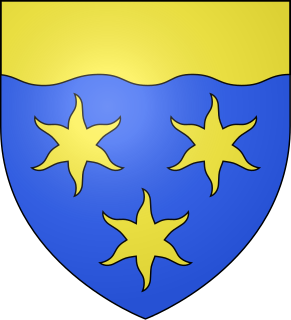
Earl of Radnor is a title which has been created twice. It was first created in the Peerage of England in 1679 for John Robartes, 2nd Baron Robartes, a notable political figure of the reign of Charles II. He was made Viscount Bodmin at the same time. Robartes was the son of Richard Robartes, who had been created Baronet in July 1621 and Baron Robartes, of Truro, in the Peerage of England in 1626. All three titles became extinct on the death of the fourth Earl in 1757. Anna Maria Hunt, great-niece of the fourth Earl, married the Hon. Charles Bagenal-Agar, youngest son of James Agar, 1st Viscount Clifden of Gowran. Their son Thomas James Agar-Robartes was created Baron Robartes in 1869. For more information on this title, see the Viscount Clifden.

Lord Napier, of Merchistoun, is a title in the Peerage of Scotland. It was created in 1627 for Sir Archibald Napier, 1st Baronet. Earlier that year, he already held the Napier Baronetcy, of Merchistoun in the County of Midlothian, created in the Baronetage of Nova Scotia. The titles remained united until 1683, when the Baronetcy became dormant. It was revived in the early 19th century and is now held by another branch of the Napier family. Between 1683 and 1686, the Lords of Napier also held the Nicolson Baronetcy, of Carnock in the County of Stirling, and since 1725 the Scott Baronetcy, of Thirlestane in the County of Selkirk, both baronetcies created in the Baronetage of Nova Scotia. The latter one is held till today. Additionally, the tenth Lord was created Baron Ettrick, of Ettrick in the County of Selkirk in the Peerage of the United Kingdom on 16 July 1872.
Earl Granville is a title that has been created twice, once in the Peerage of Great Britain and once in the Peerage of the United Kingdom. It is now held by members of the Leveson-Gower family.
Earl of Cromartie is a title that has been created twice, both for members of the Mackenzie family. It was first created as Earl of Cromarty in the Peerage of Scotland in 1703 for Sir George Mackenzie, 2nd Baronet, but his titles were forfeited after the Jacobite rising of 1745. It was recreated in 1861 in the Peerage of the United Kingdom for Anne Sutherland-Leveson-Gower, Duchess of Sutherland. Since 1979, the Earl of Cromartie has been chief of Clan Mackenzie.

Baron Glentoran, of Ballyalloly in the County of Down, is a title in the Peerage of the United Kingdom. It was created on 8 July 1939 for the Unionist politician Herbert Dixon. In 1950 he also succeeded his elder brother as third Baronet, of Ballymenock. His son, the second Baron, was also a politician and served as the last Speaker of the Senate of Northern Ireland. As of 2017 the titles are held by the latter's son, the third Baron, who succeeded in 1995. He is a former Olympic Bobsleigh gold medallist as well as a soldier, businessman and politician. Lord Glentoran was one of the ninety elected hereditary peers who remain in the House of Lords after the passing of the House of Lords Act 1999, and sat on the Conservative benches until his June 2018 retirement under the House of Lords Reform Act 2014.

Baron Northbourne, of Betteshanger in the County of Kent, is a title in the Peerage of the United Kingdom. It was created in 1884 for Sir Walter James, 2nd Baronet, who had earlier represented Kingston upon Hull in the House of Commons as a Conservative. His son, the second Baron, sat as a Liberal Member of Parliament for Gateshead. The latter's great-grandson, the fifth Baron, who succeeded his father in 1982, was one of the ninety elected hereditary peers that were allowed to remain in the House of Lords after the passing of the House of Lords Act 1999, and sat as a cross-bencher until his retirement in 2018. As of 2019, the titles are held by his son, the sixth baron, who succeeded his father in that year.
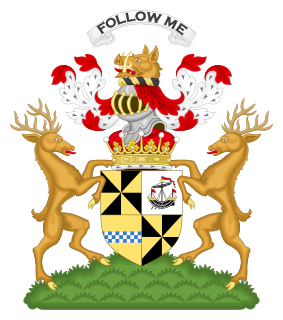
Earl of Breadalbane and Holland is a title in the Peerage of Scotland. It was created in 1681 for Sir John Campbell, 5th Baronet, of Glenorchy, who had previously been deprived of the title Earl of Caithness. He, as a principal creditor, had acquired the estates of George Sinclair, 6th Earl of Caithness who had died heavily in debt and without issue in 1670. Campbell was consequently created Earl of Caithness in 1673, but after much litigation and even bloodshed, George Sinclair of Keiss, second son of George, 5th Earl of Caithness, recovered the estates, and successfully petitioned parliament regarding the earldom, which was removed from Campbell. Sinclair's title was finally restored to him in 1681. Deprived by parliament of the Caithness earldom, Sir John Campbell was created Lord Glenorchy, Benederaloch, Ormelie and Weick, Viscount of Tay and Paintland, and Earl of Breadalbane and Holland on 13 August 1681, with the precedency of the former patent and with the power to nominate any of his sons by his first wife to succeed him. The titles were created with remainder to the heirs male of the son chosen to succeed him, failing which to the heirs male of his body, failing which to his own heirs male, failing which to his heirs whatsoever. The "of Holland" part of the title derived from the fact that Campbell was the husband of Lady Mary Rich, daughter of Henry Rich, 1st Earl of Holland.
Baron Dufferin and Claneboye, of Ballyleidy and Killyleagh in County Down, Northern Ireland, is a title in the Peerage of Ireland. It was created 30 July 1800 for Dame Dorcas Blackwood, widow of Sir John Blackwood, 2nd Baronet, Member of the Irish Parliament for Killyleagh and Bangor, in return for support for the Union of Ireland and the United Kingdom.
Henry Hyde, 4th Earl of Clarendon and 2nd Earl of Rochester, PC, styled Lord Hyde from 1682 to 1711, was an English Army officer and Tory politician who sat in the English and British House of Commons from 1692 until 1711 when he succeeded to the peerage as Earl of Rochester.

Clan Douglas is an ancient clan or noble house from the Scottish Lowlands.
Sir Thomas James Dixon, 2nd Baronet, PC (NI), was a Northern Ireland politician.
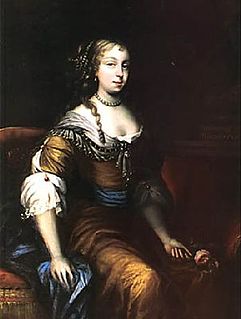
Elizabeth Wilmot, Countess of Rochester was an English heiress and the wife of John Wilmot, 2nd Earl of Rochester, the "libertine". She was born Elizabeth Malet, the daughter of John Malet, of Enmore Manor, and Unton Hawley, daughter of Francis Hawley, 1st Baron Hawley.
There have been four baronetcies created for people with the surname Lee, all extinct.
John Fenwick may refer to:
Sir Francis Henry Lee, 4th Baronet was an English politician who sat in the House of Commons from 1660 to 1667.


