Bir Bhanu is the Marlan and Rosemary Bourns Endowed University of California Presidential Chair in Engineering, the Distinguished Professor of Electrical and Computer Engineering, and Cooperative Professor of Computer Science and Engineering, Mechanical Engineering and Bioengineering, at the Marlan and Rosemary Bourns College of Engineering at the University of California, Riverside (UCR). He is the first Founding Faculty of the Marlan and Rosemary Bourns College of Engineering at UCR and served as the Founding Chair of Electrical Engineering from 1/1991 to 6/1994 and the Founding Director of the Center for Research in Intelligent Systems (CRIS) from 4/1998 to 6/2019. He has been the director of Visualization and Intelligent Systems Laboratory (VISLab) at UCR since 1991. He was the Interim Chair of the Department of Bioengineering at UCR from 7/2014 to 6/2016. Additionally, he has been the Director of the NSF Integrative Graduate Education, Research and Training (IGERT) program in Video Bioinformatics at UC Riverside. Dr. Bhanu has been the principal investigator of various programs for NSF, DARPA, NASA, AFOSR, ONR, ARO and other agencies and industries in the areas of object/target recognition, learning and vision, image/video understanding, image/video databases with applications in security, defense, intelligence, biological and medical imaging and analysis, biometrics, autonomous navigation and industrial machine vision.
Lydia E. Kavraki is a Greek-American computer scientist, the Noah Harding Professor of Computer Science, a professor of bioengineering, electrical and computer engineering, and mechanical engineering at Rice University. She is also the director of the Ken Kennedy Institute at Rice University. She is known for her work on robotics/AI and bioinformatics/computational biology and in particular for the probabilistic roadmap method for robot motion planning and biomolecular configuration analysis.
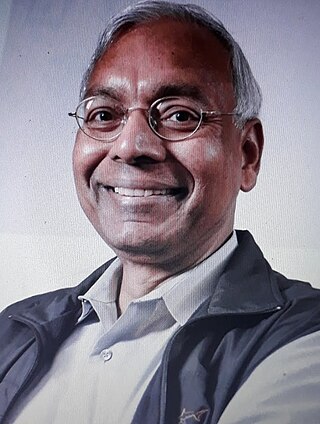
Anil Kumar Jain is an Indian-American computer scientist and University Distinguished Professor in the Department of Computer Science & Engineering at Michigan State University, known for his contributions in the fields of pattern recognition, computer vision and biometric recognition. He is among the top few most highly cited researchers in computer science and has received various high honors and recognitions from institutions such as ACM, IEEE, AAAS, IAPR, SPIE, the U.S. National Academy of Engineering, the Indian National Academy of Engineering and the Chinese Academy of Sciences.
Paul R. Sanberg is an American scientist and inventor. His early work focused on the causes of brain cell death. His recent research has been on methods of repairing damaged brain tissue, and, in tandem with other scientists, demonstrating that stem cells derived from the blood of bone marrow and umbilical cords can be converted to neural cells.

Fei-Fei Li is a Chinese-American computer scientist, known for establishing ImageNet, the dataset that enabled rapid advances in computer vision in the 2010s. She is the Sequoia Capital professor of computer science at Stanford University and former board director at Twitter. Li is a co-director of the Stanford Institute for Human-Centered Artificial Intelligence and a co-director of the Stanford Vision and Learning Lab. She served as the director of the Stanford Artificial Intelligence Laboratory from 2013 to 2018.
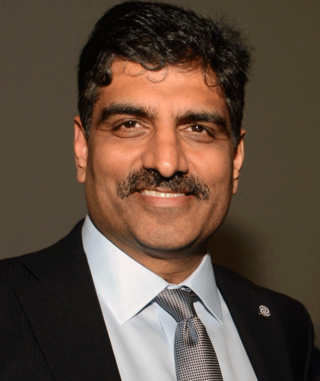
Venu Govindaraju is an Indian-American whose research interests are in the fields of document image analysis and biometrics. He presently serves as the Vice President for Research and Economic Development. He is a SUNY Distinguished Professor of Computer Science and Engineering, School of Engineering and Applied Sciences at the University at Buffalo, The State University of New York, Buffalo, NY, USA.

Salvatore Domenic Morgera is an American and Canadian engineer, scientist, inventor, and academic. Morgera is a Tau Beta Pi Eminent Engineer, Life Fellow of the Institute of Electrical and Electronics Engineers (IEEE), Fellow of the Institution of Engineering and Technology(IET), Fellow of the American Association for the Advancement of Science (AAAS), Fellow of the Asia-Pacific Artificial Intelligence Association (AAIA), Professor of Electrical Engineering, Professor of Biomedical Engineering, and Director of the C4ISR Defense & Intelligence and Bioengineering Laboratories at the University of South Florida and Professor Emeritus at McGill University, Concordia University, and Florida Atlantic University.

Theodosios Pavlidis is a computer scientist and Distinguished Professor Emeritus of Computer Science at the State University of New York, Stony Brook.
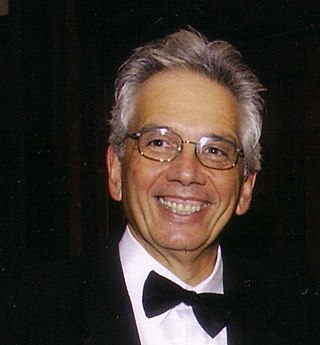
Richard D. Gitlin is an electrical engineer, inventor, research executive, and academic whose principal places of employment were Bell Labs and the University of South Florida (USF). He is known for his work on digital subscriber line (DSL), multi-code CDMA, and smart MIMO antenna technology all while at Bell Labs.
Nagarajan Ranganathan was a Distinguished University Professor of Computer Science and Engineering at the University of South Florida, Tampa, United States. He was elected as a Fellow of IEEE in 2002 for his contributions to algorithms and architectures for VLSI systems. He was elected Fellow of AAAS in 2012. He served as the Editor-in-Chief of IEEE Transactions on VLSI Systems.

René Vidal is a Chilean electrical engineer and computer scientist who is known for his research in machine learning, computer vision, medical image computing, robotics, and control theory. He is the Herschel L. Seder Professor of the Johns Hopkins Department of Biomedical Engineering, and the founding director of the Mathematical Institute for Data Science (MINDS).

Xin Zhang is a Distinguished Professor of Engineering at Boston University (BU).
Anant Madabhushi is the Donnell Institute Professor of Biomedical Engineering at Case Western Reserve University (CWRU) in Cleveland, Ohio, USA and founding director of CWRU's Center for Computational Imaging and Personalized Diagnostics (CCIPD). He is also a Research Scientist at the Louis Stokes Cleveland Veterans Administration (VA) Medical Center in Cleveland, OH, USA. He holds secondary appointments in the Case Western Reserve University departments of Urology, Radiology, Pathology, Radiation Oncology, General Medical Sciences, Computer & Data Sciences, and Electrical, Computer and Systems Engineering.
Autar Kaw is a professor of mechanical engineering at the University of South Florida. In 2012, he won the U.S Professor of the Year award from the Carnegie Foundation for Advancement of Teaching and the Council for Advancement and Support of Education. Kaw's main scholarly interests are in education research methods, open courseware development, flipped and adaptive learning, and the state and future of higher education.
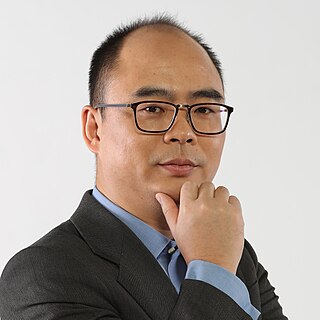
Gang Hua is a Chinese-American computer scientist who specializes in the field of computer vision and pattern recognition. He is an IEEE Fellow, IAPR Fellow and ACM Distinguished Scientist. He is a key contributor to Microsoft's Facial Recognition technologies.
Xiaoqing Ding is a professor and Ph.D. supervisor in the Department of Electronic Engineering, Tsinghua University in Beijing, China. She graduated from Tsinghua University, China in 1962 with the graduate Golden Medal.
Mark S. Nixon is an author, researcher, editor and an academic. He is the former president of IEEE Biometrics Council, and former vice-Chair of IEEE PSPB. He retired from his position as Professor of Electronics and Computer Science at University of Southampton in 2019.
Vir Virander Phoha is a professor of electrical engineering and computer science at Syracuse University College of Engineering and Computer Science.
Ramalingam "Rama" Chellappa is a Bloomberg Distinguished Professor, who works at Johns Hopkins University. At Johns Hopkins University, he is a member of the Center for Language and Speech Processing, the Center for Imaging Science, the Institute for Assured Autonomy, and the Mathematical Institute for Data Sciences. He joined Johns Hopkins University after 29 years at The University of Maryland. Before that, he was an assistant, associate professor, and later, director, of the University of Southern California's Signal and Image Processing institute.

Ge Wang is a medical imaging scientist focusing on computed tomography (CT) and artificial intelligence (AI) especially deep learning. He is the Clark & Crossan Chair Professor of Biomedical Engineering and the Director of the Biomedical Imaging Center at Rensselaer Polytechnic Institute, Troy, New York, USA. He is known for his employment on CT and AI-based imaging. He is Fellow of American Institute for Medical and Biological Engineering (AIMBE), Institute of Electrical and Electronics Engineers (IEEE), International Society for Optics and Photonics (SPIE), Optical Society of America (OSA/Optica), American Association of Physicists in Medicine (AAPM), American Association for the Advancement of Science (AAAS), and National Academy of Inventors (NAI).


