Thomas Brugis | |
|---|---|
 | |
| Nationality | English |
| Occupation | Surgeon |
Thomas Brugis (fl. 1640?) was an English surgeon.
Thomas Brugis | |
|---|---|
| | |
| Nationality | English |
| Occupation | Surgeon |
Thomas Brugis (fl. 1640?) was an English surgeon.
Brugis was born probably between 1610 and 1620, since he practised for seven years as a surgeon during the civil wars. He does not record upon which side he served. He obtained the degree of doctor of physic, though from what university does not appear, and settled at Rickmansworth, Hertfordshire, where he describes himself as curing "(by God's help) all sorts of agues in young and old, and all manner of old sores that are curable by art".
Brugis wrote The Marrow of Physicke, London, 1640, 4to; and Vade Mecum, or a Companion for a Chirurgion, of which the first edition appeared, London, 1651, 12mo, and the seventh 1689, in the same size. The popularity of this little book shows that it must have been useful, but there is nothing original in this or in the earlier work. Perhaps the only notable thing in the Vade Mecum is a small contribution to forensic medicine, in the shape of rules for the reports which a surgeon might have to make before a coroner's inquest. Even this is partly taken from Ambroise Paré; but we know of nothing like it in any earlier English book.

John Gerard was an English herbalist with a large garden in Holborn, now part of London. His 1,484-page illustrated Herball, or Generall Historie of Plantes, first published in 1597, became a popular gardening and herbal book in English in the 17th century. Except for some added plants from his own garden and from North America, Gerard's Herbal is largely a plagiarised English translation of Rembert Dodoens's 1554 herbal, itself highly popular in Dutch, Latin, French and other English translations. Gerard's Herball drawings of plants and the printer's woodcuts are mainly derived from Continental European sources, but there is an original title page with a copperplate engraving by William Rogers. Two decades after Gerard's death, the book was corrected and expanded to about 1,700 pages.

Cyprian Kamil Norwid was a Polish poet, dramatist, painter, sculptor, and philosopher. He is now considered one of the four most important Polish Romantic poets, though scholars still debate whether he is more aptly described as a late romantic or an early modernist.

William Cowper was an English surgeon and anatomist, famous for his early description of what is now known as Cowper's gland.
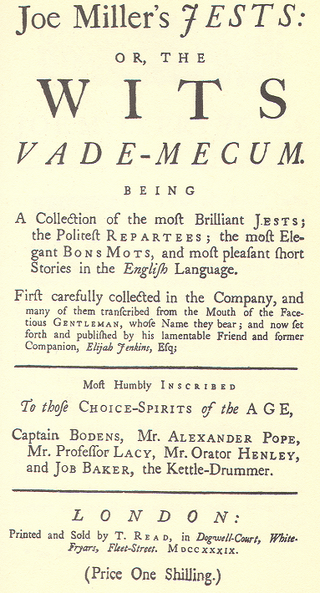
Joseph Miller was an English actor, who first appeared in the cast of Sir Robert Howard's Committee at Drury Lane in 1709 as Teague.
William Eusebius Andrews was an English journalist and editor who created a number of Catholic newspapers.
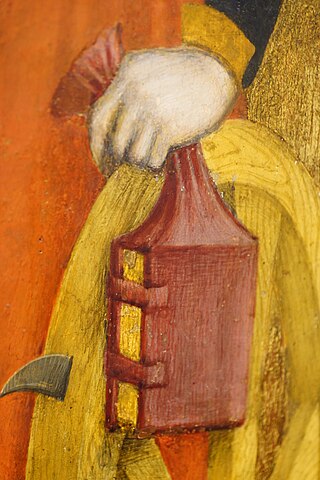
Girdle books were small portable books worn by medieval European monks, clergymen and aristocratic nobles as a popular accessory to medieval costume, between the 13th and 16th centuries. They consisted of a book whose leather binding continued loose below the cover of the book in a long tapered tail with a large knot at the end which could be tucked into one's girdle or belt. The knot was usually strips of leather woven together for durability. The book hung upside down and backwards so that when swung upwards it was ready for reading. The books were normally religious: a cleric's daily Office, or for lay persons a Book of Hours. One of the best known texts to become a girdle book is Boethius's The Consolation of Philosophy, although it is the only surviving philosophical/theological girdle book.
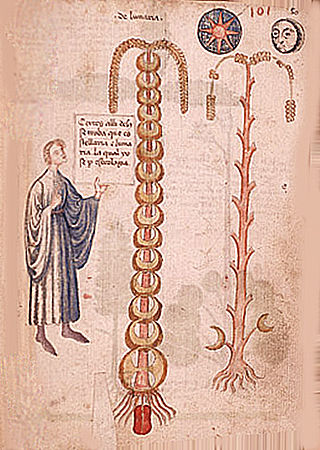
Jean de Roquetaillade, also known as John of Rupescissa, was a French Franciscan alchemist and eschatologist.

Ned Ward, also known as Edward Ward, was a satirical writer and publican in the late 17th and early 18th century in London. His most famous work, The London Spy, appeared in 18 monthly instalments from November 1698. It was described by its author as a "complete survey" of the London scene and published in book form in 1703.
Builder's Old Measurement is the method used in England from approximately 1650 to 1849 for calculating the cargo capacity of a ship. It is a volumetric measurement of cubic capacity. It estimated the tonnage of a ship based on length and maximum beam. It is expressed in "tons burden", and abbreviated "tons bm".

Sir James William Redhouse was a British lexicographer. He authored the original and authoritative Ottoman–English dictionary. He was commissioned by the American Board of Commissioners for Foreign Missions for his dictionary. His work was later used as the basis for many Turkish–English dictionaries.
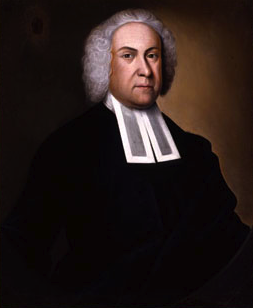
Thomas Prince was a New England clergyman, scholar and historian noted for his historical text A Chronological History of New England, in the Form of Annals. Called 'an American pioneer in scientific historical writing', Prince influenced historians such as Jeremy Belknap and Thomas Hutchinson, and his Annals was still being used as a reference text as late as 1791.
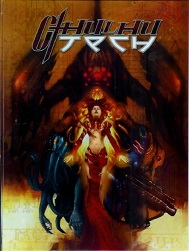
CthulhuTech is a science-fiction and horror roleplaying game created by Wildfire LLC and published by Sandstorm that combines elements of the Cthulhu Mythos with anime-style mecha, horror, magic and futuristic action. The setting is Earth in 2085 during a worldwide conflict known as the Aeon War, wherein the planet has been invaded twice: once by a black-skinned manufactured alien race known as the Nazzadi who are derived from humans and who join forces with them, and then a second time by the Mi-Go, an advanced alien civilization seemingly bent on the enslavement of humanity. Aside from these conflicts, the game focuses on other factions, such as ancient cults like the Esoteric Order of Dagon that are running amok across the planet and the eldritch horrors that are rising to destroy the world as, according to the prophecies of the Cthulhu Mythos, the "stars are right" and the Great Old Ones and their servitors are returning/reawakening to reclaim the Earth. The game uses a proprietary ten-sided die (d10) system titled "Framewerk."

Fernand Serrane (1880–1932) was a Belgian philatelist who was a popular philatelic author in France and published one of the classic works in the field of identifying forged stamps.
Thomas Branch, was a British author. His Principia Legis et Æquitatis was regarded as "the accumulated spirit and wisdom of ... the English law."
John Johnson, of Cranbrook (1662–1725) was an English clergyman, known as a theologian in the Laudian tradition.
John Mottley (1692–1750) was an English writer, known as a dramatist, biographer, and compiler of jokes.

Robert Druitt, was an English medical writer.
Robert Hooper (1773–1835) was a British physician, known as a medical writer.
Colin Chisholm M.D. (1755–1825) was a Scottish surgeon, medical writer and Fellow of the Royal Society.
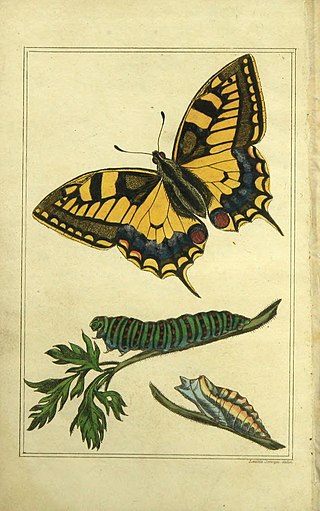
Laetitia Jermyn (1788–1848) was a British entomologist, illustrator and author. She was mentored by William Kirby, to whom she dedicated her best remembered work: The Butterfly Collector’s Vade Mecum, meaning 'ready reference'.
 This article incorporates text from a publication now in the public domain : Payne, Joseph Franke (1886). "Brugis, Thomas". In Stephen, Leslie (ed.). Dictionary of National Biography . Vol. 07. London: Smith, Elder & Co.
 Media related to Thomas Brugis at Wikimedia Commons
| International | |
|---|---|
| National | |
| People | |
