Soca music is a genre of music defined by Lord Shorty, its inventor, as the "Soul of Calypso", which has influences of African and East Indian rhythms. It was originally spelled "sokah" by its inventor but through an error in a local newspaper when reporting on the new music it was erroneously spelled "soca"; Lord Shorty confirmed the error but chose to leave it that way to avoid confusion. It is a genre of music that originated in Trinidad and Tobago in the early 1970s and developed into a range of styles during the 1980s and after. Soca was initially developed by Lord Shorty in an effort to revive traditional calypso, the popularity of which had been flagging amongst younger generations in Trinidad due to the rise in popularity of reggae from Jamaica and soul and funk from the United States. Soca is an offshoot of calypso/kaiso, with influences from East Indian rhythms and hooks.
The music of Martinique has a heritage which is intertwined with that of its sister island, Guadeloupe. Despite their small size, the islands have created a large popular music industry, which gained in international renown after the success of zouk music in the later 20th century. Zouk's popularity was particularly intense in France, where the genre became an important symbol of identity for Martinique and Guadeloupe. Zouk's origins are in the folk music of Martinique and Guadeloupe, especially Martinican chouval bwa, and Guadeloupan gwo ka. There's also notable influence of the pan-Caribbean calypso tradition and Haitian kompa.
The music of Guadeloupe encompasses a large popular music industry, which gained in international renown after the success of zouk music in the later 20th century. Zouk's popularity was particularly intense in France, where the genre became an important symbol of identity for Guadeloupe and Martinique. Zouk's origins are in the folk music of Guadeloupe and Martinique, especially Guadeloupan gwo ka and Martinican chouval bwa, and the pan-Caribbean calypso tradition.
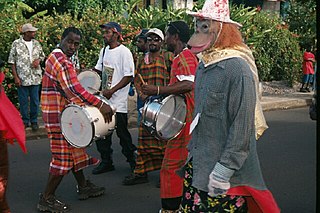
The music of Dominica includes a variety of genres including all the popular genres of the world. Popular music is widespread, with a number of native Dominican performers gaining national fame in imported genres such as calypso, reggae, soca, kompa, zouk and rock and roll. Dominica's own popular music industry has created a form called bouyon, which combines elements from several styles and has achieved a wide fanbase in Dominica. Groups include WCK, Native musicians in various forms, such as reggae, kadans (Ophelia Marie, and calypso, have also become stars at home and abroad.
Zouk is a musical movement pioneered by the French Antillean band Kassav' in the early 1980s. It was originally characterized by a fast tempo, a percussion-driven rhythm, and a loud horn section. Musicians from Martinique and Guadeloupe eventually added MIDI instrumentation to their compas style, which developed into a genre called zouk-love. Zouk-love is effectively the French Lesser Antilles' compas, and it gradually became indistinguishable from compas.
Kassav' is a French Caribbean band formed in Guadeloupe in 1979. The core members of the band are Jacob Desvarieux, Jocelyne Béroard, Jean-Philippe Marthély, Patrick Saint-Éloi, Jean-Claude Naimro, Claude Vamur, and Georges Décimus. Kassav' have issued over 20 albums, with a further 12 solo albums by band members.
Compas, also known as compas direct in French, konpa dirèk in Haitian Creole, or simply konpa but most commonly as Kompa is a modern méringue dance music genre of Haiti. The genre was popularized by Nemours Jean-Baptiste following the creation of Ensemble Aux Callebasses in 1955, which became Ensemble Nemours Jean-Baptiste in 1957. The frequent tours of the many Haitian bands have cemented the style in all the Caribbean. Therefore, compas is the main music of several countries such as Dominica and the French Antilles. Whether it is called zouk, where French Antilles artists of Martinique and Guadeloupe have taken it, or konpa in places where Haitian artists have toured, this méringue style is influential in part of the Caribbean, Portugal, Cape Verde, France, part of Canada, South and North America.
The coladeira is a music genre from the Cape Verde islands in the central Atlantic Ocean.

Majestik Zouk is an album by the French Caribbean music group Kassav'. It was released in 1989 by Columbia Records in the United States, and internationally by CBS Records International.
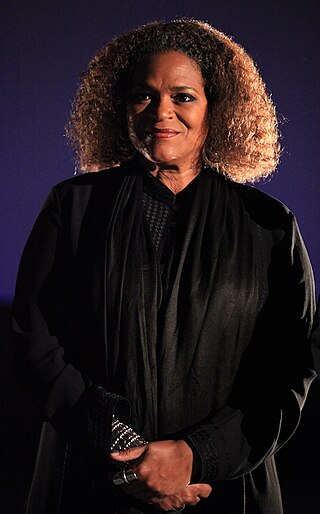
Jocelyne Béroard is a Martinican singer and songwriter. She is one of the lead singers of the Zouk and Compas band Kassav'. As a solo artist, she helped create zoukBeton, a music genre originated by the seminal Martinican Creole band Kassav' from Paris, the main members of which are from Guadeloupe and Martinique.

Antecedente is an album by the Panamanian musician Rubén Blades, released in 1988. The album was often reviewed with La Pistola y El Corazón, by Los Lobos, which also was a return-to-roots effort.

Lido is the debut album by the English band th' Faith Healers, released in 1992. The band promoted the album in the United States by touring with the Dentists.
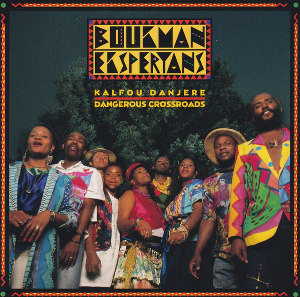
Kalfou Danjere is an album by the Haitian band Boukman Eksperyans, released in 1992. The title track, which translates to "Dangerous Crossroads", was banned in Haiti for its alleged subversive qualities. "Nwel Inosan" was also banned.
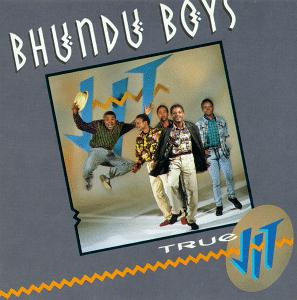
True Jit is an album by the Zimbabwean band the Bhundu Boys, released in 1987, with an international release in 1988.
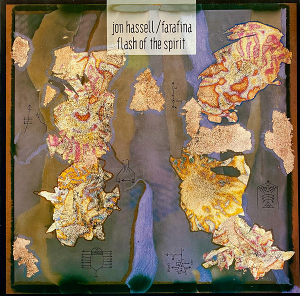
Flash of the Spirit is an album by the American musician Jon Hassell and the Burkinabé musicians Farafina. It was released in 1988, with an American release the following year. A remastered edition was released in 2020.

Criolinha is an album by the Cape Verdean musician Fantcha. It was released in the United States in 1998. The album is primarily a collection of coladeira songs, although it includes a few mornas. Fantcha supported the album with a North American tour.

Kindala is an album by the Brazilian musician Margareth Menezes. It was released in 1991. It reached the top 10 on Billboard's World Albums chart. Menezes supported the album with an international tour.

Funky Jibaro is an album by the Puerto Rican musician Yomo Toro. Released in 1988, it was his first widely distributed album.

Chamunorwa is an album by the Zimbabwean musician Thomas Mapfumo, released in 1991. He is credited with his band, Blacks Unlimited. The title translates to What Are We Fighting For. Chamunorwa was Mapfumo's final album for Mango Records.
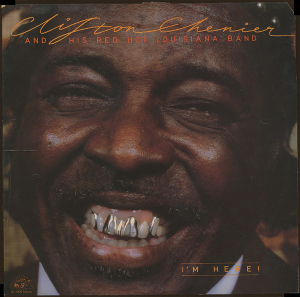
I'm Here! is an album by the American musician Clifton Chenier. It was released in 1982 via Alligator Records. Alligator licensed the album in the hope that label head Bruce Iglauer could produce the follow-up. Chenier is credited with His Red Hot Louisiana Band. The album was reissued in 1993.


