 | |||
| |||
| |||
 |
|---|
 Central African Republicportal Central African Republicportal |
General elections are due to be held in the Central African Republic in 2025. [1]
| |||
| |||
| |||
| |
|---|
| Central African Republicportal |
General elections are due to be held in the Central African Republic in 2025. [1]
The President of the Central African Republic is elected by a two-round system for a five-year term, renewable only once. The candidate who receives an absolute majority of the votes cast in the first ballot is elected. If no majority is secured, a runoff is held between the top two candidates to decide the winner. [2] [3]
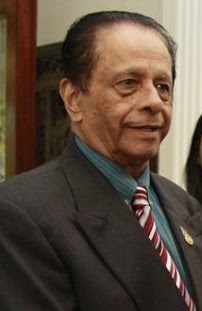
Sir Anerood Jugnauth, GCSK, PV, was a Mauritian statesman, politician and barrister who served both as President and Prime Minister of Mauritius. He was Member of Parliament for Piton & Riviere Du Rempart. A central figure of Mauritian politics in the 1980s and 1990s, he was Leader of the Opposition from 1976 to 1982. He served four consecutive terms as prime minister from 1982 to 1995 and again from 2000 to 2003. He was then elected as President from 2003 to 2012. Following his party's victory in the 2014 general elections, he served his sixth and final term as prime minister, becoming the nation's longest serving prime minister with more than 18 years of tenure, overtaking Seewoosagur Ramgoolam, who held the office for 14 years.

The National Unity Party is a political party in the Central African Republic.

The Central African Democratic Rally is a political party in the Central African Republic.
The Patriotic Front for Progress is a political party in the Central African Republic. It is an observer member of the Socialist International.
The Alliance for Democracy and Progress is a political party in the Central African Republic.
The Democratic Forum for Modernity is a political party in the Central African Republic.

General elections were held in Malawi on 27 and 28 May 1987. As the country had become a one-party state in 1966, the Malawi Congress Party was the sole legal party at the time. The number of seats in the National Assembly was increased to 112, whilst president for life Hastings Banda was able to appoint as many additional members as he saw fit to "enhance the representative character of the Assembly, or to represent particular minority or other special interests in the Republic."
General elections were held to in the Central African Republic on 22 August 1993, with a second round on 19 September 1993. They followed the previous year's elections, the results of which had been voided by the Supreme Court due to irregularities.
The Liberal Democratic Party is a political party in the Central African Republic.
The Movement for Democracy and Development is a political party in the Central African Republic, established by former President David Dacko. It is currently led by Louis Papéniah.
The Party for Democracy in Central Africa is a political party in the Central African Republic.
The National Party for a New Central Africa is a political party in the Central African Republic.
The Action Party for Development is a political party in the Central African Republic.
The National Democratic Front is a political party in the Central African Republic.
The Congress of Central African Social Democrats is a political party in the Central African Republic.
The Movement for the Social Evolution of Black Africa–Boganda is a political party in the Central African Republic.
General elections were held in the Central African Republic on 27 December 2020 to elect the President and National Assembly. A second round of the legislative elections was originally scheduled to take place on 14 February 2021.
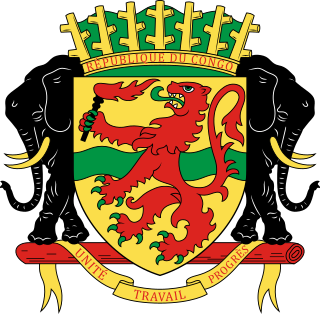
Presidential elections were held in the Republic of the Congo on 21 March 2021. Incumbent president Denis Sassou Nguesso was re-elected with 88% of the vote. His main opponent, Guy Brice Parfait Kolélas, died hours after polls closed.
General elections are due to be held in Malawi in 2025.

General elections are due to be held on Seychelles in 27 September 2025.
| Presidential elections | |
|---|---|
| Parliamentary elections | |
| Local elections | |
| French elections | |
| Referendums | |
