Electoral systems for the legislatures of the individual Australian states and territories are broadly similar to the electoral system used in federal elections in Australia.

Elections in Angola take place within the framework of a multi-party democracy and a presidential system. The National Assembly is directly elected by voters, whilst the leader of the largest party or coalition in the National Assembly automatically becomes President. The country is currently a one-party dominant state, with the MPLA as the dominant party.

Elections in Guinea-Bissau take place within the framework of a multi-party democracy and a semi-presidential system. Both the President and the National People's Assembly are directly elected by voters.

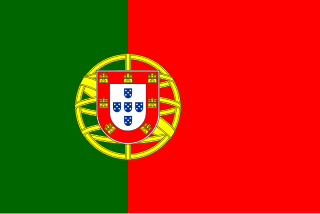
The Portuguese legislative election of 2005 took place on 20 February. The election renewed all 230 members of the Assembly of the Republic.

A donkey vote is a ballot cast in an election that uses a preference voting system, where a voter is permitted or required to rank candidates on the ballot paper, and ranks them based on the order they appear on the ballot paper. The voter that votes in this manner is referred to as a donkey voter.
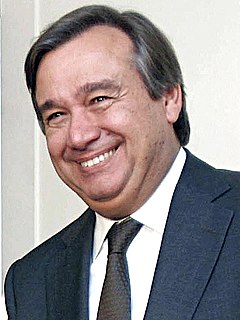
The Portuguese legislative election of 1999 took place on 10 October. The Socialist Party was aiming a second term under the lead of António Guterres, in the end the Socialists won the election, but missed what would be an historical absolute majority for the party by just one MP.
The Portuguese legislative election of 1995 took place on 1 October. The Socialist Party defeated the Social Democratic Party under the lead of António Guterres, elected three years before, but missed the absolute majority by 4 MPs.

The Portuguese legislative election of 1991 took place on 6 October. The Social Democratic Party, under the lead of Cavaco Silva, won a historic third term and won with an absolute majority for the second consecutive turn, achieving a higher share than in the previous election, losing, however, 13 MPs due to the reduction of the overall number from the original 250 to 230. Cavaco Silva became the first Prime Minister since Hintze Ribeiro, in 1904, to lead a party into three successive democratic election victories.
The Portuguese legislative election of 1987 took place on 19 July. In the previous election, in 1985, the Social Democratic Party had won a minority government managing to survive in coalition with the Democratic and Social Center and the Democratic Renewal Party, and after the approval of a no-confidence motion from the left-wing parties, with the aid of the Democratic Renewal Party, the government fell and Mário Soares, the President at the time, called for a new election.
The Portuguese legislative election of 1985 took place on 6 October. In June of the same year, the former Prime-Minister, Mário Soares, had resigned from the job due to the lack of parliamentary support, the government was composed by a coalition of the two major parties, the center-right Social Democratic and the center-left Socialist, in what was called the Central Bloc, however this was an unstable balance of forces and several members of each party opposed such alliance.

The National Assembly is the legislative branch of the government of Angola. The National Assembly is a unicameral body, with 220 members: 130 members elected by proportional representation and 90 members elected by provincial districts.
First Legislative Representative Election of the Republic of China, and the preceding 1947 National Assembly Election were the Republic of China's first public direct elections since its founding. At the time most of China's territory was under the control of the Government of the Republic of China, using a direct voting system elected 759 Legislative Representatives. Using the Republic's then 461 million population to calculate, on average 600,000 people elected one representative in the Legislature. The election along with the one held for the National Assembly also made China the largest democracy at the time.
Parliamentary elections were held in Angola in 1980. Beginning on 23 August, voters elected electoral colleges, which in turn, elected 229 candidates to the National Assembly. The elections were the first democratic elections conducted in the nation after in got independence from Portugal in 1975. During the period of 1975 to 1980, a civil war was fought between three parties, namely, People's Movement for the Liberation of Angola (MPLA), National Front for the Liberation of Angola (FNLA), and the National Union for the Total Independence of Angola (UNITA).
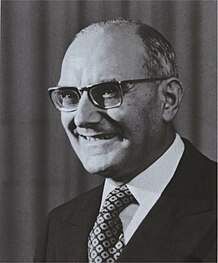
Parliamentary elections were held in Portugal on 28 October 1973, the last under the Estado Novo regime. After the only opposition party withdrew from the election, the People's National Action (ANP) was the only list to contest the election, winning all 150 seats.
Elections to the Legislative Assembly were held for the first and only time in Portuguese Guinea in March 1973.

Elections to a Legislative Assembly were held for the first and only time in Portuguese Mozambique in March 1973.

Elections to a Legislative Assembly were held for the first and only time in Portuguese Cape Verde in March 1973.

Elections to a Legislative Assembly were held for the first and only time in Portuguese São Tomé and Príncipe in March 1973.

Elections to a Legislative Assembly were held for the first and only time in Portuguese Timor in March 1973.

Elections to a Legislative Assembly were held in Macau in March 1973.