Career
Prior to joining the Connecticut Department of Environmental Protection, Esty was the Hillhouse Professor of Environmental Law and Policy at Yale University. He held faculty appointments in both Yale’s Yale School of the Environment and Law Schools. He also served as the Director of the Yale Center for Environmental Law and Policy and the Center for Business & Environment at Yale (CBEY).
Esty was a Senior Fellow at the Peterson Institute for International Economics in 1993 and 1994, served in a variety of senior positions on the United States Environmental Protection Agency from 1989 to 1993, and practiced law in Washington, D.C. from 1986 to 1989.
Esty spent the 2000–2001 academic year as a visiting professor at INSEAD, the European business school in Fontainebleau, France. In 2002, Esty received the American Bar Association Award for Distinguished Achievement in Environmental Law and Policy for “pioneering a data-driven approach to environmental decision making” and developing the global Environmental Sustainability Index. He served four years as an elected Planning and Zoning Commissioner in his hometown of Cheshire, Connecticut. He also served as an energy and environmental policy adviser on the Barack Obama 2008 presidential campaign and as a member of the Presidential Transition Team.
He has advised companies on energy, environment, and sustainability issues and serves as the Chairman of the Esty Group, a corporate sustainability strategy group based in New Haven, Connecticut. He sits on the board of directors of the Energy Future Coalition, Resources for the Future, and the Connecticut branch of The Nature Conservancy. [4]
Publications
Esty is the author or editor of ten books and a number of articles on environmental policy issues and the relationships between environment and corporate strategy, competitiveness, trade, globalization, governance, and development. His book published in 2006, Green to Gold: How Smart Companies Use Environmental Strategy to Innovate, Create Value, and Build Competitive Advantage, argues that pollution control and natural resource management have become critical elements of marketplace success and explains how leading-edge companies have folded environmental thinking into their core business strategies. The book was followed by Green to Gold Business Playbook: How to Implement Sustainability Practices for Bottom-Line Results in Every Business Function. [5]

Yale Law School (YLS) is the law school of Yale University, a private research university in New Haven, Connecticut. It was established in 1824. The 2020–21 acceptance rate was 4%, the lowest of any law school in the United States. Its yield rate is often the highest of any law school in the United States.
A green economy is an economy that aims at reducing environmental risks and ecological scarcities, and that aims for sustainable development without degrading the environment. It is closely related with ecological economics, but has a more politically applied focus. The 2011 UNEP Green Economy Report argues "that to be green, an economy must not only be efficient, but also fair. Fairness implies recognizing global and country level equity dimensions, particularly in assuring a Just Transition to an economy that is low-carbon, resource efficient, and socially inclusive."
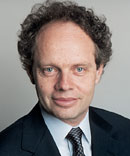
Richard L. Revesz is an American lawyer and academic. He is the administrator of the Office of Information and Regulatory Affairs. During his government employment, he is on leave as the AnBryce Professor of Law at the New York University School of Law. He served as dean of the New York University School of Law from 2002 to 2013, and as the director of the American Law Institute from 2014 to 2023.
Environmental policy is the commitment of an organization or government to the laws, regulations, and other policy mechanisms concerning environmental issues. These issues generally include air and water pollution, waste management, ecosystem management, maintenance of biodiversity, the management of natural resources, wildlife and endangered species. For example, concerning environmental policy, the implementation of an eco-energy-oriented policy at a global level to address the issue of climate change could be addressed.

The Environmental Performance Index (EPI) is a method of quantifying and numerically marking the environmental performance of a state's policies, highlightning the degradation of the planet's life-supporting systems on which humanity depends. A world economy that continues to rely heavily on fossil fuels translates into ongoing air and water pollution, acidification of the oceans, and rising concentrations of greenhouse gases in the atmosphere. These changes threaten the survival of species already suffering from widespread habitat loss, pushing them closer to extinction. Recent analyses show that humanity has already transgressed six out of nine critical planetary boundaries that define Earth's safe operating space — and is close to crossing a seventh.

Saleem H. Ali is a Pakistani American Australian academic who is the Blue and Gold Distinguished Professor of Energy and the Environment at the University of Delaware and also directs the university's Minerals, Materials and Society program. He has also held the chair in Sustainable Resources Development at the University of Queensland in Brisbane Australia where he retains affiliation as an Honorary Professor. He is also a senior fellow at Columbia University's Center on Sustainable Investment. Previously he was Professor of Environmental Studies at the University of Vermont's Rubenstein School of Natural Resources, and the founding director of the Institute for Environmental Diplomacy and Security as well as a Fellow at the Gund Institute. He has collaborated on environmental and social impact assessment research on deep sea mining using Life Cycle Analysis techniques to assist policy-makers in small-island developing states, Nauru, Cook Islands, Kiribati and Tonga, who are considering such investments under the auspices of the International Seabed Authority

Fred Krupp has been the president of Environmental Defense Fund, a U.S.-based nonprofit environmental advocacy group since 1984. He has worked towards convincing corporations of the benefits of environmentalism. This has included convincing McDonald's and Duke Energy to make environmentally conscious business decisions. Krupp is also an advocate for legislative action on environmental issues; he successfully advocated for passage of the acid rain reduction plan in the 1990 Clean Air Act and the 2022 Inflation Reduction Act.

Steve Charnovitz is an American legal scholar. He teaches at the George Washington University Law School in Washington, D.C., and is best known for his writings on the linkages between trade and environment and trade and labor rights. He is also known for his scholarship on the historical role of nongovernmental organizations in international governance.
The Global Environment & Trade Study (GETS) was a non-profit research institute established in 1994 to study the complex linkages between international trade and environmental sustainability. GETS supported numerous research projects on the legal, economic, and ecological aspects of trade and environment.
The Yale Center for Environmental Law & Policy is a joint initiative between the Yale School of Forestry & Environmental Studies and the Yale Law School.
Green to Gold: How Smart Companies Use Environmental Strategy to Innovate, Create Value, and Build Competitive Advantage is a 2006 book on sustainability by Daniel C. Esty and Andrew S. Winston and published by Yale University Press.
Sustainability metrics and indices are measures of sustainability, using numbers to quantify environmental, social and economic aspects of the world. There are multiple perspectives on how to measure sustainability as there is no universal standard. Intead, different disciplines and international organizations have offered measures or indicators of how to measure the concept.
The Yale Journal on Regulation (JREG) is a biannual student-edited law review covering regulatory and administrative law published at Yale Law School. The journal publishes articles, essays, notes, and commentaries that cover a wide range of topics in regulatory, corporate, administrative, international, and comparative law. According to the 2015 Washington and Lee University law journal rankings, the journal is ranked first in Administrative Law, in Corporations and Associations, in Commercial Law, in Communications Law, Media and Journalism, and in Health, Medicine, Psychology and Psychiatry. The 2007 ExpressO Guide to Top Law Reviews ranked the journal first among business law reviews based on the number of manuscripts received.
Marian Ruth Chertow is an American academic specializing in environmental management.
The Connecticut Department of Energy and Environmental Protection (DEEP) is a state agency in the US state of Connecticut. The department oversees the state's natural resources and environment and regulates public utilities and energy policy. It is headquartered in Hartford.
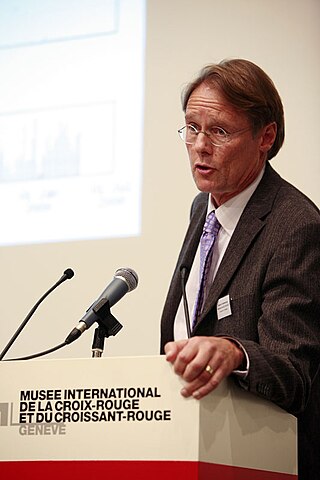
Harrie Vredenburg is a leading scholar in the areas of competitive strategy, innovation, sustainable development and corporate governance in global energy and natural resource industries and is Professor of Strategy and Suncor Chair in Strategy and Sustainability at the University of Calgary's Haskayne School of Business. He also holds appointments as a Research Fellow at the School of Public Policy at the University of Calgary and as an International Research Fellow at the Saïd Business School at the University of Oxford in the UK. In addition, he has taught annually at ESSAM, the European Summer School for Advanced Management since 2002.
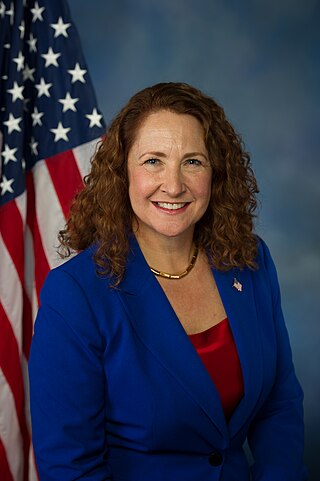
Elizabeth Esty is an American lawyer and politician who served as a U.S. Representative from Connecticut's 5th congressional district from 2013 to 2019. A Democrat, she previously was a member of the Connecticut House of Representatives, representing the 103rd Assembly District, which consisted of Cheshire and parts of Hamden and Wallingford. She also served two terms on the Cheshire Town Council. The 5th congressional district spans central and northwest Connecticut, including Waterbury, Danbury, New Britain, Meriden, Torrington, Litchfield County, the Farmington Valley, Newtown, and Esty's hometown of Cheshire.
The Center for International Environment and Resource Policy (CIERP) is an interdisciplinary education and research organization founded in 1992, devoted to the study of international sustainable development, within The Fletcher School of Law and Diplomacy, at Tufts University.

Corporate environmental responsibility (CER) refers to a company's duties to abstain from damaging natural environments. The term derives from corporate social responsibility (CSR).

Jeffrey Ralph "Jeff" Holmstead is an American energy lobbyist and lawyer. He is a partner with Houston-based Bracewell LLP and a former deputy administrator of the Environmental Protection Agency in the George W. Bush administration. Bracewell LLP is formerly Bracewell & Giuliani, the international law firm of Rudy Giuliani.


