Euroscepticism, also spelled as Euroskepticism or EU-scepticism, is a political position involving criticism of the European Union (EU) and European integration. It ranges from those who oppose some EU institutions and policies, and seek reform, to those who oppose EU membership and see the EU as unreformable. The opposite of Euroscepticism is known as pro-Europeanism, or European Unionism.
The Referendum Party was a Eurosceptic, single-issue political party that was active in the United Kingdom from 1994 to 1997. The party's sole objective was for a referendum to be held on the nature of the UK's membership of the European Union (EU). Specifically, it called for a referendum on whether the British electorate wanted to be part of a federal European state or to revert to being a sovereign nation that was part of a European free-trade bloc without wider political functions.
The June Movement was a Danish Eurosceptic political organisation founded 23 August 1992. It took its name from the referendum on the Maastricht Treaty that took place in Denmark in June of that year. The movement was a member of the European political party EUDemocrats - Alliance for a Europe of Democracies.
The Bruges Group is a think tank based in the United Kingdom. Founded in 1989, it advocates for a restructuring of Britain's relationship with the European Union and other European countries. Its members and staff campaign against the notion of an "ever-closer union" in Europe and, above all, against British involvement in a single European state. The group is often associated with the Conservative Party, including MPs such as Iain Duncan Smith, Daniel Hannan, John Redwood, and Norman Lamont. However, it is formally an independent all-party think tank, and some Labour MPs and peers have cited the publications or attended the meetings of the Bruges Group through the years, such as Frank Field, Gisela Stuart, Lord Stoddart of Swindon and Lord Shore of Stepney.

Independence/Democracy (IND/DEM) was a Eurosceptic political group active during the 2004–2009 term of the European Parliament. The group was the successor to the Europe of Democracies and Diversities (EDD) group.
The People's Movement against the EU is a political association in Denmark against the European Union. It was founded in 1972 as a cross-party campaign platform for a 'no' vote in Denmark's referendum on EEC membership. The People's Movement was represented in the European Parliament from 1979 until 2019, when it lost its single seat in the European Parliament election.
This is a list of referendums related to the European Union, or referendums related to the European Communities, which were predecessors of the European Union. Since 1972, a total of 48 referendums have been held by EU member states, candidate states, and their territories, with several additional referendums held in countries outside the EU. The referendums have been held most commonly on the subject of whether to become a member of European Union as part of the accession process, although the EU does not require any candidate country to hold a referendum to approve membership or as part of treaty ratification. Other EU-related referendums have been held on the adoption of the euro and on participation in other EU-related policies.
Paul Sykes is an English businessman and political donor. He opposed Britain's membership of the European Union and has donated to the UK Independence Party. He had previously supported the Conservative Party, but disagreed with its support of the Maastricht Treaty.

A consultative referendum on the Treaty establishing a Constitution for Europe was held in the Netherlands on 1 June 2005 to decide whether the government should ratify the proposed Constitution of the European Union. The result was a "No" vote.
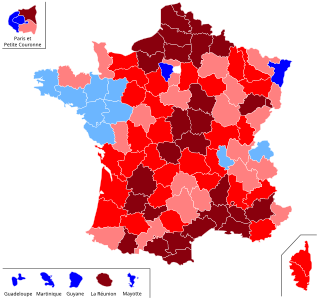
The French referendum on the Treaty establishing a Constitution for Europe was held on 29 May 2005 to decide whether France should ratify the proposed Constitution of the European Union. The result was a victory for the "No" campaign, with 55% of voters rejecting the treaty on a turnout of 69%.

Euroscepticism in the United Kingdom is a continuum of belief ranging from the opposition to certain political policies of the European Union to the complete opposition to the United Kingdom’s membership of the European Union. It has been a significant element in the politics of the United Kingdom (UK). A 2009 Eurobarometer survey of EU citizens showed support for membership of the EU was lowest in the United Kingdom, alongside Latvia and Hungary.
Article 50 of the Treaty on European Union (TEU) provides for the possibility of an EU member state leaving the European Union "in accordance with its own constitutional requirements".

The European Referendum Campaign (ERC) was an independent, Europe-wide, cross party network of NGOs and individuals which intended to bring together campaigners to fight for democratic development within the European Union. Its sole objective was to gain as many referendums on the 2007 EU Lisbon Treaty in as many EU member states as possible. The ERC was supported by the NGO Mehr Demokratie, and by Democracy International, a split-off of Mehr Demokratie, whose people also created the European Citizens' Initiative. The ERC cooperated with the European political party EUDemocrats – Alliance for a Europe of Democracies, as inspired and presided by Jens-Peter Bonde.

The ratification of the Treaty of Lisbon was officially completed by all member states of the European Union on 13 November 2009 when the Czech Republic deposited its instrument of ratification with the Italian government. The Lisbon Treaty came into force on the first day of the month following the deposition of the last instrument of ratification with the government of Italy, which was 1 December 2009.
The history of the European Union from 2004 to the present is the current timeline of the European Union. It is a period of significant upheaval and reform following the 2004 enlargement of the European Union. The EU has taken on ten new members, eight of which were initially much poorer than the EU average, and took in a further two in 2007 with many more on the way. It created the euro a few years before and had to expand this, and the Schengen Area to its new members. However this was overshadowed by the late-2000s recession and damaging disputes over the European Constitution and its successor, the Treaty of Lisbon. Throughout this period, the European People's Party has been the largest group in the European Parliament and provides every President of the European Commission.
The People's Pledge was a political campaign to secure a referendum on the United Kingdom's membership of the European Union. It aimed to achieve this by asking voters to sign a pledge that they would use their vote to help secure a majority of Members of Parliament (MPs) in support of an in-out referendum on EU membership. The 1975 European Communities membership referendum was the last time such a vote had occurred in Britain.
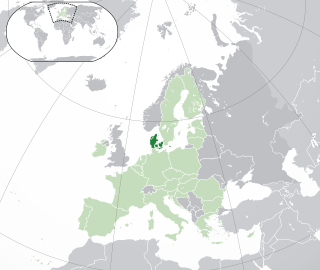
Denmark in the European Union refers to the historical and current issues of Denmark's membership in the European Union (EU). Denmark has a permanent representation to the EU in Brussels, led by ambassador Jonas Bering Liisberg.
Euroscepticism is a minority view in Ireland. Opinion polls held in the country between 2017 and 2022 indicated between 70% and 90% support for continued membership of the European Union (EU), and a 2021 'Eurobarometer' report indicating that 75% of poll respondents had a "positive image of the EU".
Euroscepticism, i.e. the opposition to policies of supranational European Union institutions and/or opposition to membership of the European Union, is a significant element in the politics of the Czech Republic, with several parties and political figures favouring leaving the union. According to a survey by CVVM in April 2016, 25% of Czechs were satisfied with European Union membership.
The United Kingdom was a member state of the European Union (EU) and of its predecessor the European Communities (EC) – principally the European Economic Community (EEC) from 1 January 1973 until 31 January 2020. Since the foundation of the EEC, the UK had been an important neighbour and then leading member state, until Brexit ended 47 years of membership. During the UK's time as a member state two referendums were held on the issue of its membership, with the first being held on 5 June 1975, resulting in a vote to stay in the EC, and the second, held on 23 June 2016, which resulted in the vote to leave the EU.
