
The Johns Hopkins Bloomberg School of Public Health (JHSPH) is part of Johns Hopkins University in Baltimore,Maryland,United States. As the first independent,degree-granting institution for research in epidemiology and training in public health,and the largest public health training facility in the United States,the Bloomberg School is a leading international authority on the improvement of health and prevention of disease and disability. The school's mission is to protect populations from illness and injury by pioneering new research,deploying its knowledge and expertise in the field,and training scientists and practitioners in the global defense of human life. The school is ranked first in public health in the U.S. News and World Report rankings and has held that ranking since 1994. The school is ranked second for public health in the world by Shanghai Rankings.

Alfred (Al) Sommer is a prominent American ophthalmologist and epidemiologist at the Johns Hopkins Bloomberg School of Public Health. His research on vitamin A in the 1970s and 1980s revealed that dosing even mildly vitamin A deficient children with an inexpensive,large dose vitamin A capsule twice a year reduces child mortality by as much as 34 percent. The World Bank and the Copenhagen Consensus list vitamin A supplementation as one of the most cost-effective health interventions in the world.
The Johns Hopkins Center for Health Security is an independent,nonprofit organization of the Johns Hopkins Bloomberg School of Public Health. The Center works to protect people’s health from epidemics and pandemics and ensures that communities are resilient to major challenges. The Center is also concerned with biological weapons and the biosecurity implications of emerging biotechnology.
Orin Levine is an epidemiologist known for his work in the fields of international public health,child survival,and pneumonia. He is currently the director of vaccine delivery at the Bill &Melinda Gates Foundation in Seattle,US. In the past he was the executive director of the International Vaccine Access Center (IVAC),the co-chair of the Pneumococcal Awareness Council of Experts (PACE),and is a professor at The Johns Hopkins Bloomberg School of Public Health in the Department of International Health. He is also an adjunct assistant professor of epidemiology at The Rollins School of Public Health at Emory University in Atlanta. Additionally,he is currently president of the American Society of Tropical Medicine and Hygiene (ASTMH) Council on Global Health. He resides in Washington,D.C.
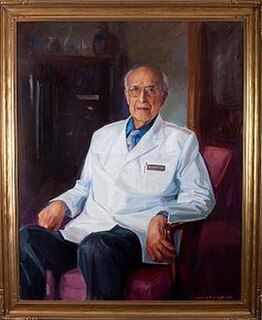
George Wills Comstock was a public health physician,epidemiologist,and educator. He was known for significant contributions to public health,specifically in the fields of micronutrient deficiencies,tuberculosis,and cardiovascular disease. He served as the editor-in-chief for the American Journal of Epidemiology.
Marie Diener-West is the Helen Abbey and Margaret Merrell Professor of Biostatistics and the chair of the Master of Public Health Program at Johns Hopkins Bloomberg School of Public Health. Diener-West is an editor for the Cochrane Eyes and Vision Group and a member of the American Public Health Association,American Statistical Association,Association for Research in Vision and Ophthalmology,and the Society for Clinical Studies.
Lawrence J. Appel is the C. David Molina Professor of Medicine and Director of the Welch Center for Prevention,Epidemiology and Clinical Research at Johns Hopkins University,a joint program of the Johns Hopkins University School of Medicine and the Bloomberg School of Public Health. Dr. Appel is a primary care internist who holds a primary appointment in the Department of Medicine with joint appointments in the Department of Epidemiology,International Health,and Nursing. In addition,he directs the ProHealth Clinical Research Unit. The focus of his career is the conduct of clinical,epidemiologic,and translational research pertaining to the prevention and control of high blood pressure,cardiovascular-kidney diseases,and other chronic conditions,primarily through nutrition-based interventions.

Nilanjan Chatterjee is a Bloomberg Distinguished Professor of Biostatistics and Genetic Epidemiology at Johns Hopkins University,with appointments in the Department of Biostatistics in the Bloomberg School of Public Health and in the Department of Oncology in the Sidney Kimmel Comprehensive Cancer Center in the Johns Hopkins School of Medicine. He was formerly the chief of the Biostatistics Branch of the National Cancer Institute's Division of Cancer Epidemiology and Genetics.
Cheryl Ann Marie Anderson is an American epidemiologist. Anderson is a professor at and founding Dean of the University of California San Diego Herbert Wertheim School of Public Health and Human Longevity Science. Anderson's research focus is on nutrition and chronic disease prevention in under-served human populations.
Gypsyamber D'Souza is an American epidemiologist. She is a professor of epidemiology at the Johns Hopkins Bloomberg School of Public Health. D'Souza researches infectious diseases,cancer prevention,and translational epidemiology. She is a principal investigator of the Multicenter AIDS Cohort Study / Women's Interagency HIV Study Combined Cohort Study (Mwccs.org).
Renee M. Johnson is an American scientist specializing in the mental health of adolescents and young adults. She researches substance abuse,substance use epidemiology,and violence in marginalized youth including persons of color,LGBTQ,and immigrants. Johnson is an associate professor in the Johns Hopkins Bloomberg School of Public Health.
Elizabeth Selvin is an American diabetes epidemiologist. She is a Full professor of epidemiology at the Johns Hopkins Bloomberg School of Public Health.
David Wesley Dowdy is an American infectious disease epidemiologist. He is the B. Frank and Kathleen Polk Professor at Johns Hopkins Bloomberg School of Public Health.
Susan Gail Sherman is an American epidemiologist. She is the Bloomberg Professor of American Health in the Department of Health,Behavior and Society at Johns Hopkins University.
Barbara Anne Curbow is an American social/health psychologist. She is a former Professor and chair of the Department of Behavioral and Community Health at the University of Maryland. Her research focuses on health disparities in treatment decision-making for adjuvant chemotherapy among colorectal cancer patients,use of alternative tobacco products,tobacco control,and cancer caregiving.
Michael John Klag is an American internist and epidemiologist. For eight years,he was the Director of the Division of General Internal Medicine and was the first Vice Dean for Clinical Investigation at the Johns Hopkins School of Medicine.
Jessica Fanzo is an American scientist. She is the Bloomberg Distinguished Professor of Global Food and Agriculture Policy and Ethics at the Johns Hopkins Berman Institute of Bioethics,the Bloomberg School of Public Health,and the Paul H. Nitze School of Advanced International Studies. Prior to coming to Johns Hopkins,Fanzo was an assistant professor of Nutrition in the Institute of Human Nutrition and Department of Pediatrics at Columbia University.
Josef Coresh is an American epidemiologist. He is the inaugural George W. Comstock Professor in the Department of Epidemiology at Johns Hopkins University. Coresh serves as the director of both the Cardiovascular Epidemiology Training Program and the George W. Comstock Center for Public Health Research and Prevention at the Johns Hopkins School of Medicine.
Xiaobin Wang is an American molecular epidemiologist. She is the Zanvyl Krieger Professor in Children’s Health at Children’s Memorial Institute and director of the Center on the Early Life Origins of Disease at the Johns Hopkins Bloomberg School of Public Health.
Leigh Ebony Boulware is an American general internist,physician-scientist,and clinical epidemiologist. She is the Eleanor Easley Professor of Medicine and director of the Clinical and Translational Science Institute at the Duke University School of Medicine.

