
The naval Battle of Cynossema took place in 411 BC during the Second Peloponnesian War. In the battle, an Athenian fleet commanded by Thrasybulus and Thrasyllus, although initially thrown on the defensive by a numerically superior Spartan fleet, won a narrow victory. This victory had an impact out of proportion to its tactical significance, coming when Athens' traditional democratic government had been replaced by an oligarchy and an Athenian defeat could have ended the war. The newly confident Athenian fleet proceeded to win two more victories in the Hellespont in quick succession, the second being the dramatic rout at Cyzicus, which ended the immediate Spartan threat to Athens' Black Sea lifeline.

Jamides, commonly called ceruleans, is a genus of butterflies in the family Lycaenidae. The species of this genus are found in the Indomalayan realm, the Palearctic realm and the Australasian realm.
Herbert Druce, FLS was an English entomologist. His collections were acquired by Frederick DuCane Godman (1834–1919), Osbert Salvin (1835–1898), and James John Joicey (1870–1932) before being bequeathed to the Natural History Museum, London. He is not to be confused with his son, the English entomologist Hamilton Herbert Druce, who also worked on Lepidoptera.

Agylla is a genus of moths in the subfamily Arctiinae. The genus was erected by Francis Walker in 1854.

Cosmosoma is a genus of tiger moths in the subfamily Arctiinae. The genus was erected by Jacob Hübner in 1823.
Elysius is a genus of moths in the family Erebidae. The genus was erected by Francis Walker in 1855.

Eucereon is a genus of tiger moths in the family Erebidae. The genus was erected by Jacob Hübner in 1819.

Hypochrysops is a genus of butterflies in the family Lycaenidae first described by Cajetan Felder and Rudolf Felder in 1860. This particular genus is exclusive to the Australian area with only a few species straying into Papua New Guinea.

Opharus is a genus of moths in the family Erebidae. The genus was erected by Francis Walker in 1855.
Saurita is a genus of moths in the subfamily Arctiinae. The genus was erected by Gottlieb August Wilhelm Herrich-Schäffer in 1855.

Virbia is a genus of tiger moths in the family Erebidae. The genus was erected by Francis Walker in 1854.
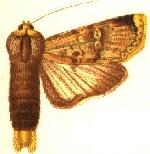
Acanthodica is a genus of moths of the family Noctuidae. The genus was erected by William Schaus in 1894.

Acontia is a genus of moths of the family Noctuidae. The genus was named by Ferdinand Ochsenheimer in 1816. Eusceptis, Pseudalypia and Spragueia are sometimes included in the present genus, but here they are tentatively treated as different pending further research. Many species of Tarache were also once placed here.

Sabulodes is a genus of moths in the family Geometridae first described by Achille Guenée in 1857.

Xylophanes is a genus of moths in the family Sphingidae erected by Jacob Hübner in 1819. As of 2000, there are about 96 species and subspecies included in the genus.

Dioptis is a genus of moths of the family Notodontidae. It consists of the following species:
Polypoetes is a genus of moths of the family Notodontidae. It consists of the following species:

Apatelodes is a genus of moths of the family Apatelodidae first described by Packard in 1864.
Langsdorfia is a genus of moths in the family Cossidae.
