
Genomics is an interdisciplinary field of molecular biology focusing on the structure, function, evolution, mapping, and editing of genomes. A genome is an organism's complete set of DNA, including all of its genes as well as its hierarchical, three-dimensional structural configuration. In contrast to genetics, which refers to the study of individual genes and their roles in inheritance, genomics aims at the collective characterization and quantification of all of an organism's genes, their interrelations and influence on the organism. Genes may direct the production of proteins with the assistance of enzymes and messenger molecules. In turn, proteins make up body structures such as organs and tissues as well as control chemical reactions and carry signals between cells. Genomics also involves the sequencing and analysis of genomes through uses of high throughput DNA sequencing and bioinformatics to assemble and analyze the function and structure of entire genomes. Advances in genomics have triggered a revolution in discovery-based research and systems biology to facilitate understanding of even the most complex biological systems such as the brain.
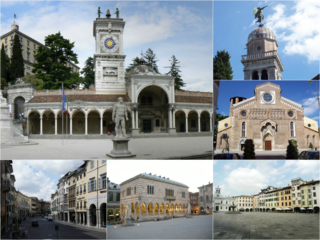
Udine is a city and comune (municipality) in northeastern Italy, in the middle of the Friuli-Venezia Giulia region, between the Adriatic Sea and the Carnic Alps. It is the capital of the Regional decentralization entity of Udine. Its population was 100,514 in 2012, 176,000 with the urban area.

Friuli-Venezia Giulia is one of the 20 regions of Italy and one of five autonomous regions with special statute. The regional capital is Trieste on the Gulf of Trieste, a bay of the Adriatic Sea.

The Eli and Edythe L. Broad Institute of MIT and Harvard, often referred to as the Broad Institute, is a biomedical and genomic research center located in Cambridge, Massachusetts, United States. The institute is independently governed and supported as a 501(c)(3) nonprofit research organization under the name Broad Institute Inc., and it partners with the Massachusetts Institute of Technology, Harvard University, and the five Harvard teaching hospitals.
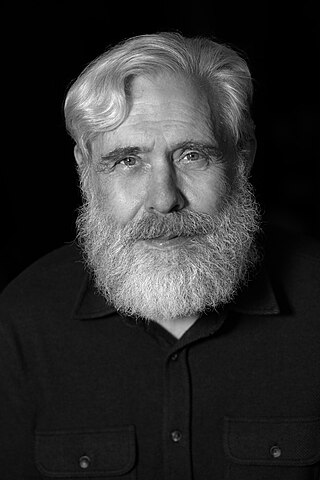
George McDonald Church is an American geneticist, molecular engineer, chemist, serial entrepreneur, and pioneer in personal genomics and synthetic biology. He is the Robert Winthrop Professor of Genetics at Harvard Medical School, Professor of Health Sciences and Technology at Harvard University and Massachusetts Institute of Technology, and a founding member of the Wyss Institute for Biologically Inspired Engineering at Harvard University.

The Joint Genome Institute (JGI) is a scientific user facility for integrative genomic science at Lawrence Berkeley National Laboratory. The mission of the JGI is to advance genomics research in support of the United States Department of Energy's (DOE) missions of energy and the environment. It is one of three national scientific user facilities supported by the Office of Biological and Environmental Research (BER) within the Department of Energy's Office of Research. These BER facilities are part of a more extensive network of 28 national scientific user facilities that operate at the DOE national laboratories.
The Association of Biomolecular Resource Facilities (ABRF) is dedicated to advancing core and research biotechnology laboratories through research, communication, and education. ABRF members include over 2000 scientists representing 340 different core laboratories in 41 countries, including those in industry, government, academic and research institutions.

CSIR Institute of Genomics and Integrative Biology (CSIR-IGIB) is a scientific research institute devoted primarily to biological research. It is a part of Council of Scientific and Industrial Research (CSIR), India.
Richard K. Wilson is a leading American molecular geneticist. He is the founding Executive Director of the Institute for Genomic Medicine at Nationwide Children’s Hospital and Professor of Pediatrics at the Ohio State University College of Medicine. He received his A.B. degree (Microbiology) from Miami University in Ohio in 1981, his Ph.D. (Chemistry) from the University of Oklahoma in 1986, and was a Research Fellow in the Division of Biology at the California Institute of Technology (1986-1990). In 1990, Dr. Wilson joined the faculty of Washington University School of Medicine where he co-founded the Genome Sequencing Center/McDonnell Genome Institute. At Washington University, Dr. Wilson was the Alan A. and Edith L. Wolff Distinguished Professor of Medicine, Professor of Genetics, Professor of Molecular Microbiology, and a member of the Senior Leadership Committee of the Siteman Cancer Center.

George M. Weinstock is an American geneticist and microbiologist on the faculty of The Jackson Laboratory for Genomic Medicine, where he is a professor and the associate director for microbial genomics. Before joining The Jackson Laboratory, he taught at Washington University in St. Louis and served as associate director of The Genome Institute. Previously, Weinstock was co-director of the Human Genome Sequencing Center (HGSC) at Baylor College of Medicine in Houston, Texas, and Professor of Molecular and Human Genetics. He received his B.S. degree from the University of Michigan in 1970 and his Ph.D. from the Massachusetts Institute of Technology in 1977. He has spent most of his career taking genomic approaches to study fundamental biological processes.
Maqsudul Alam was an East Bengal-born life-science scientist who is known for his work on genome sequencing. His work on genome sequencing started with bacteria Idiomarina loihiensis in 2003. He came into the focus of Bangladeshi people after his work on genome sequencing of jute species and jute attacking fungus.
John Quackenbush is an American computational biologist and genome scientist. He is a professor of biostatistics and computational biology and a professor of cancer biology at the Dana–Farber Cancer Institute (DFCI), as well as the director of its Center for Cancer Computational Biology (CCCB). Quackenbush also holds an appointment as a professor of computational biology and bioinformatics in the Department of Biostatistics at the Harvard School of Public Health.

Lawrence B. Schook is the vice president for research at the University of Illinois. He oversees the $1 billion research portfolio across all three campuses. A scholar in comparative genomics and the exploitation of genomic diversity to understand traits and disease, Dr. Schook focuses his research on genetic resistance to disease, regenerative medicine, and using genomics to create animal models for biomedical research. He led the international pig genome-sequencing project, which produced a draft of the pig genome allowing researchers to offer insights into diseases that afflict pigs and humans.
Shantanu Chowdhury is an Indian structural biologist and a professor at Institute of Genomics and Integrative Biology of the Council of Scientific and Industrial Research. He is known for developing a mechanism for gene regulation mediated by DNA Secondary-Structure in diverse cellular contexts. An elected fellow of the National Academy of Sciences, India, he is a recipient of the National Bioscience Award for Career Development of the Department of Biotechnology in 2010. The Council of Scientific and Industrial Research, the apex agency of the Government of India for scientific research, awarded him the Shanti Swarup Bhatnagar Prize for Science and Technology, one of the highest Indian science awards, in 2012, for his contributions to biological sciences.

The Philippine Genome Center (PGC) is a multi-disciplinary research facility in Quezon City, Metro Manila, Philippines which specializes in genomics.
Agjenzie Regjonâl pe Lenghe Furlane is a public body of the Autonomous Region of Friuli-Venezia Giulia that coordinates activities involving the safeguarding and promotion of the Friulian language across the regional territory. It plays a key role in the implementation of the legislation on the Friulian language, which comprises Regulations on the protection of historical language minorities [State Law] (482). December 15, 1999., Rules for the protection and promotion of the Friulian language and culture and establishment of a service for regional and minority languages [Regional Law] (15). March 22, 1996. as well as Rules for the protection, valorisation and promotion of the Friulian language [Regional Law] (29). December 18, 2007.
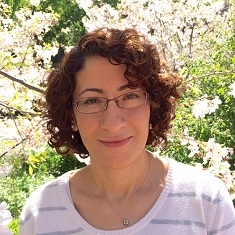
Hatice Efsun Arda is a Turkish developmental and systems biologist researching cell lineages that give rise to human pancreas using single cell sequencing. She is a Stadtman principal investigator and head of the developmental genomics group at the National Cancer Institute.
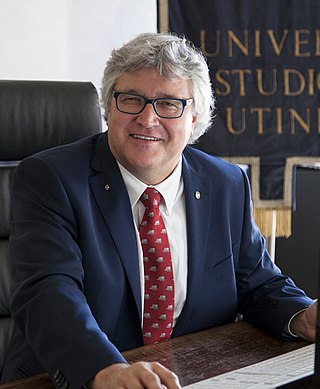
Alberto Felice De Toni is an Italian professor and engineer, current Mayor of Udine.
INSACOG is the forum set up under the Ministry of Health and Family Welfare by the Government of India on 30 December 2020, to study and monitor genome sequencing and virus variation of circulating strains of COVID-19 in India. Initially it was tasked to study the virus variant Lineage B.1.1.7 earlier found in United Kingdom in December 2020.
