Giovannini (Coronel Fabriciano)

Last updated
Giovannini
Neighborhood of Coronel Fabriciano
Vista parcial do B. Giovannini, Coronel Fabriciano MG2.JPG
View of the Giovannini neighborhood from Alto Giovannini
Brazil Minas Gerais location map.svg
Red pog.svg
Giovannini
Location in Minas Gerais
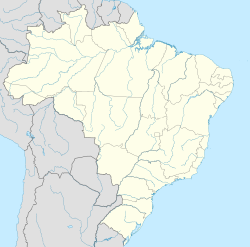
Brazil location map.svg
Red pog.svg
Giovannini
Giovannini (Brazil)
Coordinates: 19°30′53″S42°37′50″W / 19.51472°S 42.63056°W / -19.51472; -42.63056
Country Flag of Brazil.svg  Brazil
State Minas Gerais
Municipality/City Coronel Fabriciano
ZoneSenador Melo Viana District
Area
  Total0.5 km2 (0.2 sq mi)
Population
  Total3,020
  Density5.492/km2 (14.22/sq mi)

Giovannini is a neighborhood in the Brazilian municipality of Coronel Fabriciano, in the state of Minas Gerais. It is located in the Senador Melo Viana district, in Sector 4. According to the Brazilian Institute of Geography and Statistics (IBGE), its population in 2010 was 3,020 (2.9% of the municipality's total), distributed over an area of 0.5 km2. [1]

Contents

The area of the current neighborhood was occupied by Giovannini Farm, administered by the Archdiocese of Mariana and Alberto Giovannini. In the 1950s, the land was plotted and the neighborhood was officially created. It is named after Giovannini, who collaborated on several buildings in the residential area, such as the Alberto Giovannini State School and Coronel Fabriciano's first bus station. [2]

In the following decades, the neighborhood expanded and became one of the most populous areas in Coronel Fabriciano. The area includes buildings such as the Church of the Good Shepherd, which features a ceramic mosaic on its facade, and the Senhor do Bonfim Municipal Cemetery. The Governador José de Magalhães Pinto Avenue is the main link between the center of Fabriciano and the Senador Melo Viana district. [3] [4]

History

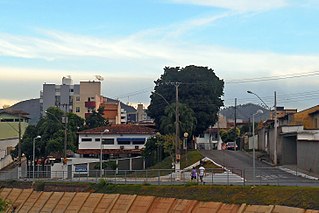
Governador Jose de Magalhaes Pinto Avenue seen from of the Pastor Pimentel Interchange, in Coronel Fabriciano. Vista da Avenida Magalhaes Pinto a partir do Trevo Pastor Pimentel, Coronel Fabriciano MG2.JPG
Governador José de Magalhães Pinto Avenue seen from of the Pastor Pimentel Interchange, in Coronel Fabriciano.

Originally, the area where the Giovannini neighborhood is located was owned by the Giovannini Farm. The land between Governador José de Magalhães Pinto Avenue (then Dom Helvécio Avenue) and Belvedere belonged to Alberto Giovannini, while the area between Governador José de Magalhães Pinto Avenue and the current Júlia Kubitschek neighborhood belonged to the Archdiocese of Mariana, under the supervision of Father Rocha, who was also responsible for the land in the current São Domingos, Recanto Verde and Bom Jesus neighborhoods. In the 1950s, the land was divided into lots and converted into a neighborhood, named after Alberto Giovannini, who was born in Queluz in São Paulo and lived in Coronel Fabriciano since August 1927, where he died on September 25, 1963. [2]

In Coronel Fabriciano, Alberto Giovannini worked as a businessman, merchant, landowner and banker. He inaugurated the Banco da Lavoura, the city's first bank branch, and donated land for the construction of the Senhor do Bonfim Municipal Cemetery, and the municipality's first state school, inaugurated in 1969 and named Alberto Giovannini State School. He also helped negotiate the construction of Fabriciano's first bus terminal, now known as the Rodoviária Velha, where stores and low-class apartments are concentrated. In 1978, the cornerstone was laid for the Church of the Good Shepherd, built in an area that had been used by the population for events. The structural and demographic development, combined with representative commerce, has made Giovannini one of the most populous areas in the city. [2] [5]

Geography and demography

Shops in the old bus station of Coronel Fabriciano. Lojas na Rodoviaria Velha de Coronel Fabriciano MG.JPG
Shops in the old bus station of Coronel Fabriciano.

The Giovannini neighborhood has a total area of 0.5 km2 and is bordered by the districts of Melo Viana, Santo Eloy, Belvedere (to the north), Alto Giovannini (to the west), Nazaré, Centro, Professores (to the south), Bom Jesus, Vila Bom Jesus and Júlia Kubitschek (to the east). Alto Giovannini originated as an extension of the original occupation, but is considered an independent neighborhood by both the IBGE and the municipal administration's geoprocessing system of 2020. It is bordered by the Caladão Stream, which cuts through the city and receives dirt and pollution from homes and small industries, workshops or slaughterhouses on its banks. [6] [7] [8] [9] [10] [11]

In 2010, the Brazilian Institute of Geography and Statistics (IBGE) estimated that 3 020 inhabitants lived in the neighborhood, which is comparable to cities in Minas Gerais such as Jaguaraçu, Rio Doce and Carmésia. Among the 63 neighborhoods in Fabriciano, Giovannini ranked 11th among the most populous, comprising 2.9% of the municipal population and 5.6% of the population of the Senador Melo Viana district, with a population density of 5,492.91 inhabitants per square kilometer. Of the total number of inhabitants, 1,421 were men (47.1% of the total) and 1,599 women (52.9%). [1]

According to the IBGE, in 2010 there were a total of 1,088 households. Although it is located between the Melo Viana neighborhood and downtown Fabriciano, which are the municipality's main commercial centers, Giovannini attracts significant commercial traffic, especially along Governador José de Magalhães Pinto Avenue. The Church of the Good Shepherd is the headquarters of the Community of the Good Shepherd, whose Catholic pastoral work also covers the surrounding neighborhoods and is subordinate to the Parish of Saint Anthony, under the jurisdiction of the Itabira-Fabriciano Diocese. Regarding other religions, the neighborhood features a Jehovah's Witness temple and the headquarters of the Seventh-day Adventist Church. [1] [3] [12] [13]

Infrastructure

Front of the Alberto Giovannini State School. Fachada da Escola Estadual Alberto Giovannini, Coronel Fabriciano MG.JPG
Front of the Alberto Giovannini State School.

According to data from the State Department of Education (SEE), the educational institutions located in Giovannini are: the Sítio do Pica-pau Pedagogical Center, a private school that provides preschool and the first grades of primary education (up to 5th grade); the Professor Francisco Letro State School, which offers primary education from 1st to 5th grade; and the Alberto Giovannini State School, a public high school and one of the best-placed institutions in the National High School Exam (ENEM) in Coronel Fabriciano. The water supply service is provided by Companhia de Saneamento de Minas Gerais (Copasa), while the electricity supply is the responsibility of Companhia Energética de Minas Gerais (Cemig), with 100% of the population having access to the electricity network. [2] [14] [15] [16] [17]

There is a branch of the Correios on Governador José de Magalhães Pinto Avenue. The city's first bus terminal was located in Giovannini, but it was replaced by another one in downtown Fabriciano. Magalhães Pinto Avenue connects the district to Presidente Tancredo de Almeida Neves Avenue, which links it to the neighboring cities of Ipatinga and Timóteo. The Pastor Pimentel Interchange, which intersects Magalhães Pinto and Tancredo Neves avenues, also divides Giovannini from downtown Fabriciano. There are municipal public transport bus lines that serve the neighborhood, and many of the routes that connect the central region to the interior of the Senador Melo Viana district use Magalhães Pinto Avenue to reach their destinations. [18] [2] [19] [20]

Culture

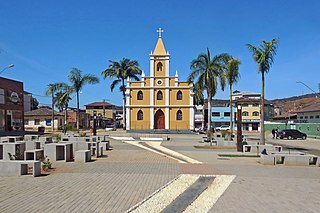
Front of the Church of the Good Shepherd. Fachada da Igreja Bom Pastor, Coronel Fabriciano MG3.JPG
Front of the Church of the Good Shepherd.

The area includes buildings such as the Church of the Good Shepherd, whose facade features a ceramic mosaic depicting Jesus with a flock of sheep, and the Senhor do Bonfim Municipal Cemetery, where around 30,000 bodies have been buried in approximately 2,000 graves. Magalhães Pinto Avenue concentrates much of the town's nightlife, with a considerable number of bars and restaurants. [21] [3] [13]

There are also leisure activities for the local population, which are often organized by the Community of the Good Shepherd. The church celebrates the Feast of the Good Shepherd every year in May, with processions, masses and shows in honor of the patron saint after whom the church is named. The state schools in the area also organize events aimed at the population, such as environmental awareness campaigns and educational talks, and on All Souls' Day the Municipal Cemetery receives thousands of visitors to the graves. The neighbourhood's open-air market is also organized every week. It was set up in the mid-1970s, initially in the center of Fabriciano. Years later it was transferred to the Professores neighborhood and Nazaré, until it reached Giovannini. [22] [23] [24]

See also

Related Research Articles

<span class="mw-page-title-main">Santana do Paraíso</span> Municipality in Southeast, Brazil

Santana do Paraíso is a Brazilian municipality situated in the state of Minas Gerais which was founded in 1992. It forms part of the Vale do Aço metropolitan area. Its estimated population in 2020 was of 35,369 inhabitants.
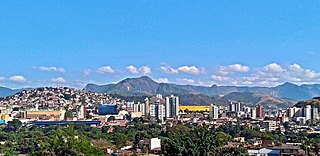
<span class="mw-page-title-main">Coronel Fabriciano</span> Municipality in Southeast, Brazil

Coronel Fabriciano is a municipality in the state of Minas Gerais in the Southeast region of Brazil. It is located in the region of Vale do Rio Doce and is situated 200 km from the state capital. The municipal population was estimated in 2020 by IBGE in 110,290 inhabitants. The area is 221.252 km2 (85.426 sq mi).

<span class="mw-page-title-main">Vale do Aço metropolitan area</span> Metropolitan Area of Brazil in Southeast

The Vale do Aço Metropolitan Region is a metropolitan area in Minas Gerais, Brazil, comprising only the four municipalities of Coronel Fabriciano, Ipatinga, Santana do Paraíso and Timóteo, but have an influence area of 22 other municipalities.
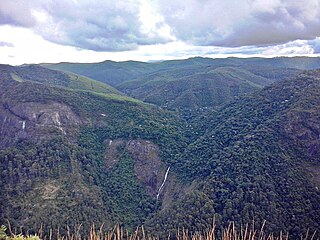
<span class="mw-page-title-main">Serra dos Cocais</span> Mountain chain in Brazil

The Serra dos Cocais is a mountain chain located in the Brazilian municipality of Coronel Fabriciano, in the interior of the state of Minas Gerais. It is part of the geologic province of the Espinhaço mountains and is composed of continuous blocks of granite over 600 million years old. Its altitude, which reaches a high point of 1200 meters above sea level, stands out from the surrounding terrain with average altitudes ranging between 500 and 800 meters. It contains an important remnant of the Atlantic Forest, in the middle of considerable reforestation with eucalyptus, and has been considered an area of environmental protection since 2002.

Rubem Siqueira Maia was a Brazilian physician and politician. After living in São João del-Rei during his childhood and graduating from the School of Medicine of Federal University of Minas Gerais (UFMG), he moved to Vale do Rio Doce to work on the construction of the Vitória-Minas Railway (EFVM) in the 1930s.

<span class="mw-page-title-main">Saint Sebastian Cathedral, Coronel Fabriciano</span> Catholic religious temple in Brazil

The Saint Sebastian Cathedral is a Catholic religious temple located in the Brazilian city of Coronel Fabriciano, in the interior of the state of Minas Gerais. It was inaugurated in 1993 and since then shares the title of seat of the Diocese of Itabira-Fabriciano with the Our Lady of the Rosary Cathedral, which also represents the Episcopal See, in Itabira.

<span class="mw-page-title-main">Saint Sebastian Parish, Coronel Fabriciano</span> Catholic Institution in Brazil

Saint Sebastian Parish is a division of the Catholic Church based in the Brazilian city of Coronel Fabriciano, in the interior of the state of Minas Gerais. The parish is part of the Diocese of Itabira-Fabriciano, and is located in Pastoral Region III. Its mother church is the Saint Sebastian Parish Church and its territory houses the co-cathedral of Saint Sebastian, which is one of the diocesan headquarters.

<span class="mw-page-title-main">Colégio Angélica</span> Private school in Brazil

Escola Normal Nossa Senhora do Carmo e Ginásio Angélica, also known as Colégio Angélica, is an educational institution in the Brazilian municipality of Coronel Fabriciano, in the interior of the state of Minas Gerais. It was created in 1950 under the administration the Congregation of the Carmelite Sisters of Divine Providence, which maintained the school until 2011. Since 2016, the Catholic Institute of Minas Gerais (ICMG) has been responsible for the institution, providing nursary, primary, elementary, and vocacional school.

<span class="mw-page-title-main">Doutor José Maria Morais Hospital</span> Brazilian Hospital

Doutor José Maria Morais Hospital is an institution located in the Brazilian city of Coronel Fabriciano, in the interior of the state of Minas Gerais. It was created by Belgo-Mineira in 1936, due to an epidemic of tropical diseases that the town was facing at the time.

The Calado Station, also known as Coronel Fabriciano Station, was a railway station that operated as a passenger and loading and unloading terminal in the Brazilian municipality of Coronel Fabriciano, in the countryside of the state of Minas Gerais. It was inaugurated on June 9, 1924, being at the time one of the three largest stations of the Vitória-Minas Railway (EFVM). Around it was established the urban core that gave rise to the headquarters of the then-subordinated district to Antônio Dias, emancipated in 1948.

The history of Coronel Fabriciano, a Brazilian municipality in the interior of the state of Minas Gerais, began at the end of the 16th century. Expeditions followed the so-called Doce River Hinterlands in search of precious metals, however, the settlement of the region was forbidden at the beginning of the XVII century, to avoid smuggling of the gold extracted in the Diamantina region.

<span class="mw-page-title-main">Caladão Stream</span> Brazilian watercourse

The Caladão Stream is a watercourse that rises and flows in the Brazilian municipality of Coronel Fabriciano, in the state of Minas Gerais. The source is located in Serra dos Cocais and runs for 10 kilometers to its mouth in the Piracicaba River. Its sub-basin covers 53 km2 and encompasses the Senador Melo Viana district, the most populous area of the city.

<span class="mw-page-title-main">Júlia Kubitschek (Coronel Fabriciano)</span> Brazilian neighborhood

Júlia Kubitschek, popularly known as JK, is a neighborhood in the Brazilian municipality of Coronel Fabriciano, in the interior of the state of Minas Gerais. It is located in the Senador Melo Viana district, in Sector 4. According to the Brazilian Institute of Geography and Statistics (IBGE), its population in 2010 was 3,452 inhabitants, distributed over an area of 1.4 km2.
<span class="mw-page-title-main">Professores (Coronel Fabriciano)</span> Brazilian neighborhood

Professores is a neighborhood in the Brazilian municipality of Coronel Fabriciano, in the interior of the state of Minas Gerais. It is located in the Senador Melo Viana district, in Sector 1. According to the Brazilian Institute of Geography and Statistics (IBGE), its population in 2010 was 887 inhabitants, distributed over an area of 0.1 km2.
<span class="mw-page-title-main">Santa Terezinha (Coronel Fabriciano)</span> Brazilian neighborhood

Santa Terezinha or Santa Terezinha I is a neighborhood in the Brazilian municipality of Coronel Fabriciano, in the interior of the state of Minas Gerais. It is located in the Senador Melo Viana district, in Sector 1. According to the Brazilian Institute of Geography and Statistics (IBGE), its population in 2010 was 1 712 inhabitants, distributed over an area of 0.3 km2.

<span class="mw-page-title-main">Centro (Coronel Fabriciano)</span> Brazilian neighborhood

Centro is a neighborhood in the Brazilian municipality of Coronel Fabriciano, in the interior of the state of Minas Gerais. It is located in the headquarters district, in Sector 1. According to the Brazilian Institute of Geography and Statistics (IBGE), its population in 2010 was 2,799 inhabitants, distributed over an area of 0.6 km2.

<span class="mw-page-title-main">Santa Helena (Coronel Fabriciano)</span> Brazilian neighborhood

Santa Helena is a neighborhood in the Brazilian municipality of Coronel Fabriciano, in the interior of the state of Minas Gerais. It is located in the headquarters district, in Sector 1. According to the Brazilian Institute of Geography and Statistics (IBGE), its population in 2010 was 1 359 inhabitants, distributed over an area of 0.2 km2.

<span class="mw-page-title-main">Floresta (Coronel Fabriciano)</span> Brazilian neighborhood

Floresta is a neighborhood in the Brazilian municipality of Coronel Fabriciano, in the interior of the state of Minas Gerais. It is located in the Senador Melo Viana district, in Sector 6. According to the Brazilian Institute of Geography and Statistics (IBGE), its population in 2010 was 2,820 inhabitants, distributed over an area of 0.4 km2.

<span class="mw-page-title-main">Caladinho Stream</span> Brazilian watercourse

The Caladinho Stream is a watercourse that rises and flows in the Brazilian municipality of Coronel Fabriciano, in the state of Minas Gerais. The source is located near the Caladinho neighborhood and it runs for about 12 kilometers to its mouth in the Piracicaba River through the Industrial Novo Reno, Universitário, Aparecida do Norte, Morada do Vale, Aldeia do Lago and Santa Terezinha II neighborhoods. Its sub-basin covers 9 km2.

<span class="mw-page-title-main">Pedro Nolasco Street</span> Street in Minas Gerais, Brazil

The Pedro Nolasco Street is located in the Brazilian municipality of Coronel Fabriciano, in the state of Minas Gerais. It begins at the intersection of Rio Piracicaba, Albert Scharlet, Doutor Querubino and Rubem Siqueira Maia streets and ends at São Sebastião Street. It originated in the 1920s when the old Calado Station was built on the site. Some of the buildings located on the street still retain their original architecture.

References

  1. 1 2 3 "Tabela 202 - População residente por sexo e situação do domicílio". IBGE. 2010-12-31.
  2. 1 2 3 4 5 "BAIRROS - GIOVANNINI". Eu Amo Ipatinga. Retrieved 2023-12-26.
  3. 1 2 3 "COMUNIDADE BOM PASTOR". Paróquia Santo Antonio. Retrieved 2023-12-26.
  4. "Sete mil pessoas são esperadas no Cemitério Senhor do Bonfim, em Fabriciano". Diário do Aço. 2016-11-02. Retrieved 2023-12-26.
  5. Freitas, Geraldo Vinicius (2009). "IPATINGA (1950 -1957): Uma idéia sobre a história do município sem a presença da Usiminas" (PDF). UFU.
  6. Gomes, Leonardo. "Grande Guia dos Bairros de Coronel Fabriciano". Revista Nosso Vale. Archived from the original on 2014-03-22. Retrieved 2014-09-26.
  7. "Plano Diretor - bairros". Coronel Fabriciano City Hall. Retrieved 2020-08-15.
  8. "Expedição traça um retrato do Ribeirão Caladão". Coronel Fabriciano City Hall. 2009-10-19. Archived from the original on 2012-11-27. Retrieved 2012-01-29.
  9. "Nível do Ribeirão Caladão sobe e poderá provocar enchentes". Vale do Aço. 2008-02-07. Archived from the original on 2012-12-31. Retrieved 2012-02-16.
  10. "Prefeitura inicia obras do Parque Linear". Coronel Fabriciano City Hall. 2011-03-23. Archived from the original on 2013-07-31. Retrieved 2012-01-29.
  11. "Sinopse por setores". IBGE. 2011-11-16.
  12. "Imóveis registram 100% de valorização em 5 anos". Diário do Aço. 2011-10-12. Archived from the original on 2012-07-24. Retrieved 2014-09-26.
  13. 1 2 "Fabriciano lidera estatística de estabelecimentos gastronômicos com perfil turístico no Vale do Aço". Vale do Aço. 2007-12-02. Archived from the original on 2014-05-28. Retrieved 2014-09-26.
  14. "Inep divulga desempenho das escolas no Enem". Diário do Aço. 2011-09-13. Archived from the original on 2012-07-12. Retrieved 2012-01-31.
  15. "Relação de Estabelecimentos de Ensino (ativos), segundo a SRE, o município, a dependência administrativa e a localização, por etapa, nível e modalidade de ensino". SEE. Archived from the original on 2014-01-11. Retrieved 2013-09-02.{{cite journal}}: CS1 maint: bot: original URL status unknown (link)
  16. "HISTÓRICO". COPASE. Retrieved 2023-12-26.
  17. "Quem Somos". CEMIG. Retrieved 2023-12-26.
  18. "Avenida Tancredo Neves é municipalizada". Coronel Fabriciano City Hall. 2010-01-12. Archived from the original on 2013-07-31. Retrieved 2012-01-31.
  19. Miranda, Cid (2022-07-21). "Viaduto do trevo de Fabriciano é interditado". Carta de Noticias. Retrieved 2023-12-26.
  20. "CEP 32470-959". Rua Cep. Retrieved 2023-12-26.
  21. "Fabriciano deve ganhar novo cemitério". Diário do Aço. 2010-10-20. Archived from the original on 2012-07-30. Retrieved 2012-02-16.
  22. "Comunidade Bom Pastor celebra Festa do Padroeiro". Diário Popular. 2011-05-13. Archived from the original on 2012-02-01. Retrieved 2012-02-01.
  23. "Blitz educativa e palestras marcam Semana do Meio Ambiente em Fabriciano". Vale do Aço. 2007-06-03. Archived from the original on 2012-12-31. Retrieved 2012-01-31.
  24. "Um dia de homenagens". Diário do Aço. 2011-11-02. Archived from the original on 2012-07-11. Retrieved 2012-02-16.