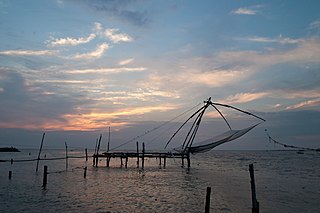
Fort Kochi, formerly known as Fort Cochin or British Cochin, is a region of Kochi city in Kerala, India. Fort Kochi takes its name from the Fort Manuel of Kochi, the first European fort on Indian soil, controlled by the Portuguese East Indies. This is part of a handful of water-bound islands and islets toward the south-west of the mainland Kochi, and collectively known as Old Kochi or West Kochi. Adjacent to this is the locality of Mattancherry. In 1967, these three municipalities along with a few adjoining areas, were amalgamated to form the Kochi Municipal Corporation.

The Santa Cruz Cathedral Basilica, also known as Kotta Palli or Kottepalli, is located in Fort Kochi, Kochi. It is one of the thirty-four basilicas in India and one of nine in Kerala. This heritage edifice of Kerala is renowned for its Indo-European and Gothic architectural style. It serves as the cathedral church of the Diocese of Cochin.

Ernakulam is the central business district of the city of Kochi, Kerala, India. It is the namesake of Ernakulam district. The eastern part of Kochi city is mainly known as Ernakulam, while the western part of it after the Venduruthy Bridge is called as Western Kochi. Many major establishments, including the Kerala High Court, the office of the Kochi Municipal Corporation and the Cochin Shipyard are situated in Ernakulam. It is also the most urbanized area in the city of Kochi. The Southern Naval Command (SNC) is in Kochi, Ernakulam district, Kerala. Established in 1958, it is the largest naval command of the Indian Navy, focusing on training and maritime security operations in the Arabian Sea and Indian Ocean.

Cochin Shipyard Ltd (CSL) is the largest shipbuilding and maintenance facility in India. It is part of a line of maritime-related facilities in the port-city of Kochi, in the state of Kerala, India. The shipyard builds platform supply vessels and double-hulled oil tankers. It has built big vessels up to 1,20,000 DWT capacity, making it the leading shipyard in India in terms of capacity. The company has Miniratna status.

Cochin Port or Kochi Port is a major port on the Arabian Sea – Laccadive Sea – Indian Ocean sea-route in the city of Kochi in Ernakulam district in the state of Kerala and is one of the largest ports in India. The Vallarpadam container terminal, part of the Cochin Port, is the first transshipment port in India. The Cochin port lies on two islands in the Vembanadu Lake; Willingdon Island and Vallarpadam, towards the Fort Kochi river mouth opening onto the Laccadive Sea.
Sir Robert Bristow was a British harbour engineer best known for his contributions to the development of the port of Kochi (Cochin) in Kerala, India and is regarded as the architect of modern Kochi port. Bristow recounted his experiences in his book Cochin Saga, which is considered an important source of historiography of Kerala. He is also noted for his initiatives in founding the Lotus Club, the first inter-racial club in Kochi. He was also a member of the Royal Society of Arts.

The Kochi Municipal Corporation is the municipal corporation that governs the Indian city of Kochi in the state of Kerala. The Corporation manages 94.88 km2 of Kochi city and has a population of 677,381 within that area. It is the most densely populated city corporation in the state. Kochi Municipal Corporation has been formed with functions to improve the infrastructure of town.
Kochi is a major port city in the Indian state of Kerala. The city is widely known as the commercial or economic capital of the state of Kerala.

INS Kochi (D64) is the second ship of the Kolkata-class stealth guided-missile destroyers built under the code name Project 15A for the Indian Navy. She was constructed by Mazagon Dock Limited (MDL) in Mumbai. After undergoing extensive sea trials, she was commissioned to Indian Navy service on 30 September 2015.

INS Chennai (D65) is the third and last ship of the Kolkata-class stealth guided missile destroyers of the Indian Navy. She was constructed by the Mazagon Dock Limited (MDL) at Mumbai. On 17 April 2017, INS Chennai was dedicated to the city of Chennai in presence of then Chief Minister of Tamil Nadu, K. Palaniswamy.

Cochin Harbour Terminus is an NSG–6 category Indian railway station in Thiruvananthapuram railway division of Southern Railway zone. It is one of the railway stations in the city of Kochi, in the state of Kerala, India. During the peak time of the station, 17 trains operated from here to different parts of the country and served as the principal station providing rail connectivity to the southern segment of the Port of Kochi located on the Willingdon Island. The station, which has not been in use after the commissioning of Vallarpadam container terminus is now locked and all the train service to the station from Ernakulam Junction were completely stopped in 2013. Since then, only occasional tourist trains carrying passengers will arrive at the station – notably the Golden Chariot in 2022.
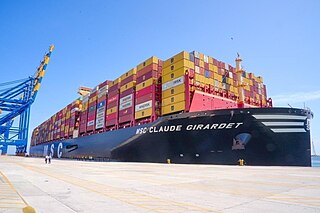
The Vizhinjam International Seaport Thiruvananthapuram(English pronunciation:/vɪzɪnˈdʒamˌɪntərˈnæʃənlˈsiːpɔːtˌtɪrʊvənənˈtɑːpʊrəm/, VIZH-in-jam in-ter-NASH-uh-nuhl SEE-port thir-uh-vuh-nuh-thuh-PUR-uhm) also known as Trivandrum Port is India's first deep water container transshipment port, located in Thiruvananthapuram, the capital city of Kerala. The port is designed to be a multi-purpose, all-weather, green port located around 20 kilometres (12 mi) away from the Thiruvananthapuram International Airport. It is poised to become India's first automated port and holds a unique position as the only Indian port directly adjacent to an international shipping lane. The port's location offers a significant advantage: it lies just 10 nautical miles (19 km) from the heavily trafficked east-west shipping channel connecting Europe, the Persian Gulf, Southeast Asia, and the Far East. The port has a natural depth of 24 meters, which reduces the need for dredging, and possesses the capability to host many of the world's massive cargo ships, including those exceeding 24,000 TEU, such as vessels of the ULCS container ships like the MSC Irina. The cruise berth under construction along the breakwater will be able to handle large cruise ships such as the Icon of the seas. The Seaport's location offers an advantage as it is situated near an international shipping channel, facilitating connections to global trade routes. When fully commissioned, it is expected that the seaport may have the capacity to cater to 50 percent of the container transhipment needs of India that currently take place at Dubai, Colombo and Singapore. The first phase of the project amounts to ₹8,867 crore, and the remaining phases cost ₹20,000 crore making the total cost ₹28,867 crore.
Kottayam Port and Container Terminal (KPCT) is the first minor port and Inland Container Depot (ICD) using Inland waterways Kerala state, situated in Nattakom, on the banks of Kodoor river in National Waterway 9. This is also India's first port and ICD to use inland waterway with Customs notified area for Exports & Imports. The port integrates multi-mode freight traffic between Kochi Port and a vast hinterland of Kottayam district, Pathanamthitta district and Idukki district. This is a gateway port for Kottayam.

The Kochi-Muziris Biennale is an international exhibition of contemporary art held in the city of Kochi in Kerala, India. It is the largest art exhibition in the country and the biggest contemporary art festival in Asia. The Kochi-Muziris Biennale is an initiative of the Kochi Biennale Foundation with support from the Government of Kerala. The concept of the Kochi-Muziris Biennale was ideated and executed by Venu Vasudevan, IAS, who was the Government of Kerala's cultural secretary. The exhibition is set across Kochi, with shows being held in existing galleries, halls, and site-specific installations in public spaces, heritage buildings and vacant structures.

The Rajshree-class patrol vessels are a series of eight inshore patrol vessels built by Garden Reach Shipbuilders & Engineers (GRSE), Kolkata for the Indian Coast Guard.

The Anti-Submarine Warfare Shallow Water Craft (ASW-SWC) corvettes, are a class of anti-submarine warfare (ASW) vessels currently being built for the Indian Navy, by Cochin Shipyard (CSL) and Garden Reach Shipbuilders & Engineers (GRSE). They were conceived as a replacement to the ageing Abhay-class corvettes of the Indian Navy, and are designed to undertake ASW duties – including subsurface surveillance in littoral waters, search-and-attack unit (SAU) missions and coordinated anti-submarine warfare operations with naval aircraft. They were also designed to provide secondary duties – including defense against intruding aircraft, minelaying and search-and-rescue (SAR).

Events in the year 2007 in Kerala
Venduruthy-Vikrant Bridge, also known as Venduruthy Bridge is a bridge in Kochi, Kerala, India. There are two bridges at present; one railway bridge and one road bridge, running parallel to each other, that connects the Ernakulam side of Kochi to the Willingdon Island. The old Venduruthy railway bridge was constructed in 1938 along with two parallel road bridges. The old railway bridge is one of the first bridges in India to be completely constructed from steel. It is a landmark in Kochi with historic significance as it played a major role in the transformation of Kochi into a major port city in India during the British era.
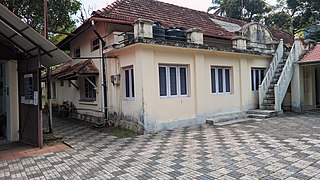
The Cochin Port Maritime Heritage Museum is a museum located on Willingdon Island in Kochi, Kerala. The museum has rare collection of photographs related to the evolution of Cochin as a port city. It also shows the development of Willingdon Island and Kochi's maritime heritage. Old marine equipment and rare photographs documenting Cochin Port's history can be found in the museum. The building, which was used as the chief engineer's quarters during the construction of Willingdon Island was converted into a museum by the Cochin Port Trust in May 2014.
The Kochi–Theni Greenfield Highway is a 151 kilometre-long planned greenfield controlled-access highway in India, connecting Kochi in Kerala with Theni in Tamil Nadu. The new six lane highway is part of the Kochi - Tuticorin economic corridor which aims at connecting these two major ports enabling smooth movement of cargo between the two. The highway, which will pass through the Western Ghats of Idukki district, will begin from Kundannoor in Kochi and reach Theni almost 67 kilometres lesser than the existing NH 85 alignment and is expected to decongest the 121-km Kochi–Munnar NH 85 stretch.