Related Research Articles

In computing and electronic systems, binary-coded decimal (BCD) is a class of binary encodings of decimal numbers where each digit is represented by a fixed number of bits, usually four or eight. Sometimes, special bit patterns are used for a sign or other indications.

In computing, floating-point arithmetic (FP) is arithmetic that represents subsets of real numbers using an integer with a fixed precision, called the significand, scaled by an integer exponent of a fixed base. Numbers of this form are called floating-point numbers. For example, 12.345 is a floating-point number in base ten with five digits of precision:
In computer science, an integer is a datum of integral data type, a data type that represents some range of mathematical integers. Integral data types may be of different sizes and may or may not be allowed to contain negative values. Integers are commonly represented in a computer as a group of binary digits (bits). The size of the grouping varies so the set of integer sizes available varies between different types of computers. Computer hardware nearly always provides a way to represent a processor register or memory address as an integer.
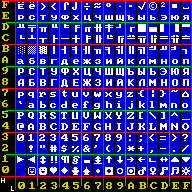
In computing, a nibble (occasionally nybble, nyble, or nybl to match the spelling of byte) is a four-bit aggregation, or half an octet. It is also known as half-byte or tetrade. In a networking or telecommunication context, the nibble is often called a semi-octet, quadbit, or quartet. A nibble has sixteen (24) possible values. A nibble can be represented by a single hexadecimal digit (0–F) and called a hex digit.
In computing, endianness is the order or sequence of bytes of a word of digital data in computer memory. Endianness is primarily expressed as big-endian (BE) or little-endian (LE). A big-endian system stores the most significant byte of a word at the smallest memory address and the least significant byte at the largest. A little-endian system, in contrast, stores the least-significant byte at the smallest address. Bi-endianness is a feature supported by numerous computer architectures that feature switchable endianness in data fetches and stores or for instruction fetches. Other orderings are generically called middle-endian or mixed-endian.
A computer number format is the internal representation of numeric values in digital device hardware and software, such as in programmable computers and calculators. Numerical values are stored as groupings of bits, such as bytes and words. The encoding between numerical values and bit patterns is chosen for convenience of the operation of the computer; the encoding used by the computer's instruction set generally requires conversion for external use, such as for printing and display. Different types of processors may have different internal representations of numerical values and different conventions are used for integer and real numbers. Most calculations are carried out with number formats that fit into a processor register, but some software systems allow representation of arbitrarily large numbers using multiple words of memory.
Two's complement is a mathematical operation to reversibly convert a positive binary number into a negative binary number with equivalent negative value, using the binary digit with the greatest place value as the sign to indicate whether the binary number is positive or negative. It is used in computer science as the most common method of representing signed integers on computers, and more generally, fixed point binary values. When the most significant bit is 1, the number is signed as negative; and when the most significant bit is 0 the number is signed as positive .
uuencoding is a form of binary-to-text encoding that originated in the Unix programs uuencode and uudecode written by Mary Ann Horton at the University of California, Berkeley in 1980, for encoding binary data for transmission in email systems.
In computing, fixed-point is a method of representing fractional (non-integer) numbers by storing a fixed number of digits of their fractional part. Dollar amounts, for example, are often stored with exactly two fractional digits, representing the cents. More generally, the term may refer to representing fractional values as integer multiples of some fixed small unit, e.g. a fractional amount of hours as an integer multiple of ten-minute intervals. Fixed-point number representation is often contrasted to the more complicated and computationally demanding floating-point representation.
In computing, signed number representations are required to encode negative numbers in binary number systems.
Densely packed decimal (DPD) is an efficient method for binary encoding decimal digits.
Extended precision refers to floating-point number formats that provide greater precision than the basic floating-point formats. Extended precision formats support a basic format by minimizing roundoff and overflow errors in intermediate values of expressions on the base format. In contrast to extended precision, arbitrary-precision arithmetic refers to implementations of much larger numeric types using special software.
Decimal floating-point (DFP) arithmetic refers to both a representation and operations on decimal floating-point numbers. Working directly with decimal (base-10) fractions can avoid the rounding errors that otherwise typically occur when converting between decimal fractions and binary (base-2) fractions.
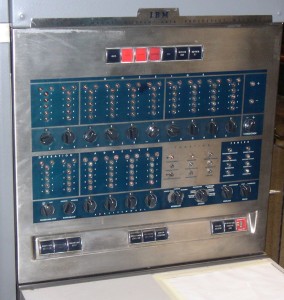
Decimal computers are computers which can represent numbers and addresses in decimal as well as providing instructions to operate on those numbers and addresses directly in decimal, without conversion to a pure binary representation. Some also had a variable wordlength, which enabled operations on numbers with a large number of digits.
The IEEE 754-2008 standard includes decimal floating-point number formats in which the significand and the exponent can be encoded in two ways, referred to as binary encoding and decimal encoding.
The PDP-11 architecture is a CISC instruction set architecture (ISA) developed by Digital Equipment Corporation (DEC). It is implemented by central processing units (CPUs) and microprocessors used in PDP-11 minicomputers. It was in wide use during the 1970s, but was eventually overshadowed by the more powerful VAX architecture in the 1980s.
In computing, decimal32 is a decimal floating-point computer numbering format that occupies 4 bytes (32 bits) in computer memory. It is intended for applications where it is necessary to emulate decimal rounding exactly, such as financial and tax computations. Like the binary16 format, it is intended for memory saving storage.
In computing, decimal64 is a decimal floating-point computer numbering format that occupies 8 bytes in computer memory. It is intended for applications where it is necessary to emulate decimal rounding exactly, such as financial and tax computations.
decimal128 is a decimal floating-point computer number format that occupies 128 bits in computer memory. Formally introduced in IEEE 754-2008, it is intended for applications where it is necessary to emulate decimal rounding exactly, such as financial and tax computations.
A half-carry flag is a condition flag bit in the status register of many CPU families, such as the Intel 8080, Zilog Z80, the x86, and the Atmel AVR series, among others. It indicates when a carry or borrow has been generated out of the least significant four bits of the accumulator register following the execution of an arithmetic instruction. It is primarily used in decimal (BCD) arithmetic instructions.
References
- 1 2 "4.7 BCD and packed BCD integers". Intel 64 and IA-32 Architectures Software Developer's Manual, Volume 1: Basic Architecture (PDF). Version 072. Vol. 1. Intel Corporation. 2020-05-27 [1997]. pp. 3–2, 4-9–4-11 [4-10]. 253665-072US. Archived (PDF) from the original on 2020-08-06. Retrieved 2020-08-06.
[…] When operating on BCD integers in general-purpose registers, the BCD values can be unpacked (one BCD digit per byte) or packed (two BCD digits per byte). The value of an unpacked BCD integer is the binary value of the low halfbyte (bits 0 through 3). The high half-byte (bits 4 through 7) can be any value during addition and subtraction, but must be zero during multiplication and division. Packed BCD integers allow two BCD digits to be contained in one byte. Here, the digit in the high half-byte is more significant than the digit in the low half-byte. […] When operating on BCD integers in x87 FPU data registers, BCD values are packed in an 80-bit format and referred to as decimal integers. In this format, the first 9 bytes hold 18 BCD digits, 2 digits per byte. The least-significant digit is contained in the lower half-byte of byte 0 and the most-significant digit is contained in the upper half-byte of byte 9. The most significant bit of byte 10 contains the sign bit (0 = positive and 1 = negative; bits 0 through 6 of byte 10 are don't care bits). Negative decimal integers are not stored in two's complement form; they are distinguished from positive decimal integers only by the sign bit. The range of decimal integers that can be encoded in this format is −1018 + 1 to 1018− 1. The decimal integer format exists in memory only. When a decimal integer is loaded in an x87 FPU data register, it is automatically converted to the double-extended-precision floating-point format. All decimal integers are exactly representable in double extended-precision format. […]
- 1 2 3 4 5 6 7 8 9 10 11 12 Hyde, Randall (September 2003). Decimal Arithmetic. The Art of Assembly Language Programming. No Starch Press. Archived from the original on 2008-11-02. Retrieved 2008-10-18.
- 1 2 3 4 5 6 Volume 2A: Instruction Set Reference, A-M (PDF). Intel 64 and IA-32 Architectures Software Developer’s Manual. Vol. 2A. Intel Corporation. 2007-05-17. Archived from the original (PDF) on 2008-03-15. Retrieved 2007-06-27.