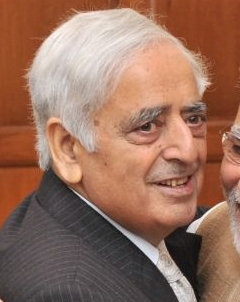
Events in the year 2004 in the Republic of India.

The Jammu & Kashmir National Conference (JKNC) is a state political party in the Indian state of Jammu and Kashmir. Founded as the All Jammu and Kashmir Muslim Conference by Sheikh Abdullah and Chaudhry Ghulam Abbas in 1932 in the princely state of Jammu and Kashmir, the organisation renamed itself to "National Conference" in 1939 in order to represent all the people of the state. It supported the accession of the princely state to India in 1947. Prior to that, in 1941, a group led by Ghulam Abbas broke off from the National Conference and revived the old Muslim Conference. The revived Muslim Conference supported the accession of the princely state to Pakistan and led the movement for Azad Kashmir.
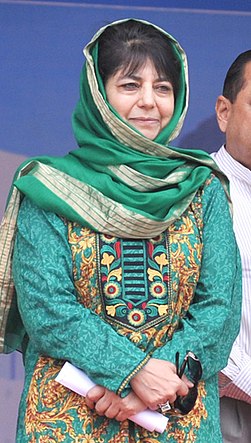
Mehbooba Mufti is an Indian politician who served as the Chief Minister of Jammu and Kashmir, from 4th April 2016 to 19th June 2018. She is a supporter of the article 35A and 370 of the Indian Constitution. She resigned on June 19 2018 after BJP withdrew support from the coalition government. She was the first woman to hold the office. Mehbooba Mufti is India's second Muslim woman chief minister after Syeda Anwara Taimur of Assam. She is the president of the Jammu and Kashmir Peoples Democratic Party (PDP) and was a member of the Indian parliament, representing Anantnag in the 16th Lok Sabha; before she was sworn in as the Chief Minister of J&K. She had previously represented Anantnag in the 14th Lok Sabha (2004–09) but did not contest the 2009 election for the 15th Lok Sabha. She is a supporter of Jamaat e Islami
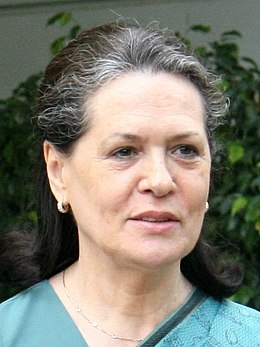
Legislative elections were held in India in four phases between 20 April and 10 May 2004. Over 670 million people were eligible to vote, electing 543 members of the 14th Lok Sabha. The Lok Sabha, or "House of the People," is the directly elected lower house of the Parliament of India.

Ghulam Nabi Azad is an Indian politician of the Indian National Congress and was the Minister of Health and Family Welfare. Presently, he serves as the Leader of opposition in Rajya Sabha.

Farooq Abdullah is an Indian politician and chairman of Jammu & Kashmir National Conference. He has served as the Chief Minister of Jammu and Kashmir on several occasions since 1982, and as the union minister for New and Renewable Energy between 2009 and 2014. He is the father of former Chief Minister of Jammu and Kashmir Omar Abdullah.

The Jammu & Kashmir National Panthers Party is a state political party in the state of Jammu and Kashmir, India. The party was founded on 23 March 1982 by Prof. Bhim Singh and a few prominent youth political personalities of the time including Jay Mala, former President of the Indian Students Congress. Its aim is to "demolish corruption, communalism, criminalization, drug menace" and to establish a real democracy through ultimate revolution.

The Indian general election, 2014 was held to constitute the 16th Lok Sabha, electing members of parliament for all 543 parliamentary constituencies. Running in nine phases from 7 April to 12 May 2014, it was the longest election in the country's history. According to the Election Commission of India, 814.5 million people were eligible to vote, with an increase of 100 million voters since the last general election in 2009, making it the largest ever election in the world. Around 23.1 million or 2.7% of the total eligible voters were aged 18–19 years. A total of 8,251 candidates contested for the 543 Lok Sabha seats. The average election turnout over all nine phases was around 66.38%, the highest ever in the history of Indian general elections.
Elections for the Indian state of Jammu and Kashmir were held over seven days in November and December 2008. The previous government led by the Jammu and Kashmir People's Democratic Party (PDP) in coalition with the Indian National Congress (INC) collapsed when the PDP withdrew. Following the election, the Jammu & Kashmir National Conference (NC) agreed a coalition with Congress and their leader, Omar Abdullah became the state's youngest ever Chief Minister at 38.
Rafi Ahmad Mir is a veteran politician and the Chief Spokesman of Jammu and Kashmir People's Democratic Party. In Mehbooba Mufti led government, he was the Vice Chairman of J&K Tourism Development Corporation.
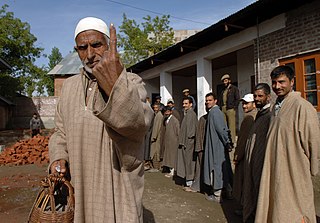
Elections in Jammu and Kashmir include elections to the Parliament of India, both houses of the bicameral state legislature, and various other local level bodies such as municipalities and Panchayat constituencies. The legal authority to conduct elections in Jammu and Kashmir is drawn from provisions in both the Constitution of India and the Constitution of Jammu and Kashmir.
The Jharkhand Legislative Assembly election, 2014 was held in five phases between November 25, and December 20, counting of votes and results were announced on December 23, 2014. The Bhartiya Janata Party (BJP) won the elections defeating The Indian National Congress (INC) and its major allies Rashtriya Janata Dal, Janata Dal (United), and Jharkhand Mukti Morcha (JMM). This was the first time, since Jharkhand was created, for a single-party majority in the state assembly, with BJP getting 42 out of 81, 1 more that required majority. This has provided for a stable government in the state for past 4 years.

The Jammu and Kashmir Legislative Assembly election, 2014 was held in the Indian state of Jammu and Kashmir in five phases from 25 November – 20 December 2014. Voters elected 87 members to the Jammu and Kashmir Legislative Assembly, which ends its six-year term on 19 January 2015. The results were declared on 23 December 2014. Voter-verified paper audit trail (VVPAT) along with EVMs were used in 3 assembly seats out of 87 in Jammu Kashmir elections.
Election for the Indian state of Jammu and Kashmir were held on 23 March 1987. Farooq Abdullah was reappointed as the Chief Minister.
Pandit Mangat Ram Sharma was an Indian politician and Deputy Chief Minister of Jammu and Kashmir as well as speaker of Jammu and Kashmir Legislative Assembly.. He was a leader of the Indian National Congress.

Ajaz Ahmad Khan popularly known as Ajaz Saab or Sher-e-Gool Gulabgarh is an Indian politician and a member of the 12th Jammu and Kashmir Legislative Assembly from Gool Arnas constituency. He is also Deputy Leader of Congress Legislative Party of Jammu and Kashmir Assembly and has been a member of the legislative assembly since 2002 from Gool Arnas assembly constituency. He is a member of Indian National Congress.
A by-election was held in the Lok Sabha constituency of Srinagar on 9 April 2017 with repolling in 38 polling on 13 April. It was triggered by the resignation of Tariq Hameed Karra after his defection from Jammu and Kashmir Peoples Democratic Party to the Indian National Congress.
Abdul Gani Vakil,, is a politician and Senior Vice President of Jammu & Kashmir People’s Conference. He has served the state as Minister for Social Welfare.