Related Research Articles

Lower Austria is one of the nine states of Austria, located in the northeastern corner of the country. Major cities are Amstetten, Klosterneuburg, Krems an der Donau, Wiener Neustadt and Sankt Pölten, which has been the capital of Lower Austria since 1986, replacing Vienna, which became a separate state in 1921. With a land area of 19,186 km2 (7,408 sq mi) and a population of 1.699 million people, Lower Austria is the largest and second-most-populous state in Austria.

Passau is a city in Lower Bavaria, Germany. It is also known as the Dreiflüssestadt, as the river Danube is joined by the Inn from the south and the Ilz from the north.

Krems an der Donau is a town with 25,271 inhabitants end 2022 in Austria, in the federal state of Lower Austria. It is the fifth-largest city of Lower Austria and is approximately 70 kilometres west of Vienna. Krems is a city with its own statute, and therefore it is both a municipality and a district.

Ostmark was a name that referred historically to the Margraviate of Austria, a medieval frontier march. It was also used in Nazi propaganda from 1938 to 1942 to refer to the formerly independent Federal State of Austria after the Anschluss with Nazi Germany. From the Anschluss until 1939, the official name used was Land Österreich.

Hainburg an der Donau is a town located in the Bruck an der Leitha district in the state of Lower Austria of eastern Austria. In 2021 it had a population of about 7,000.

The University for Continuing Education Krems is an Austrian university specializing in further education for working professionals. It is located in Krems an der Donau, Lower Austria.

The Battle of Dürenstein or the Battle of Krems, on 11 November 1805, was an engagement in the Napoleonic Wars during the War of the Third Coalition. Dürenstein, Austria, is located in the Wachau valley, on the river Danube, 73 kilometers (45 mi) upstream from Vienna, Austria. The river makes a crescent-shaped curve between Dürnstein and nearby Krems an der Donau, and the battle was fought in the flood plain between the river and the mountains.

Oliver Grau is a German art historian and media theoretician with a focus on image science, modernity and media art as well as culture of the 19th century and Italian art of the Renaissance. Main Areas of Research are: Digital Art, Media Art History, immersion, digital humanities, documentation and conservation strategies of born-digital media art. He is founder and director of the Archive for Digital Art (1998) and founder and head of the Society for MediaArtHistories and its biennial conference series. His monograph "Virtual Art: From Illusion to Immersion" is highly cited and with translations of his texts in 15 languages to date and over 300 invited lectures in 44 countries, he is one of the most internationally renowned contemporary art and media scholars.

The Danube is the second-longest river in Europe, after the Volga in Russia. It flows through Central and Southeastern Europe, from the Black Forest south into the Black Sea. A large and historically important river, it was once a frontier of the Roman Empire. In the 21st century, it connects ten European countries, running through their territories or marking a border. Originating in Germany, the Danube flows southeast for 2,850 km (1,770 mi), passing through or bordering Austria, Slovakia, Hungary, Croatia, Serbia, Romania, Bulgaria, Moldova, and Ukraine. Among the many cities on the river are four national capitals: Vienna, Bratislava, Budapest, and Belgrade. Its drainage basin amounts to 817,000 km2 (315,000 sq mi) and extends into nine more countries.
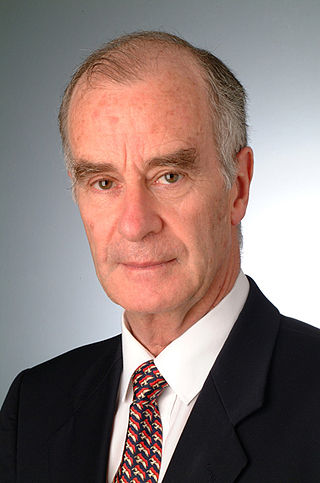
Wolf-Dieter Heiss is an Austrian neuroscientist, director of the department of neurology, University of Cologne and of department of general neurology at the Max-Planck-Institute for Neurological Research, Cologne (Germany).

The Wachau is an Austrian valley with a picturesque landscape formed by the Danube river. It is one of the most prominent tourist destinations of Lower Austria, located midway between the towns of Melk and Krems that also attracts "connoisseurs and epicureans" for its high-quality wines. It is 36 kilometres (22 mi) in length and was already settled in prehistoric times. A well-known place and tourist attraction is Dürnstein, where King Richard I of England was held captive by Leopold V, Duke of Austria. The architectural elegance of its ancient monasteries, castles and ruins combined with the urban architecture of its towns and villages, and the cultivation of vines as an important agricultural produce are the dominant features of the valley.
World Stroke Day is observed on October 29 to underscore the serious nature and high rates of stroke, raise awareness of the prevention and treatment of the condition, and ensure better care and support for survivors. On this day, organizations around the world have facilitated events emphasizing education, testing, and initiatives to improve the damaging effects of stroke worldwide. The annual event was started in 2006 by the World Stroke Organization (WSO) and the WSO declared stroke a public health emergency in 2010. The WSO now has an ongoing campaign that serves as a year-round interface for advocacy, policy, and outreach to support strides and continue progress made on World Stroke Day.
The Vienna School of Osteopathy (WSO) is a private educational institution in Austria specialising in osteopathy. Extra occupational and postgraduate trainings are offered for physiotherapists and doctors of medicine. University programmes are also open for graduates from other osteopathy schools. Up to now 550 students finished their training and currently 350 students are enrolled in training groups. Established in 1991, the WSO was the first provider of osteopathic training at academic level in Austria. It is located in Vienna, Hietzing at Frimbergergasse 6.

Vladimir Hachinski is a Canadian clinical neuroscientist and researcher based at the Schulich School of Medicine and Dentistry at Western University. He is also a Senior Scientist at London's Robarts Research Institute. His research pertains in the greatest part to stroke and dementia, the interactions between them and their joint prevention through holistic brain health promotion. He and John W. Norris helped to establish the world's first successful stroke unit at Sunnybrook Hospital in Toronto, and, by extension, helped cement stroke units as the standard of care for stroke patients everywhere. He discovered that the control of the heart by the brain is asymmetric, the fight/flight (sympathetic) response being controlled by the right hemisphere and the rest and digest (parasympathetic) response being controlled by the left hemisphere and damage to one key component can lead to heart irregularities and sudden death. This discovery has added fundamental knowledge to how the brain controls the heart and blood pressure and lays the foundation for helping prevent sudden death.
Gerald Gartlehner is an Austrian physician, health scientist and clinical epidemiologist. Considered a pioneer in the field of evidence-based medicine in Austria, Gartlehner has dedicated much of his career to establishing and promoting the use of evidence syntheses to make sound clinical and health policy decisions. Gartlehner was ranked in the top 1% of highly cited researchers in 2020, 2021, 2022 and 2023.
Ana Catarina Fonseca is a Portuguese neurologist, researcher and university teacher.

Raad Shakir CBE is Professor of Neurology at Imperial College London and a Consultant Neurologist at Charing Cross Hospital.

The Donauuferbahn is a railway line in Lower Austria. It runs 108 kilometres (67 mi) from Krems an der Donau to Mauthausen, near St. Valentin. The line is no longer contiguous; 21.9 kilometres (13.6 mi) in the middle between Weins and Weitenegg has been abandoned. Austrian Federal Railways (ÖBB) operates services on the western end; NÖVOG operates seasonal services on the eastern end.

Bruce Ovbiagele is a Nigerian-American vascular neurologist, biomedical researcher, health systems executive, academic leader, organization founder, and scientific journal editor. He serves as Professor of Neurology and Associate Dean at the University of California, San Francisco, Chief of Staff at the San Francisco VA Medical Center, Editor-in-Chief of the Journal of the American Heart Association. and Founding President of the Society for Equity Neuroscience. He is a member of the Board of Directors of the American Academy of Neurology, World Stroke Organization, and Northern California Institute of Research and Education.
References
- 1 2 3 4 5 6 7 "Universität für Weiterbildung Krems ehrt zwei Persönlichkeiten". www.donau-uni.ac.at (in German). Retrieved 2021-07-13.
- 1 2 3 4 5 6 7 "Würdigungspreis des Landes Niederösterreich an Michael Brainin". www.donau-uni.ac.at (in German). Retrieved 2021-07-13.
- ↑ "Neuer Primarius im Uniklinikum Tulln". www.noen.at (in German). 2017-05-13. Retrieved 2021-07-13.
- 1 2 3 4 5 6 7 ORCID. "Michael Brainin (0000-0001-8363-4962)". orcid.org. Retrieved 2021-07-13.
- 1 2 3 4 5 6 7 "WSO, About".
- ↑ "Team - European Master in Stroke Medicine". www.donau-uni.ac.at (in German). Retrieved 2021-07-13.
- ↑ "World Stroke Organization, Committees".
- ↑ "Cut Stroke in Half Presentation, Global Stroke Alliance".
- ↑ "Dysphagie Screening am Krankenbett von akuten Schlaganfallpatienten: Der Gugginger Schluckscreen (GUSS)". www.donau-uni.ac.at (in German). Retrieved 2021-07-13.
- ↑ "Gugging Swallowing Screen (GUSS)". DYSPHAGIE-GUSS-TRAPL (in German). Retrieved 2021-07-13.
- ↑ "Post-Stroke Checklist- Validierung für Österreich". www.donau-uni.ac.at (in German). Retrieved 2021-07-13.
- ↑ "ASPIS - Eine randomisierte, kontrollierte Multiinterventionsstudie zur Prävention von kognitivem Abbau nach Schlaganfall". www.donau-uni.ac.at (in German). Retrieved 2021-07-13.
- ↑ "Doctor Honoris Causa - Prof. Dr. Michael Brainin". www.umfcluj.ro (in Romanian). Retrieved 2021-07-13.
- 1 2 Mostviertel, Veröffentlicht von Redaktion | 16 01 2016 | (2016-01-16). "Primarius Brainin zum Präsidenten der Welt-Schlaganfall-Organisation gewählt". noe.news (in German). Retrieved 2021-07-13.
{{cite web}}: CS1 maint: numeric names: authors list (link) - ↑ "Univ.-Prof. Michael Brainin wird Ehrenmitglied der brasilianischen Schlaganfallgesellschaft". www.donau-uni.ac.at (in German). Retrieved 2021-07-13.
- ↑ "Ehrenzeichen an Barbara Schwarz, Sixtus Lanner und Michael Brainin verliehen". OTS.at (in German). Retrieved 2021-07-13.
- ↑ "World Hypertension Day 2022". World Stroke Organization. Retrieved 2022-12-07.
- ↑ https://Members.euro-acad.eu
- ↑ "Academy of Europe: List of Members". ae-info.org. Retrieved 2024-09-04.
