
Ricaniidae is a family of planthopper insects, containing over 400 species worldwide. The highest diversity is in tropical Africa and Asia and in Australia, with a few species occurring in the Palearctic and Neotropical realms. It is one of the smaller families in the planthopper superfamily Fulgoroidea.
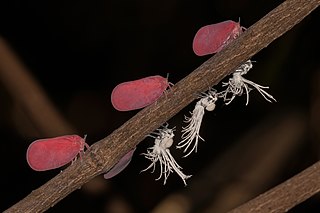
Flatidae are a family of fulgoroid planthoppers. They are cosmopolitan in distribution and are distinguished from others in the superfamily by a combination of characters. Like all other planthoppers, they suck phloem sap of plants. Some species are known to communicate with vibrations through the plant stems. Communication may be with mates, or with ants that tend the nymphs, protecting them and gathering honeydew secretions. Adults of some species have brightly coloured forewings which are tougher and known as tegmina unlike the membranous hindwings which are used for flight. Although a few can be identified by their coloration, most species requires dissection and examination under a microscope with access to literature on already described species.
Oryxa is a genus of planthoppers in the hemipteran family Flatidae. They live on the islands of Borneo and Sumatra, and in Malaysia.

Issidae is a family of planthoppers described by Spinola in 1839, belonging to the order Hemiptera, suborder Auchenorrhyncha superfamily Fulgoroidea.

Bythopsyrna circulata is a species of Asian planthoppers belonging to the family Flatidae.
Bythopsyrna is a genus of Asian planthoppers belonging to the family Flatidae.

Gergithus is a genus of planthoppers in the family Issidae. Like all planthoppers, adults feed on plant sap and are capable of escaping by leaping. The genus like other members in the tribe appears somewhat rounded and beetle-like, in some cases, with a mimetic resemblance to ladybird beetles. About 60 species are known in the genus and they are distributed in the Indomalayan and Palearctic Realms.
The Elicini are a tribe of planthoppers in the family Tropiduchidae. The type genus is Elica.

Adelidoria glauca is an insect species from Sri Lanka that was first described by William Forsell Kirby in 1891. It is the only species of the genus Adelidoria, which is related to the genus Cerynia, but differs in the neuration, etc.

Cerynia is a genus of flatid planthoppers found mainly in Southeast Asian subtropical and tropical forests, with records from China, Vietnam, Borneo and the Philippines ; it is typical of the tribe Ceryniini.

Hemisphaerius is a genus of bugs in the family Issidae and tribe Hemisphaeriini. Species resemble the closely related Gergithus: but are differentiated in this genus by the size of the frons and shorter legs.

The Hemisphaeriinae are a subfamily of bugs in the family Issidae, based on the type genus Hemisphaerius. Species in 107 genera have been recorded in most continents, but the greatest diversity appears to be in South-East Asia.

The Flatinae are a subfamily of planthoppers, erected by Maximilian Spinola in 1839. Genera have been recorded from all continents except Antarctica: especially in tropical and subtropical regions.
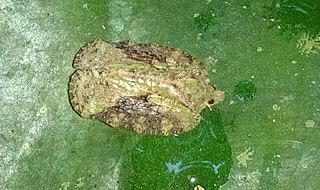
Atracis is a genus of flatid planthopper with around 60 species distributed in the Oriental Realm and tropical Africa.
Tropidocephala is a genus of planthopper bugs, typical of the tribe Tropidocephalini. Species have been recorded from Africa, Europe and Asia.

Tambinia is a genus of planthoppers (Hemiptera) in the family Tropiduchidae and typical of the tribe Tambiniini ; species are found in Australia and Southeast Asia.
Tropiduchus is a genus of planthoppers, recorded from Africa and Malesia.

The Menoscinae are a subfamily of planthoppers in the family Lophopidae erected by Leopold Melichar in 1915. Most genera are recorded from SE Asia through to Australia, but the single genus in tribe Carrioniini is Neotropical.
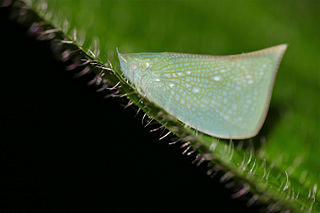
Lawana is a genus of planthoppers in the family Flatidae, erected by William Lucas Distant in 1906. In 1923, Leopold Melichar confirmed placement of this genus in tribe Flatini and subtribe Lawanina. Species are recorded from tropical Africa and Asia.
Flata is the type genus of planthoppers in the family Flatidae and tribe Flatini, erected by Johan Christian Fabricius in 1798. Species are recorded from subtropical and tropical Asia including India, China, Indochina and Malesia.

