Picciano

Last updated
Picciano
Comune di Picciano
Picciano-4.jpg
View of Picciano from the east
Italy provincial location map 2016.svg
Red pog.svg
Picciano
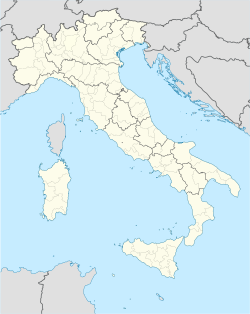
Location of Picciano in Italy
Italy Abruzzo location map.svg
Red pog.svg
Picciano
Picciano (Abruzzo)
Coordinates: 42°28′N13°59′E / 42.467°N 13.983°E / 42.467; 13.983
Country Italy
Region Abruzzo
Province Pescara (PE)
Frazioni Piccianello, Pagliari, Colletti, Le Piane, Incotte, Casette, Colli, Fontanelle.
Government
  MayorMarino Marini
Area
[1]
  Total
7 km2 (2.7 sq mi)
Elevation
153 m (502 ft)
Population
 (December 31, 2006) [2]
  Total
1,398
  Density200/km2 (520/sq mi)
Demonym Piccianesi
Time zone UTC+1 (CET)
  Summer (DST) UTC+2 (CEST)
Postal code
65010
Dialing code 085
Patron saintSan Vincenzo Ferreri
Saint day1st Sunday after Easter

Picciano is a village and comune in Italy in the Province of Pescara, within the Abruzzo region. Its population at the end of 2006 was 1,398.

Contents

History

Picciano is first mentioned in 1049 when Bernardo Earl of Penne, with the Charta Offersionis, gave fields and buildings to build a Benedictine abbey in its hills. This is the first indication of the existence of a town called Picciano. and could be considered its terminus ante quem.

Many legends are known about the origin of the name "Picciano", the most believable talks about shepherds devoted to the Goddess Pithia; other variants of the name, found in the Charta Convenientiae, is "Piczano" so that perhaps the name of the town can be dated back to the Early Middle Age, avoiding conjectures about Roman origins.

One of the two marble Lions coming from the ancient Abbey. Leone-1.jpg
One of the two marble Lions coming from the ancient Abbey.
S. Maria del Soccorso Church, Picciano, Facade Santa Maria del Soccorso-1.jpg
S. Maria del Soccorso Church, Picciano, Façade

Images

References

  1. "Superficie di Comuni Province e Regioni italiane al 9 ottobre 2011". Italian National Institute of Statistics. Retrieved 16 March 2019.
  2. "Popolazione Residente al 1° Gennaio 2018". Italian National Institute of Statistics. Retrieved 16 March 2019.