Related Research Articles
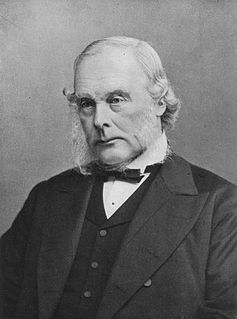
Joseph Lister, 1st Baron Lister,, known between 1883 and 1897 as Sir Joseph Lister, Bt., was a British surgeon and a pioneer of antiseptic surgery.

Sir Magdi Habib Yacoub, is an Egyptian-British retired professor of cardiothoracic surgery at Imperial College London, best known for his early work in repairing heart valves with surgeon Donald Ross, adapting the Ross procedure, where the diseased aortic valve is replaced with the person's own pulmonary valve, devising the arterial switch operation (ASO) in transposition of the great arteries, and establishing the heart transplantation centre at Harefield Hospital in 1980 with a heart transplant for Derrick Morris, who at the time of his death was Europe's longest-surviving heart transplant recipient. Yacoub subsequently performed the UK's first combined heart and lung transplant in 1983.

Obstructed labour, also known as labour dystocia, is when the baby does not exit the pelvis during childbirth due to being physically blocked, despite the uterus contracting normally. Complications for the baby include not getting enough oxygen which may result in death. It increases the risk of the mother getting an infection, having uterine rupture, or having post-partum bleeding. Long term complications for the mother include obstetrical fistula. Obstructed labour is said to result in prolonged labour, when the active phase of labour is longer than twelve hours.

Global health is the health of populations in the global context; it has been defined as "the area of study, research and practice that places a priority on improving health and achieving equity in health for all people worldwide". Problems that transcend national borders or have a global political and economic impact are often emphasized. Thus, global health is about worldwide health improvement, reduction of disparities, and protection against global threats that disregard national borders. Global health is not to be confused with international health, which is defined as the branch of public health focusing on developing nations and foreign aid efforts by industrialized countries. Global health can be measured as a function of various global diseases and their prevalence in the world and threat to decrease life in the present day.
Sir Richard Peto is an English statistician and epidemiologist who is Professor of Medical Statistics and Epidemiology at the University of Oxford, England.
Bruce A. Reitz is an American cardiothoracic surgeon, best known for leading the first combined heart-lung transplantation in 1981 with pioneer heart transplant surgeon Norman Shumway. He obtained an undergraduate degree at Stanford University a medical degree at Yale Medical School and completed an internship at Johns Hopkins Hospital (1971) and residencies and fellowships at Stanford University Hospital the National Institutes of Health (1974). He joined the surgical faculty at Stanford University (1978) then became chief of cardiac surgery at Johns Hopkins University (1982–92) and Chairman of the Department of Cardiothoracic Surgery at Stanford (1992–2005). In 1995 he conducted another pioneering operation: the first Heartport procedure, using a device that allows minimally invasive coronary bypass and valve operations. Reitz also played a major role in the resident education program at Stanford, which he reorganized and maintained.
Aleck William Bourne was a prominent British gynaecologist and writer, known for his 1938 trial, a landmark case, in which he was prosecuted for performing a termination of pregnancy on a 14-year-old rape victim. He was subsequently charged with procuring an illegal abortion but was acquitted. He later became a pro-life activist.

Jaques-Louis Reverdin was a Swiss surgeon who was a native of Cologny.
Sir Rory Edwards Collins FMedSci FRS is a British physician who is Professor of Medicine and Epidemiology at the Clinical Trial Service Unit within the University of Oxford, the head of the Nuffield Department of Population Health and a Fellow of Green Templeton College, Oxford. His work has been in the establishment of large-scale epidemiological studies of the causes, prevention and treatment of heart attacks, other vascular disease, and cancer, while also being closely involved in developing approaches to the combination of results from related studies ("meta-analyses").
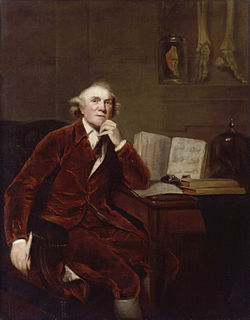
The Hunterian Society, founded in 1819 in honour of the Scottish surgeon John Hunter (1728–1793), is a society of physicians and dentists based in London.
ResearcherID is an identifying system for scientific authors. The system was introduced in January 2008 by Thomson Reuters.
The Bradshaw Lectures are prestigious lectureships given at the invitation of the Royal College of Physicians and the Royal College of Surgeons of England.
The Hunterian Oration is a lecture of the Royal College of Surgeons of England. The oration was founded in 1813 by the executors of the will of pioneering surgeon John Hunter, his nephew Dr Matthew Baillie and his brother-in-law Sir Everard Home, who made a gift to the College to provide an annual oration and a dinner for Members of the Court of Assistants and others. In 1853, the oration and dinner became biennial; it is held on alternate years in rotation with the Bradshaw Lecture. It is delivered by a Fellow or Member of the college on 14 Feb, Hunter's birthday, "such oration to be expressive of the merits in comparative anatomy, physiology, and surgery, not only of John Hunter, but also of all persons, as should be from time to time deceased, whose labours have contributed to the improvement or extension of surgical science". The RCS Oration is not to be confused with the Hunterian Society Oration given at the Hunterian Society.

Walter Whitehead, FRCSE, FRSE, was a surgeon at various hospitals in Manchester, England, and held the chair of Clinical Surgery at the Victoria University of Manchester. He was president of the British Medical Association in 1902. He once claimed that knowledge of anatomy was an impediment to being a good surgeon but was himself a bold, innovative practitioner of international repute. His procedure for excision of the tongue using scissors and his formulation of a related ointment became a standard treatment, as did a procedure he developed for the treatment of haemorrhoids.

Nadine Rena Caron FACS, FRCSC,, is a Canadian surgeon. She is notable for being the first Canadian female general surgeon of First Nations descent (Ojibway) as well as the first female First Nations student to graduate from University of British Columbia's medical school.

William Francis Victor Bonney FRCP FRCS was a prominent British gynaecological surgeon. He was described by Geoffrey Chamberlain as "a primary influence on world gynaecology in the years between the wars".
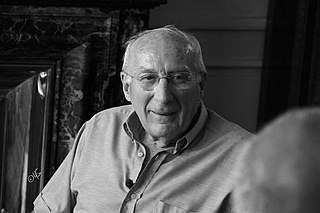
Francis Fontan was a French cardiologist and cardiothoracic surgeon best known for developing the Fontan procedure, a form of cardiac surgery used to treat some forms of congenital heart disease.
James Johnston Mason Brown OBE, FRCSEd was a Scottish paediatric surgeon. During World War II he served as a surgical specialist with the 8th Army in North Africa and Italy and was awarded the OBE for this service. As surgeon-in-chief at the Royal Hospital for Sick Children in Edinburgh, he edited the major textbook The Surgery of Childhood. He was the joint founder of the Scottish Surgical Paediatric Society and a founder member of the British Association of Paediatric Surgeons (BAPS), of which he became president. He was elected President of the Royal College of Surgeons of Edinburgh (RCSEd) in 1962 but died in office aged 56 years.

Thomas Morstede was an esquire and English surgeon who served the three successive kings, Henry IV, Henry V and Henry VI of England. He was described by Theodore Beck as the "most eminent English surgeon of the fifteenth century".
The Medical Art Society (MAS), is a British society for doctors, dentists and veterinary surgeons who draw, paint and sculpt. It was established in 1934 by a group of doctors, including the plastic surgeon Sir Harold Gillies and the physiologist Sir Leonard Hill.
References
- ↑ Fariña-Pérez, Luis A. (May 2010). "Jaques-Louis Reverdin (1842-1929): the surgeon and the needle". Archivos Espanoles de Urologia. 63 (4): 269–274. doi: 10.4321/s0004-06142010000400004 . ISSN 1576-8260. PMID 20508302.(subscription required)
- ↑ Bonney, Victor (June 1917). "On the sole use of the Reverdin needle". The Lancet . 189 (4896): 994–996. doi:10.1016/s0140-6736(01)28955-7. ISSN 0140-6736.(subscription required)
- ↑ Percival, R. (6 June 1952). "Modification of Bonney-Reverdin needle-holder". The Lancet. 2 (6732): 469. doi:10.1016/s0140-6736(52)90250-x. ISSN 0140-6736. PMID 14956046.
 | This article related to medical equipment is a stub. You can help Wikipedia by expanding it. |