Stephen P. Hubbell is an American ecologist on the faculty of the University of California, Los Angeles. He is author of the unified neutral theory of biodiversity and biogeography (UNTB), which seeks to explain the diversity and relative abundance of species in ecological communities not by niche differences but by stochastic processes among ecologically equivalent species. Hubbell is also a senior staff scientist at the Smithsonian Tropical Research Institute in Balboa, Panama. He is also well known for tropical forest studies. In 1980, he and Robin B. Foster of the Field Museum in Chicago, launched the first of the 50 hectare forest dynamics studies on Barro Colorado Island in Panama. This plot became the flagship of a global network of large permanent forest dynamics plots, all following identical measurement protocols. This global network now has more than 70 plots in 28 countries, and these plots contain more than 12000 tree species and 7 million individual trees that are tagged, mapped, and monitored long-term for growth, survival and recruitment. The Center for Tropical Forest Science coordinates research across global network of plots through the Smithsonian Tropical Research Institute. The program has expanded into the temperate zone, and is now known as the Forest Global Earth Observatory Network or ForestGEO.
Michael Patrick Hassell is a British biologist, noted for his work in population ecology, especially in insects. He is a professor at Imperial College London.
Richard Randolph "Randy" Olson is a marine biologist-turned-filmmaker who earned his Ph.D. in Biology from Harvard University (1984) and became a tenured professor of marine biology at the University of New Hampshire (1992) before changing careers by moving to Hollywood and entering film school at the University of Southern California.

Theodore Holmes Bullock is one of the founding fathers of neuroethology. During a career spanning nearly seven decades, this American academic was esteemed both as a pioneering and influential neuroscientist, examining the physiology and evolution of the nervous system across organizational levels, and as a champion of the comparative approach, studying species from nearly all major animal groups—coelenterates, annelids, arthropods, echinoderms, molluscs, and chordates.

Philip James DeVries is a tropical biologist whose research focuses on insect ecology and evolution, especially butterflies. His best-known work includes symbioses between caterpillars, ants and plants, and community level biodiversity of rainforest butterflies.
Alan Matthew Hastings is a mathematical ecologist and distinguished professor in the Department of Environmental Science and Policy at the University of California, Davis. In 2005 he became a fellow of the American Academy of Arts and Sciences and in 2006 he won the Robert H. MacArthur Award.
Bruce A. Menge is an American ocean ecologist. He has spent over forty years studying the processes that drive the dynamics of natural communities. His fields of interest include: structure and dynamics of marine meta-ecosystems, responses of coastal ecosystems to climate change, linking benthic and inner shelf pelagic communities, the relationship between scale and ecosystem dynamics, bottom-up and top-down control of community structure, recruitment dynamics, ecophysiology and sub-organismal mechanisms in environmental stress models, larval transport and connectivity, impact of ocean acidification on marine ecosystems, controls of productivity, population, community, and geographical ecology. He settled on two career goals: carrying out experiment-based field research to investigate the dynamics of rocky intertidal communities, focusing on species interactions and environmental context and how this might shape a community, and using the resulting data to test and modify theories on how communities were organized.
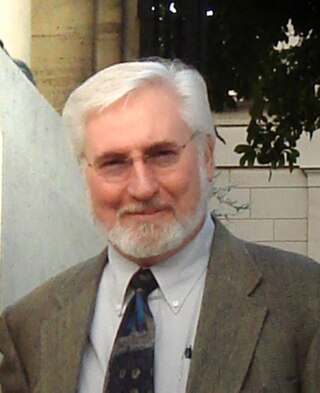
C. Richard (Dick) Tracy is an American biologist, a professor of biology at the University of Nevada, Reno.
Alexander Sokoloff was a biologist and geneticist who conducted genetic research on the red flour beetle Tribolium castaneum, a world-wide pest species. From 1965 to 1990 he was a Professor of Biology at California State University, San Bernardino, serving for part of that time as Department Chair.
Raymond Carroll Osburn was an American zoologist.
Marcus William Feldman is the Burnet C. and Mildred Finley Wohlford Professor of Biological Sciences, director of the Morrison Institute for Population and Resource Studies, and co-director of the Center for Computational, Evolutionary and Human Genomics (CEHG) at Stanford University. He is an Australian-born mathematician turned American theoretical biologist, best known for his mathematical evolutionary theory and computational studies in evolutionary biology, and for originating with L. L. Cavalli-Sforza the theory of cultural evolution.

Richard Marshall Eakin, was an American zoologist and professor at the University of California, Berkeley. He was widely known for portraying prominent historical scientists during some of his lectures; dressing in costume and speaking in character to entertain and inform his students. A 1953 Guggenheim fellow, he wrote several books and more than 200 scientific papers. His research focused on eyes and vision in animals, especially the parietal eye or "third eye" of vertebrates, as well as animal embryology. He served as chairman of the UC Berkeley Department of Zoology for over 10 years, was elected president of the Western Society of Naturalists and American Society of Zoologists, and was a fellow of the California Academy of Sciences.
Donald Putnam Abbott was an invertebrate zoologist and professor of biology at the Hopkins Marine Station of Stanford University from 1950 through 1982. He earned his Ph.D. under S. F. Light and Ralph Smith at the University of California, Berkeley. Abbott was an expert on ascidian tunicates and an authority on all forms of invertebrate animals. He was an influential teacher, researcher, author, and student mentor. His wife, Isabella Abbott, was a world authority on marine algae of the Pacific.
Professor Helene Denise Marsh is an Australian scientist who has provided research in the field of Environmental Science, more specifically Zoology and Ecology. The focal point of her research has been the biology of dugongs, with particular foci in the areas of population ecology, history, reproduction, diet, and movements. She is the Dean of Graduate Research Studies and the Professor of Environmental Science at James Cook University in Queensland, Australia, and also a Distinguished Professor in the College of Marine and Environmental Science. Marsh is also a program leader for the Marine and Tropical Research Science Facility. In 2015 she was elected a Fellow of both the Australian Academy of Science (FAA), and the Australian Academy of Technological Sciences and Engineering (FTSE). She was appointed Officer of the Order of Australia (AO) in the 2021 Australia Day Honours.
Jonathan B. Losos is an American evolutionary biologist and Herpetologist.
Shandelle Marie Henson is an American mathematician and mathematical biologist known for her work in population dynamics. She is a professor of mathematics and ecology at Andrews University in Berrien Springs, Michigan, and the editor-in-chief of the journal Natural Resource Modeling.

Daniel Oro is a Spanish ecologist working as Professor of Research at CEAB-CSIC.
Robert Kent Trench was an American Biologist who was a professor at the University of California, Santa Barbara. His research considered corals and symbiotic algae, with a focus on the adaption of zooxanthellae. He was awarded the 1994 International Society of Endocytobiology Miescher-Ishida Prize.
John Norton Thompson is an American evolutionary biologist.
Priyanga Amarasekare is a Professor of Ecology and Evolutionary Biology at the University of California, Los Angeles (UCLA) and distinguished Fellow of the Ecological Society of America (ESA). Her research is in the fields of mathematical biology and trophic ecology, with a focus on understanding patterns of biodiversity, species dispersal and the impacts of climate change. She received a 2021 Guggenheim Fellowship and received ESA's Robert H. MacArthur Award in 2022.

