Related Research Articles
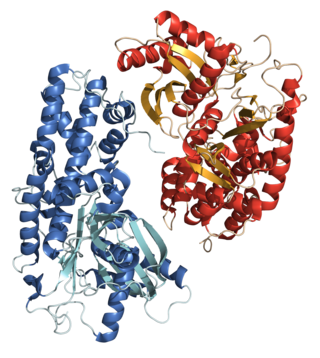
A hexokinase is an enzyme that phosphorylates hexoses, forming hexose phosphate. In most organisms, glucose is the most important substrate for hexokinases, and glucose-6-phosphate is the most important product. Hexokinase possesses the ability to transfer an inorganic phosphate group from ATP to a substrate.
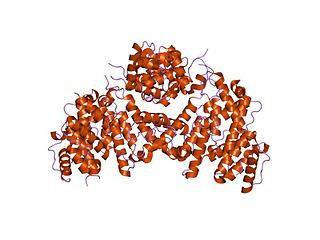
Fimbrin also known as is plastin 1 is a protein that in humans is encoded by the PLS1 gene. Fimbrin is an actin cross-linking protein important in the formation of filopodia.
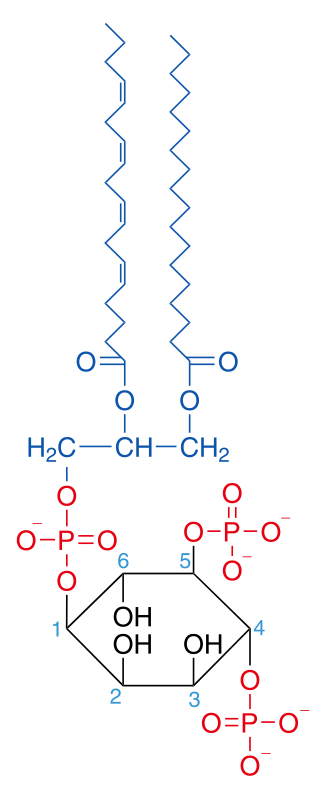
Phosphatidylinositol 4,5-bisphosphate or PtdIns(4,5)P2, also known simply as PIP2 or PI(4,5)P2, is a minor phospholipid component of cell membranes. PtdIns(4,5)P2 is enriched at the plasma membrane where it is a substrate for a number of important signaling proteins. PIP2 also forms lipid clusters that sort proteins.

Amphiphysin is a protein that in humans is encoded by the AMPH gene.
Synaptojanin is a protein involved in vesicle uncoating in neurons. This is an important regulatory lipid phosphatase. It dephosphorylates the D-5 position phosphate from phosphatidylinositol (3,4,5)-trisphosphate (PIP3) and Phosphatidylinositol (4,5)-bisphosphate(PIP2). It belongs to family of 5-phosphatases, which are structurally unrelated to D-3 inositol phosphatases like PTEN. Other members of the family of 5'phosphoinositide phosphatases include OCRL, SHIP1, SHIP2, INPP5J, INPP5E, INPP5B, INPP5A and SKIP.

FYVE, RhoGEF and PH domain-containing protein 1 (FGD1) also known as faciogenital dysplasia 1 protein (FGDY), zinc finger FYVE domain-containing protein 3 (ZFYVE3), or Rho/Rac guanine nucleotide exchange factor FGD1 is a protein that in humans is encoded by the FGD1 gene that lies on the X chromosome. Orthologs of the FGD1 gene are found in dog, cow, mouse, rat, and zebrafish, and also budding yeast and C. elegans. It is a member of the FYVE, RhoGEF and PH domain containing family.

Epidermal growth factor receptor substrate 15 is a protein that in humans is encoded by the EPS15 gene.

Intersectin-1 is a protein that, in humans, is encoded by the ITSN1 gene.

Dynamin-1 is a protein that in humans is encoded by the DNM1 gene.

Src homology 2 (SH2) domain containing inositol polyphosphate 5-phosphatase 1(SHIP1) is an enzyme with phosphatase activity. SHIP1 is structured by multiple domain and is encoded by the INPP5D gene in humans. SHIP1 is expressed predominantly by hematopoietic cells but also, for example, by osteoblasts and endothelial cells. This phosphatase is important for the regulation of cellular activation. Not only catalytic but also adaptor activities of this protein are involved in this process. Its movement from the cytosol to the cytoplasmic membrane, where predominantly performs its function, is mediated by tyrosine phosphorylation of the intracellular chains of cell surface receptors that SHIP1 binds. Insufficient regulation of SHIP1 leads to different pathologies.
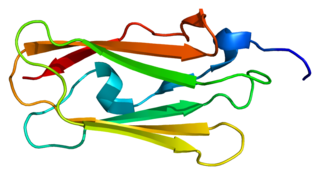
Filamin-C (FLN-C) also known as actin-binding-like protein (ABPL) or filamin-2 (FLN2) is a protein that in humans is encoded by the FLNC gene. Filamin-C is mainly expressed in cardiac and skeletal muscles, and functions at Z-discs and in subsarcolemmal regions.

Endophilin-A1 is a protein that in humans is encoded by the SH3GL2 gene.
PIKfyve, a FYVE finger-containing phosphoinositide kinase, is an enzyme that in humans is encoded by the PIKFYVE gene.

Coatomer subunit beta is a protein that is encoded by the COPB2 gene in humans.
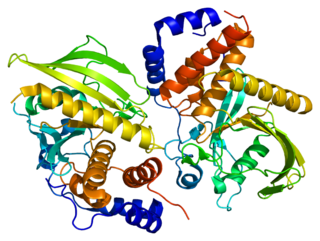
Tyrosine-protein phosphatase non-receptor type 9 is an enzyme that in humans is encoded by the PTPN9 gene.
The Akt signaling pathway or PI3K-Akt signaling pathway is a signal transduction pathway that promotes survival and growth in response to extracellular signals. Key proteins involved are PI3K and Akt.
The EHD protein family is a relatively small group of proteins which have been shown to play a role in several physiological functions, the most notable being the regulation of endocytotic vesicles. This family is recognized by its highly conserved EH domain, a structural motif that has been shown to facilitate specificity and interaction between protein and ligand. The four mammalian EHD proteins that have been classified are: EHD1, EHD2, EHD3, and EHD4.

Rho-associated protein kinase (ROCK) is a kinase belonging to the AGC family of serine-threonine specific protein kinases. It is involved mainly in regulating the shape and movement of cells by acting on the cytoskeleton.
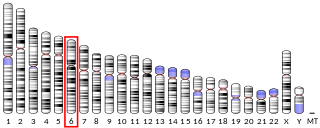
Polyphosphoinositide phosphatase also known as phosphatidylinositol 3,5-bisphosphate 5-phosphatase or SAC domain-containing protein 3 (Sac3) is an enzyme that in humans is encoded by the FIG4 gene. Fig4 is an abbreviation for Factor-Induced Gene.

In molecular biology, the cyclase-associated protein family (CAP) is a family of highly conserved actin-binding proteins present in a wide range of organisms including yeast, flies, plants, and mammals. CAPs are multifunctional proteins that contain several structural domains. CAP is involved in species-specific signalling pathways. In Drosophila, CAP functions in Hedgehog-mediated eye development and in establishing oocyte polarity. In Dictyostelium discoideum, CAP is involved in microfilament reorganisation near the plasma membrane in a PIP2-regulated manner and is required to perpetuate the cAMP relay signal to organise fruitbody formation. In plants, CAP is involved in plant signalling pathways required for co-ordinated organ expansion. In yeast, CAP is involved in adenylate cyclase activation, as well as in vesicle trafficking and endocytosis. In both yeast and mammals, CAPs appear to be involved in recycling G-actin monomers from ADF/cofilins for subsequent rounds of filament assembly. In mammals, there are two different CAPs that share 64% amino acid identity.
References
- ↑ Nemoto Y, Arribas M, Haffner C, DeCamilli P (December 1997). "Synaptojanin 2, a novel synaptojanin isoform with a distinct targeting domain and expression pattern". The Journal of Biological Chemistry. 272 (49): 30817–21. doi: 10.1074/jbc.272.49.30817 . PMID 9388224.
- ↑ Cox DN, Chao A, Baker J, Chang L, Qiao D, Lin H (December 1998). "A novel class of evolutionarily conserved genes defined by piwi are essential for stem cell self-renewal". Genes & Development. 12 (23): 3715–27. doi:10.1101/gad.12.23.3715. PMC 317255 . PMID 9851978.
 | This membrane protein–related article is a stub. You can help Wikipedia by expanding it. |