
Thomas Vernon Wollaston was an English entomologist and malacologist, becoming especially known for his studies of Coleoptera inhabiting several North Atlantic archipelagoes. He was well-placed socially. His religious beliefs effectively prevented him from supporting Charles Darwin's theories after 1859, but Darwin remained a close friend. Wollaston supported the theory that continental lands had once extended outward farther to encompass some of the island groups he studied.
Francis Wollaston was a British astronomer and Church of England priest. He was elected a Fellow of the Royal Society in 1769.

Pupillidae is a family of mostly minute, air-breathing, land snails, terrestrial pulmonate gastropod mollusks or micromollusks in the superfamily Pupilloidea.
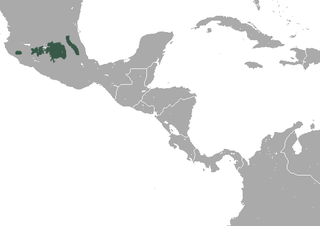
The Central Mexican broad-clawed shrew is a species of mammal in the family Soricidae. It is found in the highlands above 2000 m in the Mexican states of Colima, Hidalgo, Jalisco, Michoacán, Mexico, and Puebla, Morelos, and in the Mexican Federal District

Masoreus is a genus of ground beetle native to the Palearctic, the Near East and North Africa. It contains the following species:
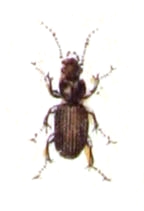
Olisthopus is a genus of ground beetle native to the Palearctic, the Near East and North Africa. It contains the following species:
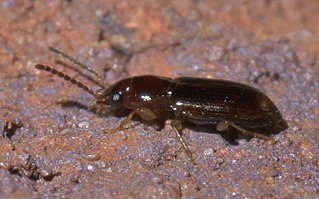
Bradycellus is a genus in the beetle family Carabidae. There are more than 120 described species in Bradycellus.

Philorhizus is a genus in the beetle family Carabidae. There are more than 50 described species in Philorhizus.
Zargus is a genus of in the beetle family Carabidae. There are about six described species in Zargus.
Trechus cautus is a species of ground beetle in the subfamily Trechinae. It was described by Thomas Vernon Wollaston in 1854.
Trechus custos is a species of ground beetle in the subfamily Trechinae. It was described by Thomas Vernon Wollaston in 1854.
Trechus dilutus is a species of ground beetle in the subfamily Trechinae. It was described by Thomas Vernon Wollaston in 1854.
Trechus flavomarginatus is a species of ground beetle in the subfamily Trechinae. It was described by Thomas Vernon Wollaston in 1854.
Trechus nigrocruciatus is a species of ground beetle in the subfamily Trechinae. It was described by Thomas Vernon Wollaston in 1854.
Trechus umbricola is a species of ground beetle in the subfamily Trechinae. It was described by Thomas Vernon Wollaston in 1854.

Cossoninae is a true weevil subfamily in the family Curculionidae.
Sphaericus is a genus of spider beetles in the family Ptinidae. There are more than 30 described species in Sphaericus.

Laparocerus is a genus of weevils of the family Curculionidae with 264 species and subspecies practically exclusive to central Macaronesia: the archipelagos of Madeira, Salvages and the Canaries. The two species present in western Morocco are attributable to a retro-colonisation from the Canary Islands to Africa. Over some nine million years, this lineage of Entiminae has generated some twenty-four monophyletic branches (subgenera) as a result of successive adaptive and geographic radiations, which have been significantly influenced by the geological dynamics of construction and dismantling typical of volcanic islands.
