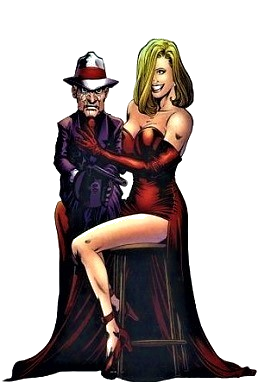
Arnold Wesker with his dummy, Scarface, in Detective Comics vol. 1, 584 (March 1988) Art by Norm Breyfogle (pencil), Steve Mitchell (ink), and Adrienne Roy (color)
A supervillain or criminal mastermind is a variant of the villainous stock character that is commonly found in American comic books, usually possessing superhuman abilities. A supervillain is the antithesis of a superhero.
A comic book or comicbook, also called comic magazine or simply comic, is a publication that consists of comics art in the form of sequential juxtaposed panels that represent individual scenes. Panels are often accompanied by descriptive prose and written narrative, usually, dialog contained in word balloons emblematic of the comics art form. Although comics has some origins in 18th century Japan, comic books were first popularized in the United States and the United Kingdom during the 1930s. The first modern comic book, Famous Funnies, was released in the U.S. in 1933 and was a reprinting of earlier newspaper humor comic strips, which had established many of the story-telling devices used in comics. The term comic book derives from American comic books once being a compilation of comic strips of a humorous tone; however, this practice was replaced by featuring stories of all genres, usually not humorous in tone.
DC Comics, Inc. is an American comic book publisher. It is the publishing unit of DC Entertainment, a subsidiary of Warner Bros. since 1967. DC Comics is one of the largest and oldest American comic book companies, and produces material featuring numerous culturally iconic heroic characters including: Superman, Batman, Wonder Woman, Green Lantern, the Flash, Aquaman, Martian Manhunter, Shazam, Green Arrow, Black Canary, Cyborg, Robin/Nightwing, Batgirl, Supergirl, the Atom and Blue Beetle.
Andrew Sellon portrays a character named Arthur Penn in the television series Gotham. In the fifth season he finds the dummy Scarface and becomes the Ventriloquist.
Gotham is an American crime drama television series developed by Bruno Heller, produced by Warner Bros. Television and based on characters published by DC Comics and appearing in the Batman franchise, primarily those of James Gordon and Bruce Wayne. The series premiered on Fox on September 22, 2014, and concluded on April 25, 2019. The series stars Ben McKenzie as Jim Gordon and David Mazouz as Bruce Wayne. The series was originally intended to focus only on Gordon's early days with the Gotham City Police Department, but they subsequently included the Bruce Wayne character and the origin stories of several Batman villains, including Penguin, Riddler, Catwoman, Poison Ivy, Scarecrow, Mr. Freeze, Hugo Strange, Solomon Grundy, Ra's al Ghul, Nyssa al Ghul, Bane and the Joker.
The fifth and final season of the American television series Gotham, based on characters from DC Comics related to the Batman franchise, revolves around the characters of James Gordon and Bruce Wayne. The season is produced by Primrose Hill Productions, DC Entertainment, and Warner Bros. Television, with John Stephens serving as the showrunner. The season was inspired and adapted elements from the comic book storylines of Batman: No Man's Land and Batman: Zero Year. The subtitle for the season is Legend of the Dark Knight.
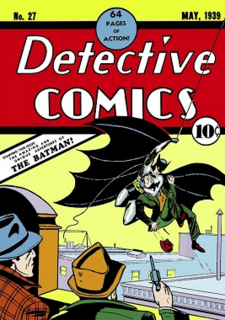
Detective Comics is an American comic book series published by DC Comics. The first volume, published from 1937 to 2011, is best known for introducing the superhero Batman in Detective Comics #27.
John Wagner is an American-born British comics writer. Alongside Pat Mills, he helped revitalise British comics in the 1970s, and continues to be active in the British comics industry, occasionally also working in American comics. He is best known as the co-creator, with artist Carlos Ezquerra, of the character Judge Dredd.
Alan Grant is a Scottish comic book writer known for writing Judge Dredd in 2000 AD as well as various Batman titles from the late 1980s to the early 2000s. He is the co-creator of the characters Anarky, Victor Zsasz, and the Ventriloquist.
In Detective Comics #827 (March 2007), a new Ventriloquist, Peyton Riley, was introduced by Paul Dini and Don Kramer.
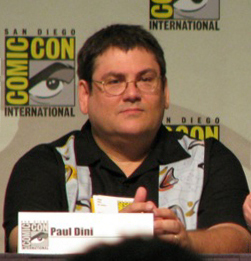
Paul Dini is an American animator and comic creator. He is best known as a producer and writer for several Warner Bros. Animation/DC Comics animated series, including Tiny Toon Adventures, Batman: The Animated Series, Superman: The Animated Series, The New Batman/Superman Adventures, Batman Beyond, and Duck Dodgers. He developed and scripted Krypto the Superdog and contributed scripts to Transformers, Animaniacs, Freakazoid and Static Shock. After leaving Warner Bros. Animation in early 2004, Dini went on to write and story edit the popular ABC adventure series Lost. He has written a number of comic books for DC Comics, including Harley Quinn and Superman: Peace on Earth. October 2010 saw the debut of Tower Prep, a new live action/drama series Dini created for Cartoon Network. It was announced that after two decades of doing DC-related animated projects, Paul Dini had gone over to Marvel to serve as a writer and producer for Ultimate Spider-Man and Hulk and the Agents of S.M.A.S.H..
Don Kramer is an American comics artist. He has worked for both Marvel and DC, as well as on independent projects. Titles at DC include a Doctor Fate miniseries with Chris Golden, JSA with Geoff Johns and a run on Detective Comics with Paul Dini. He was also the artist for Nightwing with Peter Tomasi, the JSA vs Kobra mini-series with Eric Trautmann and J. Michael Straczynski's run on Wonder Woman.
In September 2011, The New 52 rebooted DC's continuity. In this new timeline, a new Ventriloquist was introduced named Shauna Belzer, first appearing in Batgirl #20 (July 2013), as created by Gail Simone and Fernando Pasarin.
The New 52 was the 2011 revamp and relaunch by DC Comics of its entire line of ongoing monthly superhero comic books. Following the conclusion of the "Flashpoint" crossover storyline, DC cancelled all of its existing titles and debuted 52 new series in September 2011 with new first issues. Among the renumbered series were Action Comics and Detective Comics, which had retained their original numbering since the 1930s.
Gail Simone is an American writer of comic books. Best known for penning DC's Birds of Prey, her other notable works include Secret Six, Welcome to Tranquility, The All-New Atom, Deadpool, and Wonder Woman.
Fictional character biography
Arnold Wesker
A meek, quiet man named Arnold Wesker (the first Ventriloquist) plans and executes his crimes through a dummy named Scarface, with the dress and persona of a psychopath-like 1920s gangster (complete with pinstripe suit, cigar, and Tommy gun). His name comes from the nickname of Al Capone, after whom Scarface is modeled.
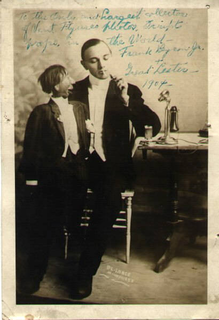
Ventriloquism, or ventriloquy, is an act of stagecraft in which a person changes his or her voice so that it appears that the voice is coming from elsewhere, usually a puppeteered prop, known as a "dummy". The act of ventriloquism is ventriloquizing, and the ability to do so is commonly called in English the ability to "throw" one's voice.
A gangster is a criminal who is a member of a gang. Some gangs are considered to be part of organized crime. Gangsters are also called mobsters, a term derived from mob and the suffix -ster. Gangs provide a level of organization and resources that support much larger and more complex criminal transactions than an individual criminal could achieve. Gangsters have been active for many years in countries around the world.
The Thompson submachine gun is an American submachine gun invented by John T. Thompson in 1918 which became infamous during the Prohibition era, being a signature weapon of various crime syndicates in the United States. It was a common sight in the media of the time, being used by both law enforcement officers and criminals. The Thompson submachine gun was also known informally as the "Tommy Gun", "Tôm Sông", "Annihilator", "Chicago Typewriter", "Chicago Submachine", "Chicago Piano", "Chicago Style", "Chicago Organ Grinder", "Drum Gun","The Chopper", and simply "The Thompson".
Showcase '94 #8-9 establishes an alternate origin story: after a barroom brawl in which he kills someone during a violent release of his repressed anger, Wesker is sent to Blackgate Penitentiary. He is introduced to "Woody" — a dummy carved from the remains of the former Blackgate gallows by his cellmate Donnegan — who convinces him to escape and kill Donnegan in a fight which scars the dummy, thus resulting in the birth of Scarface.
Wesker lets the Scarface personality do the dirty work, including robbery and murder. He is totally dominated by Scarface, who barks orders at him and degrades him with verbal (and even physical) abuse. Wesker is unable to enunciate the letter "B" in his words while throwing his voice and replaces them with the letter "G" instead (for example, Scarface often calls Batman and Robin "Gatman" and "Rogin").
In the 1995 Riddler story Riddler: The Riddle Factory, it is revealed that a gangster named "Scarface" Scarelli had once been active in Gotham City, though he had apparently died long before Batman's era. A supernatural aspect to Scarface was hinted at in Wesker's alternate origin story in Showcase '94 #8-9, when Wesker's cellmate creates the first Scarface dummy from pieces of wood from the remains of Blackgate Prison's gallows. 2001's Batman/Scarface: A Psychodrama reinforces this and shows the dummy to be indirectly responsible for two accidents while separated from Wesker (with at least one fatality). The dummy also retained his speech impediment while operated by a young boy and seemed to even show awareness of his name during this period.
The Ventriloquist is one of many villains in the Batman's rogues gallery to be confined to Arkham Asylum when Batman apprehends him. One particularly memorable series of events concerning him took place during the Knightfall storyline, after Bane had destroyed Arkham and released its inmates. Unable to find Scarface, the Ventriloquist uses a sock puppet in his place for a short time (aptly named Socko). After an ill-fated team-up with fellow escapee Amygdala,[1] he procures a number of other hand puppets to fill in for Scarface, including one of a police officer which he refers to as "Chief O'Hara". Later, when Wesker does indeed find Scarface, Scarface and Socko are set at odds until a standoff occurs, and the puppets shoot each other, leaving Wesker unconscious and bleeding from two wounded hands.[2]
During the events of the Cataclysm story arc, the stress caused by the earthquake apparently triggered the release of another personality within Wesker in the form of the 'Quakemaster', who claimed to have caused the earthquake himself over a video and threatened to trigger another unless he was paid $100 million. However, the seismologist Quakemaster had captured to provide him with information deliberately feeds him inaccurate scientific data to provide detectives looking for her with information as to her location. Robin subsequently deduces 'Quakemaster's' true identity, due to his speeches always taking great effort to avoid saying any words with the letter "B".
In one issue, Wesker is apparently killed, and in a bizarre twist, Scarface appears to still talk and act alive before he is destroyed. This death appears to have been retconned in "One Year Later" (presumably due to the events of the Infinite Crisiscrossover). Wesker appears as one of the members of the Secret Society of Super Villains that faces the Jade Canary, who pitches Scarface off the top of a roof.
The death of the first Ventriloquist (Arnold Wesker). Art by Don Kramer.
In Detective Comics #818, an issue later included in the trade paperback Batman: Face the Face, Wesker is murdered by an unseen assailant. The dummy Scarface is stepped on and its head crushed. The dying Wesker uses Scarface's hand to leave a clue regarding his murder: a street name. Later in the storyline, it is revealed that Tally Man, acting as an enforcer for the Great White Shark, is responsible for the murder.[3]
During the Blackest Night crossover, Wesker is among the many deceased villains that receive a black power ring and is reanimated into a Black Lantern. Using his power ring, Wesker creates a construct of Scarface made of black energy. He is shown murdering many police officers.[4]
In September 2011, The New 52 rebooted DC's continuity. In this new timeline, Arnold Wesker was never killed. He appears in Batman: The Dark Knight #2. Implied to be in possession of the Venom steroid, he clashes briefly with Nightwing.
During The War of Jokes and Riddles, Wesker and Scarface are seen as part of the Joker's gang in his gang war against the Riddler's gang.[5]
In Harley Quinn: Rebirth, after turning on the Penguin, the Ventriloquist and Scarface join up with the few remaining crimelords of New York that managed to escape from the Penguin's giant penguins and they help Harley to fight back. Afterwards, he is put in charge of Coney Island's Mafia.
Peyton Riley
The second Ventriloquist (Peyton Riley). Interior art of to Detective Comics #827 (March 2007), art by Don Kramer.
A new female Ventriloquist, Peyton Riley, called "Sugar" by Scarface, soon surfaced in the pages of Detective Comics. Batman responded to a police scanner call - witnesses said Catwoman had been shot. He got to the body, which had a note on it that read "dummy." A counter started at four seconds - he got out as the place exploded. When he got back to his car, there was a dummy posing as Robin. He shot it with a grapple and it, too, exploded.
Batman had the police exhume Arnold Wesker's body, but the coffin was empty. Bruce went out disguised as Lefty Knox to see what the underground was saying. Within a week, he heard the Ventriloquist was making a comeback at the Iceberg Lounge. "Lefty" attended the big show - as the curtains parted, Wesker sat with Scarface in his lap. A beautiful blonde whom Scarface calls "Sugar" knocked over the dead body, picked up the dummy, and continued on. When she was questioned by an audience member, she shot him. Scarface told the room he was working on a plan to take over the city, but would have to remove Batman from the equation first. He called Batman out, knowing that he would be in the audience. Bruce threw his voice and made it look like one of the other criminals was confessing. A batarang flew and took out the lights. Scarface opened fire. Batman swooped in and grabbed the woman and the dummy. He separated them and realized the dummy was a bomb. The woman escaped. Batman informed Gordon of what had happened.
Sugar is a more compatible partner than Wesker, since Scarface no longer substitutes "B" with "G", and she is far more willing to commit violent crime. When nearly captured by Batman and Harley Quinn (who had been close to Wesker after he tried to cheer her up when she was initially sent to Arkham while the Joker was still on the loose), Sugar has Scarface say, "Save yourself." Unlike Wesker, who is horrified at any damage to Scarface, Sugar rigs her dummies to explode, using this to cover her escapes. She has numerous identical dummies at her hideout, one of which then becomes the "real" Scarface.
During Gotham Underground #2 (January 2008), Sugar and Scarface, along with Lock-Up, the Firefly, and Killer Moth are told by the Scarecrow that the Penguin is working for the Suicide Squad. They attack him, but end up meeting a team of criminals working for the Penguin. While they try to escape, they are brought to a dead end by the Scarecrow. Tobias Whale shoots Scarface, but lets Sugar live, although he informs one of the men escorting her that she is to be "hurt".
In Detective Comics #843 (April 2008), Scarface kidnaps a rival gangster, Johnny Sabatino, and takes Bruce Wayne hostage. While alone, Sugar breaks away from Scarface and talks to Bruce in what appears to be her 'real' personality. She reveals that she was engaged to Wayne's friend, Matthew Atkins, "years ago." Her real name is revealed to be Peyton Riley, and she expresses remorse for her crimes before the Scarface persona reappears and interrupts their conversation.
In the following issue, Riley reveals that her father, an Irish Mafia boss named Sean Riley, wanted to marry her off to Sabatino, forming a permanent alliance between Gotham's Irish and Italian gangs. Sean Riley therefore assaults Peyton's fiancé, leaving him in intensive care. He subsequently becomes an alcoholic, and Peyton was forced to marry Sabatino. This does not lead to the hoped-for gang alliance, as Sabatino proves to be an inept gangster. He and Peyton are eventually taken to see Scarface, as Sabatino had cheated him on a weapons deal. Both Scarface and Wesker were impressed by Peyton's intelligence, and gave Sabatino a second chance, taking 30% of his profits.
In Detective Comics #850 (November 2008), she and Tommy Elliot bond over their mutual resentment of their families, and vow that they will escape together when Elliot comes into his fortune. However, Elliot's ailing mother does not approve of their relationship, and when Tommy refuses to stop seeing Peyton, she writes him out of her will. Peyton subsequently runs the departing family lawyer off of the road and kills him (calling in a favor from some of her father's men to "take care of the details"), while Elliot murders his mother. Peyton declares that they can finally be free together - only to be abandoned by Elliot, who later describes her as a "sweet girl, but too needy."
When Scarface's hold on the mob begins to crumble, Sabatino, now a crime boss in his own right, decides to cement his own position by wiping out the Rileys. After killing his father-in-law, he takes Peyton to a gangster's hide-out and shoots her in the head. She survives, however, and regains consciousness just as the Tally Man is killing Wesker nearby. Peyton finds the body of Wesker, and is shocked to hear Scarface talking to her. Although she suspects she may be hallucinating, she forms a partnership with him.
Scarface and Peyton plan to throw Sabatino over the side of his own yacht. Zatanna rescues Wayne from something, and, as Batman, he proceeds to rescue Sabatino while Zatanna tries to talk down Peyton, explaining that dolls and puppets have powerful magic. Before she can have any effect, a thug named Moose hits her with an oar. While Batman protects Zatanna from Moose, Peyton makes another attempt to throw Sabatino over the side, but gets too close, and he begins to strangle her with his own bonds. Scarface quietly says, "Jump, Sugar", and Peyton sends them both over the side. Before they hit the water, Scarface says "G'bye, kiddo. I loved y..." Riley has not appeared again ever since.
Shauna Belzer
In The New 52, a new Ventriloquist debuted in the pages of Batgirl. Shauna Belzer grew up in the shadow of her twin brother Ferdie, whom their parents treated as a favorite while ignoring her; other children, meanwhile, idolized Ferdie while bullying her. When Shauna learned she could move things with her mind, she used her newfound powers to murder one of her tormentors. She would later use these powers to kill her hated brother and make it look like an accident.
Shauna was trying to find her place in the world when she first met Ferdie, the dummy. She saw him at a birthday party and killed the clown who was using him. Shauna would later go on to kill her parents and start doing ventriloquist acts that would usually end with a dead audience.[6]
Shauna is one of six individuals who are kidnapped by a man identifying himself as the Mockingbird, and sealed inside a shipping container on the bottom of the ocean. Besides Shauna, the others are the Catman, Big Shot, Black Alice, Strix and Porcelain. After escaping, this group becomes known as the new Secret Six.[7] The Mockingbird is eventually revealed to be the Riddler, who believes that one of the six stole a priceless diamond from him, but he does not know who. The thief is revealed to be the ventriloquist doll Ferdie, who had stolen the diamond and hidden it within his own wooden body, his persona being so separate from Shauna's that she did not even realize that her doll was the thief. In the final issue of the Secret Six series, Shauna betrays the team and abandons Ferdie when he insists that they remain loyal to the group. Shauna is incarcerated in Arkham Asylum, where she is now using a sock puppet as her new doll.
Powers and abilities
The first Ventriloquist has no superhuman powers and is not a good hand-to-hand combatant. He is a skilled ventriloquist and his Scarface persona is a skilled criminal strategist. However, he is unable to pronounce any word with a letter "B" in it accurately without moving his lips, giving Scarface a speech impediment in which he says every "B" in a word as a "G". Wesker usually carries a handgun of some kind, while Scarface carries a trademark Tommy gun. However, Wesker tends to show that he and Scarface hold two different personalities and he and Scarface can sometimes argue amongst each other, which tends to work as an advantage to Batman in several occasions.
The second Ventriloquist is much more skilled in ventriloquism than her predecessor and is capable of pronouncing all speech patterns with more proficiency when in her Scarface persona. Unlike the first one, the second Ventriloquist's personality does not contradict Scarface's and is much more willing to commit cruel acts, especially since she believes that she and the dummy are in a romantic relationship. Coming from an elite Mafia family, she is also a brilliant criminal mastermind.
The third Ventriloquist is, possibly, a metahuman capable of controlling other beings. Her psychotic mind often leads those to gain their own personalities.
Other versions
DCAU continuity
In the DCAU-continuity comic books, Scarface has his speech impediment from the mainstream DC Universe version. This was explained by Scarface claiming that, while "in prison" after one of Wesker's arrests, he was involved in a fight where a fellow inmate tore his lips off.
Batman: Arkham Unhinged
In Batman: Arkham Unhinged, the Arnold Wesker incarnation of the Ventriloquist and Scarface are seen participating in Two-Face's trial against Joker as a juror, where Wesker voted guilty due to Joker forcefully taking Scarface from him.[8]
Batman/Teenage Mutant Ninja Turtles
In the Batman/Teenage Mutant Ninja Turtles crossover, Arnold Wesker's Ventriloquist appears mutated into a macaw by the Shredder and the Foot Clan to attack Batman and Robin. Batman is captured, but Robin manages to escape. The Teenage Mutant Ninja Turtles and Splinter then arrive, where Splinter defeats the mutated villains, while Batman uses his new Intimidator Armor to defeat the Shredder and the Turtles defeat Ra's al Ghul. Later, Gordon tells Batman that the police scientists have managed to turn all of the Arkham inmates, including Wesker, back to normal and they are currently in A.R.G.U.S. custody.[9]
Batman: White Knight
The Arnold Wesker incarnation of the Ventriloquist has a minor appearance in Batman: White Knight. Wesker, along with several other Batman villains, is tricked by Jack Napier (who in this reality was a Joker who had been force-fed an overdose of pills by Batman, which temporarily cured him of his insanity) into drinking drinks that had been laced with particles from Clayface's body. This was done so that Napier, who was using the Mad Hatter’s technology to control Clayface, could control them by way of Clayface’s ability to control parts of his body that had been separated from him. Wesker and the other villains are then used to attack a library, which Napier himself was instrumental in building in one of Gotham City’s poorer districts. Later on in the story, the control hat is stolen by the Neo-Joker (the second Harley Quinn, who felt that Jack Napier was a pathetic abnormality while the Joker was the true, beautiful personality) in an effort to get Napier to release the Joker persona.
In other media
Television
Live-action
The Ventriloquist appears in Gotham, portrayed by real-life ventriloquist Andrew Sellon. In the series, he is Oswald Cobblepot's accountant Arthur Penn, who made his debut in the fourth season. In addition to Cobblepot, he also works as an accountant for Carmine Falcone and his daughter Sofia. In the fifth season episode "Penguin, Our Hero", during the No Man's Land event, he is presumably killed off after being shot by a street gang called Street Demonz. In the episode "Nothing's Shocking", Penn is revealed to be alive as he approach both Cobblepot and Edward Nygma; Penn explains that he woke up in the GCPD Morgue and, making his way to an abandoned magic shop where he found a ventriloquist dummy named Scarface, developed a split personality, with Scarface as the dominant personality, treating Penn as "his" lackey. Penn and Scarface threaten to kill Cobblepot so Scarface can become the dominant mob boss in Gotham City. Cobblepot manages to "kill" Scarface by blowing his head off, which frees Penn from the dummy's control. Moments later, however, Nygma shoots Penn dead. Originally Penn's role as the Ventriloquist was going to be cut from the season due to it being shortened down to 10 episodes. But after Fox extended the season up to 12, it allowed the creative team to continue with their original plan.[10]
The Arnold Wesker incarnation of Ventriloquist makes a cameo appearance in the season finale of Titans, titled "Dick Grayson", in which the eponymous character is placed in a dream world created by Trigon, where Batman has gone on a killing spree, taking out his greatest enemies one by one; the Ventriloquist is among them, since his dead body (as well as his puppet Scarface) can be seen inside his cell at Arkham Asylum.[11]
Ventriloquist and Scarface appear in Batman: The Animated Series. In this depiction, he is a master ventriloquist and can pronounce every sound perfectly as Scarface, a decision Bruce Timm fought for even though DC Comics wanted Scarface to substitute 'B' with 'G' as in the comics.[12] In his first appearance "Read My Lips", Batman investigates a series of robberies and discovers that the crimes are planned by a mob boss known as "Scarface" who has been having his minions Rhino, Mugsy, and their new recruit Ratso (voiced by Neil Ross) commit them. He traces Scarface to his lair at a deserted mannequin warehouse and discovers that the crime czar is a wooden dummy, manipulated by a mild-mannered man called 'Ventriloquist'. As he makes further developments, he realizes Arnold Wesker (the ventriloquist) has a split personality and it is the dummy who manipulates Wesker. Scarface and his gang capture Batman by discovering the bug he put on the Ventriloquist's tie and organizes a fake heist to get Batman. Scarface ties and hangs Batman and sets him to fall into a pit full of mannequin hands with sharpened nails pointing up while destroying the bug. Batman even admitted that he allowed Wesker to let him get close to Scarface. At this point by faking and projecting the voice of the Ventriloquist, Batman plays both of Wesker's personalities, setting them to fight against each other. This gets to the point where Scarface orders that Wesker be shot, an order no one carries out, so Scarface tries to shoot Wesker himself until Batman cuts off his hand with a batarang. While the duo argue, Batman manages to free himself safely and take out the gang. During the fight, Scarface's minion Mugsy shoots at Batman, but accidentally destroys Scarface. At the end of the episode, Wesker is shown in one of Arkham Asylum's workshops working on a project. After a nurse congratulates him on his recovery, he rolls it over revealing a new dummy head. He takes a knife and makes a scar across the face similar to the original Scarface's as Wesker is rebuilding Scarface. In the DVD commentary to "Read My Lips", Timm stated that the Fox Kids censors allowed the recurring destruction of Scarface because he wasn't a "living" character which allowed the production staff to vent their darker impulses by finding a more gruesome way of destroying the dummy each time, culminating in grinding him to sawdust in a building's ventilation fans in a later episode. In the episode "Trial", Ventriloquist and Scarface act as bailiffs in Batman's trial after the inmates at Arkham Asylum take control of it. When they try to stop Batman from escaping the asylum, Scarface is accidentally decapitated by Scarecrow's scythe. In the episode "Catwalk", Ventriloquist and Scarface hire Catwoman to pull off a robbery for them, though it turns out to be a ruse for Scarface to steal some valuable stuffed animals and leave Catwoman to take the fall. Angered, Catwoman destroys Scarface by throwing him onto a conveyor belt and dropping a pile of logs on him, crushing him and burning the remains. She very nearly kills the Ventriloquist as well to ensure Scarface will never return, but Batman stops her at the last moment.
Ventriloquist and Scarface appear in The New Batman Adventures. In the episode "Double Talk", Arnold Wesker is deemed sane by Arkham and released into the community. Now free of his domineering other personality, Wesker is supported by Bruce Wayne, who gives him a job at Wayne Enterprises and keeps tabs on him as Batman. After a while, Wesker begins hearing Scarface's voice ordering his "dummy" around again and even to the part where Rhino and Mugsy try to get him back to Scarface's side. In addition, Rhino and Mugsy enlist dwarfish con-man Hips McManus (voiced by Billy Barty) into posing as a living version of Scarface. Wesker relapses when he finds Scarface planted in his apartment, resulting in a confrontation with Batman and Batgirl atop the Wayne Enterprises building that leads to Wesker holding Batman at gunpoint, with Scarface pushing Wesker to shoot Batman. When prompted by Batman to take control, Wesker turns on Scarface and shoots him repeatedly, causing him to fall onto a fan, destroying him and finally setting himself free.
In Batman Beyond, a Scarface dummy is seen on display in the Batcave in the episodes "Rebirth", "Out of the Past", and "Blackout".
In Justice League, the character makes two cameos. In part two of the episode "A Better World", an alternate dimension version of Ventriloquist and Scarface is among the several lobotomized patients courtesy of the Superman of the Justice Lords, a Justice League who goes to extreme measures to ensure peace and is not bound by a "no killing" policy (Ventriloquist's forehead is unmarked while Scarface intriguingly bears the two burn scars, indicating that the treatment apparently had the same psychological effect, which means since he was the "brain" but still using Arnold as a vessel). In part three of the episode "Starcrossed", another Scarface dummy is in another glass display case in the Batcave.
The Scarface robot holding Wesker in The Batman.
The Arnold Wesker incarnation of Ventriloquist appears in The Batman, where he and Scarface are both voiced by Dan Castellaneta. In the series, Wesker is a ventriloquist who snapped when he was booed off the stage one night and turned to a life of crime with his first successful act being the robbery of each and every person in the audience who had booed him. Scarface's costume is updated to one reminiscent of that worn by Al Pacino in Scarface.[citation needed] In his debut episode "The Big Dummy", Wesker arranges for the theft of various gadgets which are used to construct a giant Scarface robot which holds Wesker in its hand in a reversal of their roles. However, Scarface still needs Wesker to actually move and talk as he is just an oversized "Dummy". In the end, Scarface is destroyed when he is run over by a train. Wesker is then taken to Arkham Asylum. In the episode "Fistful of Felt", Wesker returns with a rebuilt Scarface. It is then revealed that Wesker once had a TV show called Cockamanee Junction which was cancelled. After Batman prevents them from stealing dollar molds from a treasury, Wesker and Scarface are seen in Arkham during Hugo Strange's therapy group with the Joker and Penguin. Strange considers Wesker his main patient and "frees" Wesker from Scarface by simply removing the puppet and prohibiting access to him. Wesker seems to recover and starts to do kids' parties with a puppet named Mr. Snoots until Strange begins the next phase of his plan. He places Scarface in Wesker's apartment, perhaps to see if Wesker is completely cured and able to stand up to Scarface's overbearing demands. Upon seeing the puppet, the voice of Scarface begins to speak from the dummy. In a confrontation with Batman in a newly opened building for children, the Mr. Snoots puppet confronts Scarface. Scarface and Mr. Snoots start fighting and are both once again destroyed by a train. Wesker is then returned to Arkham. In "Rumors", Wesker and Scarface are among the villains captured by Rumor and have been placed in separate cells. Wesker and Scarface both make their final appearance in the series in the season five episode "The End of The Batman", being assisted by Wrath and Scorn.
Film
The Arnold Wesker incarnation of Ventriloquist makes a cameo appearance in The Batman vs. Dracula, as one of the inmates of Arkham Asylum playing bingo.
The Arnold Wesker incarnation of Ventriloquist was originally planned to be featured in The Lego Batman Movie, according to some concept art.[13]
While the Arnold Wesker incarnation of Ventriloquist is not depicted in Batman: Arkham Asylum, he is referenced numerous times and Scarface is even afforded a cameo appearance. During the game's opening sequence, the asylum administrator Quincy Sharp may be heard claiming that Wesker is among those who have been rehabilitated by his institution. Later on, Scarface may be glimpsed on display in Sharp's cluttered office. Shortly afterwards, a hallucinating Batman, who has been drugged by the Scarecrow, sees an apparently self-sufficient Scarface making an absurd speech welcoming him to madness. Well into the storyline's final stages, the Joker appears using Scarface to entertain himself. He subsequently discards the latter in disgust after a mock dialogue stating that Scarface is going back to the Ventriloquist. Observant players have noted Scarface's trademark Thompson submachine gun can be found mounted on a wall in one of Arkham's many cell blocks. Closer inspection will automatically unlock the Ventriloquist's biography and patient report. He is also one of the villains who is listed on the party list.
In Batman: Arkham City, the game's background information has confirmed Peyton Riley's career as the second Ventriloquist, although, unlike her comic book counterpart, she took possession of Scarface while Arnold Wesker was still living. Wesker, meanwhile, is still at large in Gotham City; listening to Batman's police scanner will reveal that he has taken a hostage in a shootout with the police. As in Arkham City's prequel, the Joker has somehow managed to procure the puppet and has forced his henchmen to create numerous copies so he may destroy each one after amusing himself. One particular Scarface was even impounded by the Penguin, and may be seen locked away inside a display case in his headquarters, and will dance if interacted with. The final appearance of a Scarface doll is in the DLC Harley Quinn's Revenge. This Scarface puppet was found in the Steel Mill where a crib has been placed with the doll inside painted the same scheme as the Joker.
In Batman: Arkham Knight, Peyton Riley's Tommy Gun is stored in the evidence room of the Gotham City Police Department. If the display is interacted with, Aaron Cash expresses his confusion about the relationship between Scarface and the Ventriloquist asking if it is actually the puppet's gun rather than Riley's. The status of both Riley and Wesker is unknown. Also, the Scarface puppet used by Joker is also on display.
Other games
The Arnold Wesker incarnation of Ventriloquist appears as a boss in the Batman: Dark Tomorrow game. He is seen engaging in a gang war with Black Mask using weapons that have been covertly supplied to both sides by Ra's al Ghul to distract Batman during his latest scheme. When defeated, Batman decapitates Scarface's head with a roped hook towards a wall (but is still animated) he is still mocking the Caped Crusader, until Batman gagged him with a live fish so he can be quiet.
The Arnold Wesker incarnation of Ventriloquist appears in Batman: The Telltale Series, voiced by Larry Brisbowitz. This version of the character uses a sock puppet named Socko (also voiced by Larry Brisbowitz) instead of the traditional Scarface, just like he did in the Knightfall storyline. In the fourth episode "Guardian of Gotham", Wesker is one of the inmates of Arkham Asylum and the imprisoned Bruce has the opportunity to ask him about "John Doe".
The Elizabeth Arkham Asylum for the Criminally Insane, typically called Arkham Asylum, is a fictional psychiatric hospital – prison appearing in American comic books published by DC Comics, commonly in stories featuring the superhero Batman. Arkham Asylum first appeared in Batman #258, written by Dennis O'Neil with art by Irv Novick.
Harley Quinn is a fictional character appearing in comic books published by DC Comics. The character was created by Paul Dini and Bruce Timm, and first appeared in Batman: The Animated Series in September 1992, voiced by actress Arleen Sorkin. She later appeared in DC Comics's Batman comic books, with the character's first comic book appearance in The Batman Adventures #12. In her depictions she has been portrayed as a psychiatrist and as a psychologist. In the 2002 television series Birds of Prey, Harley Quinn was played by actress Mia Sara. Harley Quinn made her first feature film live-action appearance in the DCEU live-action 2016 film Suicide Squad, in which she is portrayed by actress Margot Robbie. Robbie will return to play the character in the 2020 film Birds of Prey . Quinn is also set to appear in her own upcoming animated series Harley Quinn in October 2019 as part of the DC Universe streaming service, voiced by Kaley Cuoco.
The Penguin is a fictional supervillain appearing in comic books published by DC Comics, commonly as an adversary of the superhero Batman. The character made his first appearance in Detective Comics #58 and was created by Bob Kane and Bill Finger. The Penguin is one of Batman's most enduring enemies and belongs to the collective of adversaries that make up Batman's rogues gallery.
The Scarecrow is a fictional supervillain appearing in comic books published by DC Comics, created by Bill Finger, Bob Kane, and Jerry Robinson. The character first appeared in World's Finest Comics #3. The self-proclaimed "Master of Fear" is commonly depicted as an obsessive ex-professor of psychology in Gotham City who uses a variety of experimental drugs and toxins to exploit the fears and phobias of his victims. He is one of the most enduring enemies of superhero Batman and belongs to the collective of adversaries that make up the Dark Knight's rogues gallery.
The Mad Hatter is a fictional supervillain appearing in comic books published by DC Comics, commonly as an adversary of the superhero Batman. He is modeled after the Hatter from Lewis Carroll's novel Alice's Adventures in Wonderland, a character often called the "Mad Hatter" in adaptations of Carroll.
Killer Croc is a fictional supervillain appearing in comic books published by DC Comics, commonly as an adversary of the superhero Batman. Killer Croc belongs to the collective of adversaries that make up Batman's rogues gallery.
Maximilian "Maxie" Zeus is a fictional supervillain appearing in comic books published by DC Comics. He is a delusional criminal mastermind who believes that he is the god Zeus and is an occasional enemy of Batman.
Hush is a fictional supervillain appearing in comic books published by DC Comics, commonly as an adversary of the superhero Batman. Hush first appeared in Batman #609 as part of the 12-issue storyline Batman: Hush. He was created by Jeph Loeb and Jim Lee.
Blackgate Penitentiary is a fictional prison appearing in American comic books published by DC Comics, commonly in stories featuring the superhero Batman. The facility first appeared in Detective Comics #629, written by Peter Milligan with art by Jim Aparo and Steve Leialoha.
Humpty Dumpty is a fictional character from DC Comics. Unlike many of Batman's enemies, he is not deliberately malevolent, and is typically portrayed as comic relief.
Amygdala is the alias of DC Comics character Aaron Helzinger, who is a sometime opponent of Batman. He has reduced mental capacity, near superhuman strength and endurance, and is prone to outbursts of violence due to medical experimentation on his brain, chiefly the removal of his amygdala.
Lock-Up is a DC Comics supervillain and an enemy of Batman. Created by Paul Dini, he first appeared in one episode of Batman: The Animated Series and was incorporated into DC's mainstream continuity in Robin #24.
The Great White Shark or simply Great White, formerly Warren White, is a fictional comic book supervillain owned by DC Comics who exists in that company's DC Universe.
Tweedledum and Tweedledee are two fictional characters, a duo of supervillains appearing in comic books published by DC Comics, primarily known as enemies of Batman.
Mr. Freeze is a fictional supervillain appearing in American comic books published by DC Comics. Created by writer Dave Wood and artist Sheldon Moldoff, he first appeared in Batman #121 as the ice-based criminal Mr. Zero, but he was soon renamed "Mr. Freeze". Years later, his origin story was revamped to match the one conceived by writer Paul Dini for Batman: The Animated Series. Dr. Victor Fries was a cryogenics expert in Gotham City who was caught in a laboratory mishap while attempting to cure his terminally ill wife, Nora; the accident drastically lowered his body temperature to sub-zero levels, forcing him to wear a cryogenic suit in order to survive. This depiction of Mr. Freeze has since endured as one of the superhero Batman's most recurring enemies and belongs to the collective of adversaries that make up his central rogues gallery.
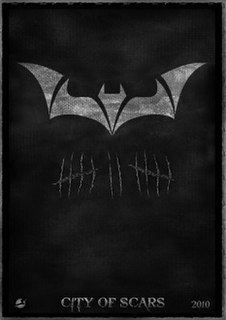
City of Scars, also known as Batman: City of Scars, is a 2010 superhero fan film produced by Aaron and Sean Schoenke, based on the Batman franchise. The film had a budget of $27,000 and was shot in 21 days. The 30-minute short film is partly set in Arkham Asylum.
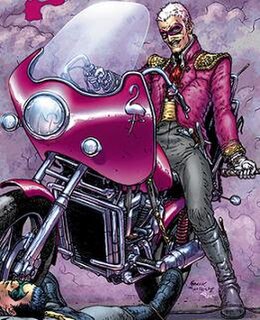
Flamingo is a fictional supervillain appearing in American comic books published by DC Comics, commonly as an adversary of the Batman.
Gotham State Penitentiary is the name of a fictional prison appearing in American comic books published by DC Comics.
Originally created in September 1992, the fictional comic book character Harley Quinn has been adapted into various other forms of media. The character has appeared in both live action and animated television series, films and video games. The character was originally voiced by Arleen Sorkin in the DC animated universe. Since then, she has also been voiced by Hynden Walch and Tara Strong in either DC Animated Showcases or in various video games. In the Birds of Prey television series, she was portrayed by actress Mia Sara. The character made her live-action feature film debut in the 2016 film Suicide Squad, portrayed by Margot Robbie.
The Scarecrow was originally a comic book character and Batman's adversary, but he has been substantially adapted from the comics into various forms of media, including feature films, television series, and video games. He has been voiced by Henry Polic II and Jeffrey Combs in the DC animated universe, by Dino Andrade and John Noble in the Batman: Arkham video game series, and by Robert Englund in Injustice 2. He has also been portrayed in live-action by Cillian Murphy in The Dark Knight Trilogy, and both Charlie Tahan and David W. Thompson in the FOX television show Gotham.
This page is based on this Wikipedia article Text is available under the CC BY-SA 4.0 license; additional terms may apply. Images, videos and audio are available under their respective licenses.