
The Federalist Papers is a collection of 85 articles and essays written by Alexander Hamilton, James Madison, and John Jay under the collective pseudonym "Publius" to promote the ratification of the Constitution of the United States. The collection was commonly known as The Federalist until the name The Federalist Papers emerged in the twentieth century.

Federalist No. 9, titled "The Union as a Safeguard Against Domestic Faction and Insurrection", is a political essay by Alexander Hamilton and the ninth of The Federalist Papers. It was first published in the New York Daily Advertiser and the Independent Journal on November 21, 1787, under the pseudonym used for all Federalist Papers, Publius. The essay argues that large republics can achieve stability, and that they do not inevitably lead to tyranny as his opponents believe. It expressed ideas that became the foundation of Federalist No. 10, the most influential in the series.

Federalist No. 23, titled "The Necessity of a Government as Energetic as the One Proposed to the Preservation of the Union", is a political essay written by Alexander Hamilton and the twenty-third of The Federalist Papers. It was first published in New York newspapers on December 18, 1787, under the pseudonym Publius, the name under which all The Federalist Papers were published. This entry shifted the focus of the series, beginning an extended analysis of the proposed constitution and its provisions regarding commerce and national defense.
Federalist No. 1, titled "General Introduction", is an essay by Alexander Hamilton. It is the first essay of The Federalist Papers, and it serves as a general outline of the ideas that the writers wished to explore regarding the proposed constitution of the United States. The essay was first published in The Independent Journal on October 27, 1787, under the pseudonym Publius, the name under which all essays of The Federalist Papers were published.

Federalist No. 2, titled "Concerning Dangers From Foreign Force and Influence", is a political essay written by John Jay. It was the second of The Federalist Papers, a series of 85 essays arguing for the ratification of the United States Constitution. The essay was first published in The Independent Journal on October 31, 1787, under the pseudonym Publius, the name under which all The Federalist Papers were published. Federalist No. 2 established the premise of nationhood that would persist through the series, addressing the issue of political union.
Federalist No. 4, titled "The Same Subject Continued: Concerning Dangers from Foreign Force and Influence", is a political essay by John Jay and the fourth of The Federalist Papers. It was first published in The Independent Journal on November 7, 1787, under the pseudonym Publius, the name under which all The Federalist Papers were published. It is the third of four essays by Jay discussing the protection of the United States from dangerous foreign influence and military conflict. It directly continued the argument made in Federalist No. 3, and it was further continued in Federalist No. 5.
Federalist No. 6, titled "Concerning Dangers from Dissensions Between the States", is a political essay written by Alexander Hamilton and the sixth of The Federalist Papers. It was first published in the Independent Journal on November 14, 1787, under the pseudonym Publius, the name under which all The Federalist Papers were published. It is one of two essays by Hamilton advocating political union to prevent the states from going to war with one another. This argument is continued in Federalist No. 7.
Federalist No. 7, titled "The Same Subject Continued: Concerning Dangers from Dissensions Between the States", is a political essay by Alexander Hamilton and the seventh of The Federalist Papers. It was first published in the Independent Journal on November 17, 1787, under the pseudonym Publius, the name under which all The Federalist Papers were published. It is one of two essays by Hamilton advocating political union to prevent the states from going to war with one another. Federalist No. 7 continues the argument that was developed in Federalist No. 6.

Federalist No. 8, titled "Consequences of Hostilities Between the States", is a political essay by Alexander Hamilton and the eighth of The Federalist Papers. It was first published in the New-York Packet on November 20, 1787, under the pseudonym Publius, the name under which all The Federalist Papers were published. It was a response to critics of a national standing army, and it examines a scenario in which the states of the United States are not unified and military conflict occurs between them.
Federalist No. 15 is an essay by Alexander Hamilton, the fifteenth of The Federalist Papers. It was published by The Independent Journal on December 1, 1787, under the pseudonym Publius, the name under which all The Federalist papers were published at the time. No. 15 addresses the failures of the Articles of Confederation to satisfactorily govern the United States; it is the first of six essays on this topic. It is titled "The Insufficiency of the Present Confederation to Preserve the Union".
Federalist No. 16, titled "The Same Subject Continued: The Insufficiency of the Present Confederation to Preserve the Union", is an essay by Alexander Hamilton. It is one of the eighty-five articles collected in the document The Federalist Papers. The entire collection of papers was written by Alexander Hamilton, James Madison, and John Jay. Federalist Paper No. 16 was first published on December 4, 1787 by The New York Packet under the pseudonym Publius. According to James Madison, "the immediate object of them was to vindicate and recommend the new Constitution to the State of [New York] whose ratification of the instrument, was doubtful, as well as important". In addition, the articles were written and addressed "To the People of New York".
Federalist No. 24, titled "The Powers Necessary to the Common Defense Further Considered", is a political essay written by Alexander Hamilton and the twenty-fourth of The Federalist Papers. It was first published in New York newspapers on December 19, 1787, under the pseudonym Publius, the name under which all The Federalist Papers were published. It is one of two essays by Hamilton arguing in favor of a national standing army during peacetime, along with Federalist No. 25.
Federalist No. 25, titled "The Same Subject Continued: The Powers Necessary to the Common Defense Further Considered", is a political essay written by Alexander Hamilton and the twenty-fifth of The Federalist Papers. It was first published in New York newspapers on December 21, 1787, under the pseudonym Publius, the name under which all The Federalist Papers were published. It is one of two essays by Hamilton arguing in favor of a national standing army during peacetime, along with Federalist No. 24.
Federalist No. 26, titled "The Idea of Restraining the Legislative Authority in Regard to the Common Defense Considered", is an essay written by Alexander Hamilton in the twenty-sixth of The Federalist Papers. It was published on December 22, 1787, under the pseudonym Publius, the name under which all The Federalist papers were published. Federalist No. 26 expands upon the arguments of a federal military Hamilton made in No. 24 and No. 25, and it is directly continued in No. 27 and No. 28.
Federalist No. 27, titled "The Same Subject Continued: The Idea of Restraining the Legislative Authority in Regard to the Common Defense Considered", is an essay by Alexander Hamilton, the twenty-seventh of The Federalist Papers. It was published on December 25, 1787, under the pseudonym Publius, the name under which all The Federalist papers were published. Federalist No. 27 is the second of three successive essays covering the relationship between legislative authority and military force, preceded by Federalist No. 26, and succeeded by Federalist No. 28.
Federalist No. 28, titled "The Same Subject Continued: The Idea of Restraining the Legislative Authority in Regard to the Common Defense Considered", is a political essay by Alexander Hamilton and the twenty-eighth of The Federalist Papers. The essay was published on December 28, 1787, under the pseudonym Publius, the name under which all The Federalist Papers were published. This is the last of the three essays discussing the powers of the federal government over a standing military, directly following Federalist No. 26 and Federalist No. 27. Its theme of defense would be continued for one more essay in Federalist No. 29.
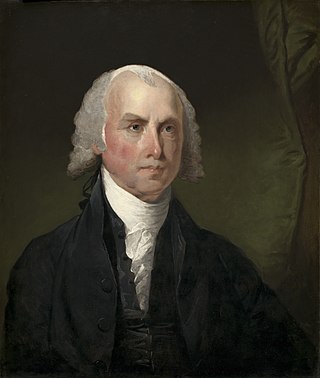
Federalist No. 41, titled "General View of the Powers Conferred by the Constitution", is an essay written by James Madison as the forty-first of The Federalist Papers. These essays were published by Alexander Hamilton, with John Jay and James Madison serving as co-authors, under the pseudonym "Publius." No. 41 was first published by The New York Packet on January 19, 1788 and argues about the necessity of the powers the Constitution vested upon the general government as well as the meaning of the phrase "general welfare".
Federalist No. 46 is an essay by James Madison, the forty-sixth of The Federalist Papers. It was first published by The New York Packet on January 29, 1788, under the pseudonym Publius, the name under which all The Federalist papers were published. This essay examines the relative strength of the state and federal governments under the proposed United States Constitution. It is titled "The Influence of the State and Federal Governments Compared".
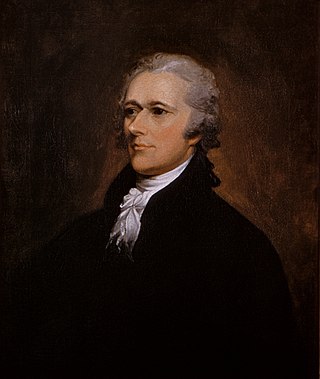
Federalist No. 66 is an essay by Alexander Hamilton, the sixty-sixth of The Federalist Papers. It was published on March 8, 1788, under the pseudonym Publius, the name under which all The Federalist papers were published. The title is "Objections to the Power of the Senate To Set as a Court for Impeachments Further Considered".
Federalist No. 85 is an essay by Alexander Hamilton, the eighty-fifth and last of The Federalist Papers. It was published on August 13 and 16, 1788, under the pseudonym Publius, the name under which all The Federalist papers were published. The title is "Concluding Remarks".

