 | This article has multiple issues. Please help improve it or discuss these issues on the talk page . (Learn how and when to remove these template messages)
|


The following economics-related events occurred in 2008.
| This article has multiple issues. Please help improve it or discuss these issues on the talk page . (Learn how and when to remove these template messages)
|
The following economics-related events occurred in 2008.

Dow Jones & Company, Inc. is an American publishing firm owned by News Corp and led by CEO Almar Latour.

The Dow Jones Industrial Average (DJIA), Dow Jones, or simply the Dow, is a stock market index of 30 prominent companies listed on stock exchanges in the United States.

A stock market crash is a sudden dramatic decline of stock prices across a major cross-section of a stock market, resulting in a significant loss of paper wealth. Crashes are driven by panic selling and underlying economic factors. They often follow speculation and economic bubbles.

The economy of Iceland is small and subject to high volatility. In 2011, gross domestic product was US$12 billion, but by 2018 it had increased to a nominal GDP of US$27 billion. With a population of 387,000, this is $55,000 per capita, based on purchasing power parity (PPP) estimates. The 2008–2011 Icelandic financial crisis produced a decline in GDP and employment that has since been reversed entirely by a recovery aided by a tourism boom starting in 2010. Tourism accounted for more than 10% of Iceland's GDP in 2017. After a period of robust growth, Iceland's economy is slowing down according to an economic outlook for the years 2018–2020 published by Arion Research in April 2018.

The Wall Street Crash of 1929, also known as the Great Crash or the Crash of '29, was a major American stock market crash that occurred in the autumn of 1929. It started in September, when share prices on the New York Stock Exchange (NYSE) collapsed, and ended in mid-November. The pivotal role of the 1920s' high-flying bull market and the subsequent catastrophic collapse of the NYSE in late 1929 is often highlighted in explanations of the causes of the worldwide Great Depression.

Íslandsbanki is an Icelandic bank with roots tracing back to 1875, formerly being the domestic part of Glitnir banki hf., but on 15 October 2008 being split from the bankrupt Glitnir and reestablished into a new independent bank. The sole operations of the bank is to manage a branch network in Iceland, with a 20%-40% market share across all domestic franchise areas. As of 2022, the bank has 12 branches around Iceland.
Kaupthing Bank was a major international Icelandic bank, headquartered in Reykjavík, Iceland. It was taken over by the Icelandic government during the 2008–2011 Icelandic financial crisis and the domestic Icelandic-based operations were spun into a new bank New Kaupthing, which was subsequently renamed Arion Banki. All the non-Icelandic assets and debts remained with the now defunct Kaupthing Bank. Prior to its collapse, it also allegedly loaned money to various parties with the purpose of buying Kaupthing shares.

Ewald Nowotny is an Austrian economist and social democratic politician and former governor of Austria's central bank Oesterreichische Nationalbank. He was also a member of the European Central Bank’s governing council.

The Great Recession was a period of marked general decline observed in national economies globally, i.e. a recession, that occurred in the late 2000s. The scale and timing of the recession varied from country to country. At the time, the International Monetary Fund (IMF) concluded that it was the most severe economic and financial meltdown since the Great Depression. One result was a serious disruption of normal international relations.

The Icelandic financial crisis was a major economic and political event in Iceland between 2008 and 2010. It involved the default of all three of the country's major privately owned commercial banks in late 2008, following problems in refinancing their short-term debt and a run on deposits in the Netherlands and the United Kingdom. Relative to the size of its economy, Iceland's systemic banking collapse was the largest of any country in economic history. The crisis led to a severe economic slump in 2008–2010 and significant political unrest.

The US bear market of 2007–2009 was a 17-month bear market that lasted from October 9, 2007 to March 9, 2009, during the financial crisis of 2007–2009. The S&P 500 lost approximately 50% of its value, but the duration of this bear market was just below average.
On the evening of January 18, the Danish Parliament agreed to a financial package worth 100 billion Danish kroner. In response, markets panicked yet again. On January 22, the editorial board of The Christian Science Monitor wrote that the four largest U.S. banks "have lost half of their value since January 2."
The subprime mortgage crisis reached a critical stage during the first week of September 2008, characterized by severely contracted liquidity in the global credit markets and insolvency threats to investment banks and other institutions.
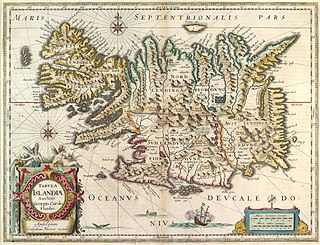
The economy history of Iceland covers the development of its economy from the Settlement of Iceland in the late 9th century until the present.

The 2007–2008 financial crisis, or Global Financial Crisis (GFC), was the most severe worldwide economic crisis since the Great Depression. Predatory lending in the form of subprime mortgages targeting low-income homebuyers, excessive risk-taking by global financial institutions, a continuous buildup of toxic assets within banks, and the bursting of the United States housing bubble culminated in a "perfect storm", which led to the Great Recession.
On 20 February 2020, stock markets across the world suddenly crashed after growing instability due to the COVID-19 pandemic. It ended on 7 April 2020.
