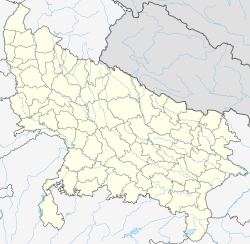
Basrehar[3] is not only a village but also serves as a Community development block[6] (commonly known as a block) within the Etawah district of Uttar Pradesh. As a block headquarters, Basrehar functions as an important administrative unit responsible for the planning and implementation of rural development programmes in the surrounding villages[1].
The Basrehar Block[2] oversees multiple Gram Panchayats and plays a key role in the execution of government schemes related to agriculture, education, health services, infrastructure development, and social welfare. Various block-level offices operate from Basrehar to facilitate coordination between the district administration and local village institutions.
Geography
Basrehar is situated in the central part of Etawah district in northern India. The village covers a geographical area of about 190.98 hectares. It is located at 26°51′02″N79°05′29″E / 26.85043°N 79.09148°E / 26.85043; 79.09148 and is well connected to nearby rural settlements through local roads. The postal PIN code of the village is 206253.
Demographics
According to the 2011 Census of India[7], Basrehar has a total population of 7,606 living in 1,231 households. The male population is 4,034, while the female population is 3,572. The village has a sex ratio of 885 females per 1,000 males.
Children in the age group of 0–6 years constitute a significant portion of the population. Basrehar has a literacy rate of 82.77%, which is higher than the state average. Male literacy stands at approximately 88.07%, while female literacy is around 76.84%.
Social composition
Scheduled Castes constitute around 17% of the total population of Basrehar[7]. The presence of Scheduled Tribes in the village is negligible, as per census records. The social structure of the village reflects the broader demographic pattern of rural Uttar Pradesh.
Administration
Basrehar is administered under the Panchayati Raj system. The village is governed by an elected Gram Panchayat, headed by a Pradhan (village head), who is responsible for local governance, development activities, and implementation of government schemes.
Economy
The economy of Basrehar is primarily agrarian. Agriculture[8] and allied activities form the main source of livelihood for the residents. A significant portion of the population is engaged in farming, agricultural labour, and small-scale occupations. Some residents are also employed in nearby urban areas, including Etawah town.
Transport
Basrehar is connected to Etawah city and neighbouring villages through a network of rural roads. The nearest major railway station is Etawah Junction, which connects the area to major cities in Uttar Pradesh and other parts of India. Public and private transport services facilitate daily commuting.
Postal and civic services
The village falls under the Basrehar postal region with PIN code 206253. Basic civic amenities such as primary education, local markets, and healthcare access are available within or near the village, supported by district-level infrastructure.
This page is based on this Wikipedia article Text is available under the CC BY-SA 4.0 license; additional terms may apply. Images, videos and audio are available under their respective licenses.