peacock Dance, Yak Dance, Kite Dance, Khukuri Dance, Ballet Dance, Opera Dance, Calisthenics Dance, Cultural Dance, Padma sambhav Dance, Development and cultural activist of Nepali folk dance. दोहारी गीत प्रतियोगिता, हिड्दा हिड्दै बनेका तस्बिरहरु, नृत्याक्षर विज्ञान, Alpha Science of Dance
Bhairab Bahadur Thapa (born 17 February 1933) is a Nepalese dance director, choreographer, and scholar.[1] He is considered as the first dance director of a country called Nepal. Thapa passed the examination from the Public Service Commission in 2018 BS (1961-1962) and started working as a dance director in the cultural institute. After retiring from the institute, Thapa opened a dance troupe and continued his choreography work. Hundreds of artists who have taken dance training with him are established in the Nepali art field.
Thapa was born on 17 February 1933 (6 Falgun 1989 BS) in Kamal Pokhari, Kathmandu. He grew up in a musical family. Around 2005-6 BS, he travelled to Gorakhpur with his brother there he enlisted in the British army at the age of 17 after the end of Second World War and was posted in Malay in British Army First Six Battalion. He was known in army as 'Nepali Tarzan', 'Nepali Babu' and 'Dancer'. When he danced whole night during the coronation of Elizabeth II on June 2, 1953, the officers of the battalion were impressed and he was given a holiday for six months. He returned to Nepal on 19 June 1953 (6 Ashadh 2010 BS) and after nine day of his arrival, the playwright Bhim Nidhi Tiwari declared him as a Pratibhashali Kalakar (exemplary performer). On 19 September 1953 (3 Ashoj 2010 BS) he performed for an hour on the Nepal Farmer's Union's annual program.[2]
Establishment of Bhairab Nritya Dal
Logo of Bhairab Nritya Dal
On 21 February 1954 he established an organization known as Bhairav Nritya Dal with the support of playwright Balkrishna Sama. He left the army after the establishment of the organization. He created various dance forms and amplified the existing cultural dance forms of Nepal through the organizations such as Machua, Raila, Tappa, Jhayure, Sorathi, etc.[2]
Introduction of Bhairab Nritya Dal
Bhairab Bahadur Thapa and Bal Krishna sama
Every year, traditional dances were performed only within one's own ethnic communities called Guthis at designated locations. Going to other places to perform dances was against tradition. This practice is still in continuation. Due to societal constraints and the fact that dancing in different villages for money was seen as disgraceful, only dances performed by traditional groups within their own communities existed in Nepal. However, in the face of such societal norms, a revolutionary change came when an aspiring artist, Bhairab Bahadur Thapa, established the "Bhairab Dance Ensemble" on the 10th of Falgun, 2010 B.S. (February 21, 1954 A.D.)[3]
The Cultural Journey of Bhairab Bahadur Thapa
Nepal and China Cultural Relationship ( July 9, 1956 A.D )<
In the order of departure, the Nepali cultural delegation was accompanied by Chairman Mao Zedong and Prime Minister Zhou Enlai.
Bhairab Bahadur Thapa, a member of the first cultural representative delegation of the Nepal government, arrived in the vast land of China on July 9, 1956 AD (Asar 26, 2013 BS). He created a sensation in various regions by presenting his Nepali dance art on well-established stages and shook the hearts of millions of Chinese people. In particular, the then-Chinese Chairman Mao Zedong[4] and the then-Chinese Prime Minister Zhou Enlai including other leaders watched in a we as Bhairab Bahadur Thapa presented Nepali dances and numerous emotional expressions on the colorful stage of China. In this way, Bhairab Bahadur Thapa became the first cultural ambassador of Nepal to China, successfully influencing millions of Chinese people through Nepali dances and various artistic expressions. He contributed significantly to Nepal and China's "sisterly" relationship in the field of culture.[5]
The first Nepali dancer in India ( January 11, 1958 A.D. )
Former Indian Prime Minister Pandit Jawaharlal Nehru watched the "Echo Ballet" with interest, featuring Bhairab Bahadur Thapa in the center, Kokil Gurung on the right, and Kumar Nepali on the left.
The dancer Bhairab Bahadur Thapa, funded by himself, led his Bhairab Dance Ensemble to variouslocations in India, successfully presenting the first Nepali danceart in India. He is considered a legendary artist who achieved this feat.During his tour, on January 11, 1958, in the context of the 63rd Annual Congress of the Indian National Congress in Pragjyotishpur, Guwahati, Assam, Thapa's Bhairab Dance Ensemble had the opportunity to present a cultural program. During this occasion, prominent figures such as Indira Gandhi and 14-year-old Rajiv Gandhi, along with India's first Prime Minister, Pandit Jawaharlal Nehru, were present. Afterwitnessing the Bhairab Dance Troupe's cultural program, especially their “ECHO BALLET,” Pandit Nehru remarked, "After seeing the ‘ECHO BALLET’ dance of the Nepali Bhairab Party, I have changed my opinion about the dance art of the Nepali people. I am very pleased to see the elevated Nepali dance. I will meet you all in Kathmandu later." He further ordered related agencies to organize Nepali programs for another seven days. Additionally, he provided an opportunity for all members of the Bhairab Dance Ensemble to meet him and personally thanked them.
ER Activities
Bhairab Bahadur Thapa along with his cultural team participated in different countries at the invitation of the government of different countries or at the invitation of non-governmental organizations.
1. Chairman of the People's Republic of China Mr. Mao Zedong, Prime Minister Mr. Chou-en-lai, Mr. Marshall Holung and Dr. Sungchung Leen, wife of Sun Yat Sen - 11 July 1956, Peking,
B.B. Thapa Meets Mao Zedong
2. Prime Minister of India Pt. Jawaharlal Nehru - 18 January 1958, Assam (on the occasion of Aya Jit Rabi Kshlmashb Kahatath Tjashcham Riylanchavak Kvakaksyal at Guwahati in the former state of Assam),
3. President of India Shri Zakir Hussain 22 February 1965, Delhi,
Bhairab Dance Ensemble in Zagreb.
4. General Secretary of the Soviet Communist Party and President Mr. Leonid Brezhnev - August 29, 1970, Moscow, 5. Mr. Marshall Tito, President of Yugoslavia - 21 July 1974, Zagreb,
7. Mr. Alberto Obligado, Assistant Director General and UNESCO Head Quarters in Paris, France - 8 August 1974, Paris,
When heads of state and national representatives of different countries came to Nepal, Bhairav Bahadur Thapa, who was the first dance director of the government of Nepal at that time, welcomed them with a cultural program on his stage:-
xi. Delegates of the Indian Ocean countries to the Conference on Family Planning, May 3, 1964
xii. Maharaja Shri Madhav Rao Scindia of Gwalior, India - 16 April 1964
xiii. Prince Philip, Prince of Edinburgh, March 14, 1965
xiv. Vice Premier and Foreign Minister of the People's Republic of China Mr. Marshall Chen Yi 31 March 1965
xv. Mr. Heinrich Lübke, President of West Germany - 12 March 1967
xvi. President of Pakistan Shri Agha Muhammad Yahya Khan - 28 September 1970
xvii. Representatives of the various countries adopted at the 26th meeting of the Colombo Plan, 2 December 1977[8]
Works
He has published multiple books. He published a school curriculum book Nepali Nritya Ra Saririk Prabeshika in 2022 BS. In 2030 BS, he published a poetry collection called Dhoka. He has also written two autobiographies- Hindhda Hindhdai Baneka Tasbir Haru and Bhairav lai Herne Akhaharu. Bhairav lai Herne Akhaharu was published in 2009.[9]
In 2020, Thapa wrote a book about difference forms of dance and the disciplines of Nepali dances known as Nrityakshar Bigyan.[10] The book was shortlisted for Madan Puraskar for the year 2077 BS (2020).[11] The book is being translated into English as Alphabetic Science of Dance and into Hindi by Chetan Karki.[12]
Awards
Uttamshanti Award - 2065 B.S
Bhimanidhi Tiwari Drama Literature Award - 2071 B.S.
Nepal Music and Drama National Intelligence Award - 2071 B.S.
Harish Bhuwan Chandra Award - 2077 B.S.
Jagadamba Shree Award - 2077 B.S.
Bhim Darshan Roka Ideal Master Honors and Awards - 2078 B.S.
Shankar Lamichhane Samman- 2078 B.S.
Nepal Music Association National Honors and Awards - 2079 B.S.
Menkaji Gurung Memorial Honors and Awards - 2080 B.S.
Rajendra Lakshmi Specific Dance Master National Honors and Awards - 2081
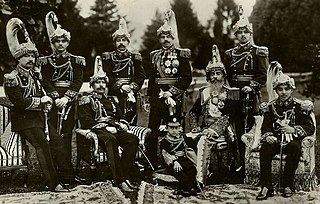
The Kingdom of Nepal was a Hindu kingdom in South Asia, formed in 1768 by the expansion of the Gorkha Kingdom, which lasted until 2008 when the kingdom became the Federal Democratic Republic of Nepal. It was also known as the Gorkha Empire, or sometimes Asal Hindustan. Founded by King Prithvi Narayan Shah, a Gorkha monarch who claimed to be of Thakuri origin from chaubisi, it existed for 240 years until the abolition of the Nepalese monarchy in 2008. During this period, Nepal was formally under the rule of the Shah dynasty, which exercised varying degrees of power during the kingdom's existence.
The Magars, also spelled Mangar and Mongar, are a Tibeto-Burman ethnic group native to Nepal and Northeast India, representing 6.9% of Nepal's total population according to the 2021 Nepal census. They are one of the main Gurkha tribes.
The Communist Party of Nepal , abbreviated CPN (UC–M) was an underground communist party in Nepal. The CPN (UC–M) was formed in 2002 through the merger of Communist Party of Nepal and Communist Party of Nepal (Masal).
The Rastriya Prajatantra Party is a constitutional monarchist and Hindu nationalist political party in Nepal.
The Communist Party of Nepal (Mashal) was an underground communist party in Nepal. CPN (Mashal) was formed in November 1984, following a split in the Communist Party of Nepal (Masal). The new party was founded at a congress (labelled the 'fifth congress') in Gorakhpur, India. It was difficult to identify any major ideological difference between the two factions, and probably the split was caused by dissatisfaction with Singh's authoritarian leadership methods. Mohan Baidya (alias 'Kiran') became general secretary of the new party. Other Central Committee members elected at the Gorakhpur conference were Chitra Bahadur K.C., Ramsingh Shris, Bhairav Regmi, Govindsingh Thapa, Pushpa Kamal Dahal, Khambasingh Kubar, Bachaspati Devkota, C.P. Gajurel, Dev Gurung, Ishwari Dahal, Bishnu Pokhrel and Bhakta Bahadur Shrestha.
Chhetri, historically called Kshettriya or Kshetriya or Khas are Nepali speaking Rajputs historically associated with warriors and administrators, some of whom trace their origin to migration from medieval India. Chhetri was a caste of administrators, governors, warriors and military elites in the medieval Khas Kingdom and Gorkha Kingdom. The nobility of the Gorkha Kingdom mainly originated from Chhetri families. They also had a strong presence in civil administration affairs. The bulk of prime ministers of Nepal before the democratization of Nepal belonged to this caste as a result of the old Gorkhali aristocracy. Gorkha-based aristocratic Chhetri families included the Pande dynasty, the Basnyat dynasty, the Kunwar family and the Thapa dynasty.
The Prime Minister of Nepal is the head of government of Nepal. Together with their Council of Ministers, The Prime Minister exercises executive power in the country. The Prime Minister must enjoy the confidence in the Pratinidhi Sabha before being appointed by the President and shall resign if they are unable to retain the majority in the House.
The Rana dynasty was a Chhetri dynasty that imposed authoritarianism in the Kingdom of Nepal from 1846 until 1951, reducing the Shah monarch to a figurehead and making the Prime Minister and other government positions held by the Ranas hereditary. The Rana dynasty is historically known for their iron-fisted rule in Nepal. This changed after the Revolution of 1951 with the promulgation of a new constitution, when power shifted back to the monarchy of King Tribhuvan.
The Government of Nepal is the federal executive authority of Nepal. Prior to the abolition of the Nepalese monarchy in 2006, it was officially known as His Majesty's Government.
Mathabar Singh Thapa was the Prime Minister of Nepal and the Commander-In-Chief of the Nepalese Army from 25 December 1843 – 17 May 1845, until he was murdered by his nephew Jung Bahadur Rana. He was the first Mukhtiyar to title himself as a prime minister, as per the British convention. He was the nephew of Bhimsen Thapa, who was sentenced to prison after falsely being accused of killing King Rajendra's six months old son. Mathabar Singh Thapa fled to Shimla after the execution of Bhimsen Thapa, to avoid his own execution as he was Bhimsen's nephew. Four years later, the second queen of Rajendra, Queen Rajya Lakshmi, called him back and installed him as the Mukhtiyar, paving the way for him to eventually title himself as the Prime Minister. Mathabar Singh, however, enraged the queen by refusing to make her son, Ranendra Bikram, the king. The queen, in turn, had him shot by his own nephew Janga Bahadur Rana and thereby making him the last dynast of the Thapa dynasty. Mathabir Singh Thapa was killed by his own nephew.
Kamal Thapa is a Nepalese politician belonging to Rastriya Prajatantra Party Nepal.
Balaram Gharti Magar is a political leader of Nepal. He became minister 11 times in the past, during Panchayat System, and after the declaration of multi-party system. Roughly, he remained in different governments as a minister for about 30 years in the past. He is a Central Committee Member, Senior Member, of Rastriya Prajatantra Party (RPP). He is still actively taking part in his party activities. He has been visiting his birthplace, Rolpa, and Rolpali people time to time.
Thapa Kaji is a large social group of people of Jharra/Pure Chhettri caste in Nepal. Thapas of Uttrakhand And Himanchal State of India are considered as Pahari Rajput. Over a period of time, this community has spread to many parts of the world. The surname originated during the Khas Kingdom in Karnali region during middle age-it referred to a position/post of a warrior. Chhetri is considered a derivative form of the Sanskrit word Kshatriya.
The Madan Puraskar is a literary honor in Nepal which Madan Puraskar Guthi confers annually for an outstanding book in the Nepali language published within the calendar year. It is considered as the most prestigious literature award in Nepal. It is awarded on the day of Ghatasthapana every year alongside Jagadamba Shree Puraskar.
Rana Jang Pande was the 3rd Prime Minister of the government of Nepal and the most powerful person in political scenario in three decades from the aristocratic Pande clan. He was one of the sons of Mukhtiyar Kaji Damodar Pande. He served as the Prime Minister for two terms, serving 1837–1837 and 1839–1840 AD. He became powerful after Bhimsen Thapa was arrested, and was declared Mukhtiyar and Commander in Chief. He was a grandson of Kaji Kalu Pandey who was the commander of King Prithvi Narayan Shah and the Mulkaji of Gorkha and a notable figure during the unification campaign of Nepal.
Narayan Prasad Rajbhandari, professionally known as Chittaranjan Nepali, was a Nepalese writer and historian. He received the first ever Madan Puraskar for Janaral Bhimsen Thapa Ra Tatkalin Nepal, a biographical book on the life of prime minister Bhimsen Thapa. He wrote in Nepali as well as Nepalbhasa.
Limbuvanko Eitihasik Dastabej Sangraha 1662–1963 AD is a historical book about the Limbuwan region in eastern part of Nepal written and compiled by Bhagi Raj Ingnam. It was published on 25 December 2020 by Yakthung Publication and won the Madan Puraskar for the year 2020.
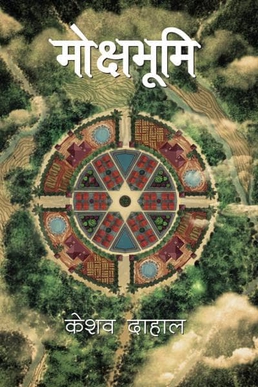
Mokshabhumi is a 2020 Nepali novel by Keshab Dahal. It was published on 6 October 2020 by Kitab Publishers. It won the Padmashree Sahitya Puraskar and was shortlisted for the Madan Puraskar. It is Dahal's debut novel, who is a political activist and writer.
Ramite is a 2021 Nepali novel by Jason Kunwar. It was published on February 13, 2021 by Red Panda Books. It is debut book of the author who is a musician and a part of a band called 'Night'. The book was shortlisted for the Madan Puraskar.
References
↑ Singh, Rishi (2009-05-01). "Music on their feet". The Himalayan Times. Retrieved 2021-11-12.
This page is based on this Wikipedia article Text is available under the CC BY-SA 4.0 license; additional terms may apply. Images, videos and audio are available under their respective licenses.