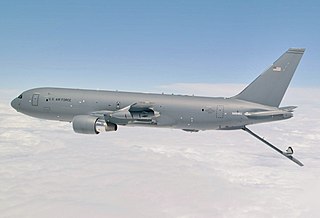
| C-390 Millennium | |
|---|---|
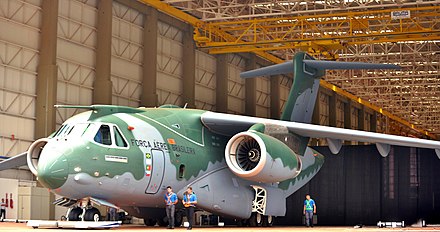
| A C-390 in flight | |
| Role | Medium-sized transport aircraft |
| National origin | Brazil |
| Manufacturer | Embraer Defense and Security [1] |
| First flight | 3 February 2015 [2] |
| Introduction | 2019 (first delivery) [3] |
| Status | deliveries started [3] |
| Primary user | Brazilian Air Force Portuguese Air Force |
| Produced | 2014–present |
| Number built | 4 |
| Program cost | $2 billion (2014) [4] |
| Unit cost | US$ 50-55 million (2016) [5] |
The C-390 Millennium is a medium-size, twin-engine jet-powered military transport aircraft in production by Brazilian aerospace manufacturer Embraer, able to perform aerial refuelling and to transport cargo and troops. It is the heaviest aircraft the company has made to date, and will be able to transport up to 26 tonnes (29 tons) of cargo, including wheeled armoured fighting vehicles. [6] [7]
A twinjet or twin-engine jet is a jet aircraft powered by two engines. A twinjet is able to fly well enough to land with a single working engine, making it safer than a single-engine aircraft in the event of failure of an engine. Fuel efficiency of a twinjet is better than that of aircraft with more engines. These considerations have led to the widespread use of aircraft of all types with twin engines, including airliners, fixed-wing military aircraft, and others.
Military transport aircraft or military cargo aircraft are used to airlift troops, weapons and other military equipment to support military operations. Transport aircraft can be used for both strategic and tactical missions, and are often diverted to civil emergency relief missions.

Brazil, officially the Federative Republic of Brazil, is the largest country in both South America and Latin America. At 8.5 million square kilometers and with over 208 million people, Brazil is the world's fifth-largest country by area and the fifth most populous. Its capital is Brasília, and its most populated city is São Paulo. The federation is composed of the union of the 26 states, the Federal District, and the 5,570 municipalities. It is the largest country to have Portuguese as an official language and the only one in the Americas; it is also one of the most multicultural and ethnically diverse nations, due to over a century of mass immigration from around the world.
The first production aircraft was delivered on 4 September 2019. [8] On 18 November 2019, during the Dubai Airshow, Embraer and Boeing announced the new name of the aircraft, targeting the global market, C-390 Millennium. [9] [10]
Between 2005 and 2007, Embraer intended to use the wing and GE CF34 engine of the mature Embraer E-190 with a cabin modified as a cargo hold with a rear ramp, closed-loop fly-by-wire and synthetic vision. [11] The initial design was a high-wing E190. [12]
Fly-by-wire (FBW) is a system that replaces the conventional manual flight controls of an aircraft with an electronic interface. The movements of flight controls are converted to electronic signals transmitted by wires, and flight control computers determine how to move the actuators at each control surface to provide the ordered response. It can use mechanical flight control backup systems or use fully fly-by-wire controls.
By 2006, Embraer was studying on a military tactical transport design of a similar size to the Lockheed C-130 Hercules, powered by 17,000-22,000 lbf (75.6-98 kN) engines like the Pratt & Whitney PW6000 or Rolls-Royce BR715. [13] In April 2007, Embraer reported it was studying a medium-size airlifter, with the company designation "C-390". [14] The transport aircraft is to incorporate many of the technological solutions from the Embraer E-Jet family series and feature a rear ramp for loading and unloading a wide range of cargo.
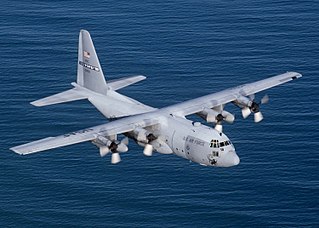
The Lockheed C-130 Hercules is an American four-engine turboprop military transport aircraft designed and built originally by Lockheed. Capable of using unprepared runways for takeoffs and landings, the C-130 was originally designed as a troop, medevac, and cargo transport aircraft. The versatile airframe has found uses in a variety of other roles, including as a gunship (AC-130), for airborne assault, search and rescue, scientific research support, weather reconnaissance, aerial refueling, maritime patrol, and aerial firefighting. It is now the main tactical airlifter for many military forces worldwide. More than 40 variants of the Hercules, including civilian versions marketed as the Lockheed L-100, operate in more than 60 nations.
The Pratt & Whitney PW6000 is a high-bypass turbofan jet engine designed for the Airbus A318 with a design thrust range of 18,000–24,000 lbf (80–107 kN).
The Embraer E-Jet family is a series of narrow-body short- to medium-range twin-engine jet airliners, carrying 66 to 124 passengers commercially, manufactured by Brazilian aerospace manufacturer Embraer. The aircraft family was first introduced at the Paris Air Show in 1999 and entered production in 2002. The series has been a commercial success primarily due to its ability to efficiently serve lower-demand routes while offering many of the same amenities and features of larger jets. The aircraft is used by mainline and regional airlines around the world but has proven particularly popular with regional airlines in the United States.
In March 2008, the Brazilian Government planned to invest about R$60 million (or US$33 M) in initial development of the aircraft and the Brazilian Air Force was simultaneously finalizing an initial purchase contract for some 22 to 30 aircraft, while Embraer was negotiating with possible partners. [15] In May 2008, the Brazilian Congress released R$800 million (US$440M) to be invested in the project and development of the aircraft. The media also claimed that this aircraft is going to be used not only by the Brazilian Air Force, but also by their Army and Navy, with unconfirmed sales to other government agencies. [16]
The Brazilian real is the official currency of Brazil. It is subdivided into 100 centavos. The Central Bank of Brazil is the central bank and the issuing authority. The real replaced the Brazilian cruzeiro.
The Brazilian Air Force is the air branch of the Brazilian Armed Forces and one of the three national uniformed services. The FAB was formed when the Army and Navy air branch were merged into a single military force initially called "National Air Forces" in 1941. Both air branches transferred their equipment, installations and personnel to the new force.
The Brazilian Army is the land arm of the Brazilian Armed Forces. The Brazilian Army has fought in several international conflicts, mostly in South America during the 19th century. In the 20th century, it fought on the Allied side in World War I and World War II. Aligned with the Western Bloc, during the time of military rule in Brazil from 1964 to 1985, it also had active participation in the Cold War, in Latin America and Southern Portuguese Africa, as well as taking part in UN peacekeeping missions worldwide since the late 1950s.
On 14 April 2009, Embraer was awarded with a $1.5 billion contract to develop and build two prototypes. [17] [18] At the programme launch, the design was all-new, with a new fuselage cross-section, wing, engine and flight deck, beyond the E-190 limited wing surface and engines, to replace the operating envelope of the Brazilian Air Force C-130J. In Embraer's view, the jet engine is sufficiently resilient to dust ingestion, whereas propeller tips close to the ground are susceptible to damage. Embraer also chose the IAE V2500 engine for efficiency in normal conditions rather than performance in unusual conditions like the Antonov An-32. [11]
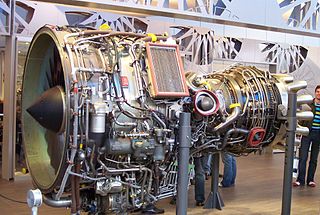
The IAE V2500 is a two-shaft high-bypass turbofan engine which powers the Airbus A320 family, the McDonnell Douglas MD-90, and the Embraer KC-390.
The Antonov An-32 is a turboprop twin-engined military transport aircraft.
In March 2010, Embraer drew up a development schedule, with the first prototype aircraft scheduled to be delivered in late 2014. [19] In July, during the Farnborough Airshow, the Brazilian Air Force announced it will order 28 C-390s and Embraer announced an increase in the cargo capacity to 21 t (46,000 lb). [6] [20] During the 2011 Paris Air Show, Embraer announced plans to launch a stretched version of the C-390 focused on the civil cargo market in 2018, with 200–250 predicted orders over a 10-year period. Two plugs will be added fore and aft of the centre fuselage section increasing internal capacity, but also providing for a side cargo door. [21]
In April 2011, Embraer estimated 695 military transport aircraft will need to be replaced during the following decade. [22]
In August 2010, Argentine Defence Minister Nilda Garré announced that Argentina will participate in the construction of the aircraft. [23] On 24 August, the defence ministers of Chile and Brazil signed an agreement for Chile's ENAER company to join the C-390 industry team. [24] Colombia also signed an agreement to join the programme. [25] On 10 September 2010, the defense minister of Portugal signed an intentions letter to join the programme. [26] On 14 December 2011, Brazil and Portugal agreed a defense partnership with EEA engineering components to be built by Embraer's Portuguese subsidiary OGMA. [27]
In April 2012, Boeing and Embraer signed a cooperation agreement. [28] In June, they partnered to develop the C-390 and possibly to sell it. [29]
Major subcontractors include Aero Vodochody for the rear fuselage section, [30] Rockwell Collins for the avionics, [31] BAE Systems for the fly-by-wire primary flight control system, [32] ELEB for the landing gear, [33] and Rockwell Collins for the cargo handling and aerial delivery system. [34] International Aero Engines (IAE) supplies the V2500-E5 turbofans, its first military application. [35] Fábrica Argentina de Aviones supplies the tail cone, cargo door and landing gear doors. [36]
Two prototypes were planned by the program. The first prototype (PT-ZNF) rolled out from the Embraer subsidiary plant, Embraer Defense and Security, at Gavião Peixoto, São Paulo on 21 October 2014, [37] [38] and flew for the first time on 3 February 2015. [2]
In July 2015, the company announced a two-year delay in the flight test program, citing the devaluation of the Brazilian currency and government spending cuts. However, a second test flight took place at Gavião Peixoto on 26 October 2015. [39] By February 2016, the first prototype had logged more than 100 hours of flight. [40] With the resumption of flight-testing, the manufacturer expected to certify the aircraft in 2017 and begin deliveries in 2018. The eight months between test flights were used to conduct ground vibration tests to validate aeroelastic models, as well as avionics, mission, landing gear and electric and hydraulic flight control system testing. Embraer has reported good availability for testing, sometimes doing two flights per day. The aircraft was tested to the limits of speed, Mach number, and altitude, as well as all slats, flaps and landing gear positions. [41]
The second prototype (PT-ZNJ) was finished in March 2016 and made the first flight on 28 April 2016. [42] [43] [44] By then, Richard Aboulafia's Teal Group estimated the C-390 price at $50–55 million, $15 million less than the Hercules. [5]
On 17 October 2017, the first prototype (PT-ZNF) had an uncommanded descent from 20000 ft to 3100 ft at 4500 ft/min. [45] In December 2017, as the two prototypes accumulated over 1,500 flight hours and laboratory testing over 40,000 hours, initial operating capability was reached while full operational capability was expected in 2018. [46] On 5 May 2018, the first prototype (PT-ZNF) ran off the runway during a ground test in Gaviao Peixoto, Brazil. [47] [45] The third C-390 built and first production aircraft first flew on 6 October 2018. [48]
After 1,900 flight hours in testing, the C-390 received Brazilian civil type certification on 23 October 2018; the first production aircraft is to be delivered to the Brazilian air force in the first half 2019 and should obtain military certification by the end of 2019. [49] The third aircraft (PT-ZNG), originally slated for the first delivery, has been redirected to complete certification. [12]
On 18 November 2019, Boeing (49%) and Embraer (51%) announced a joint venture to promote and develop new markets for the C-390 Millennium tactical transport aircraft, called Boeing Embraer – Defense, to operate after the regulatory approvals and closing conditions. [50]
Embraer built the C-390 around the 18.5 m (61 ft) long, 3.45 m (11.3 ft) wide and 2.95 m (9 ft 8 in) high hold with a rear ramp. Its twin IAE V2500-E5 turbofans are mounted forward on the high wing with anhedral angle, slats and up to 40° flaps High-lift devices. The landing gear has low-pressure tires, two 5.9 bar (85 psi) on the nose and four 7.2 bar (105 psi) on either side bogies for soft, unpaved ground or damaged runways.Fly-by-wire flight controls with active sidesticks allows load factors up to 3g. The cockpit has head-up displays for the enhanced vision system with four cameras and Rockwell Collins Pro Line Fusion commercial avionics. [12]
The aircraft can carry 26 t (57,000 lb): two fully tracked M113 armored personnel carriers, one Boxer or Brazilian VBTP-MR Guarani wheeled armored vehicle, a Sikorsky H-60 helicopter, 74 litters with life-support equipment, up to 80 soldiers or 66 paratroopers with full gear, and loads of up to 42,000 lb (19 t) can be air dropped. The C-390 can refuel in flight other aircraft through two wing-mounted probe and drogue pods from Cobham plc delivering up to 1,500 L (400 US gal) per minute from a 35 t (77,000 lb) total fuel capacity, between 120 to 300 kn (220 to 560 km/h) and from 2,000 to 32,000 ft (610 to 9,750 m). [12]
With extended slats, idle thrust and flight spoilers extended to 40°, it descends at a rate of 9,000 ft/min (2,700 m/min) at its 300 kn (560 km/h) maximum IAS. With flaps full at 40 degrees, it stalls at 104 kn (193 km/h) IAS. [12]
The first C-390 will be operated from Anapolis Air Base by the First Troop Transport Group. Embraer has already started the training of the FAB personnel. In 2014, the Brazilian Air Force ordered a total of 28 C-390s with logistic support from the Brazilian manufacturer. It should progressively replace the C-130 Hercules within the FAB. [51]
In 2007, Correios, the Brazilian postal service, was interested in buying five or more aircraft to replace commercial freight service for mail transport. [52] In September 2008, the Portuguese Air Force was interested in the airplane to replace its C-130 fleet. [53] In September 2009, France could buy 10 C-390s to compensate the Dassault Rafale sale to Brazil. [54] In October, Sweden was to evaluate the C-390 in connection to its F-X2 offer on JAS 39 Gripen. [55]
In February 2010, Embraer proposed C-390s to the Portuguese Ministry of Defense to replace the Portuguese Air Force's C-130s. [56] In July, the Brazilian Air Force intended to buy 28 aircraft. [57] In August, the Chilean Air Force planned to order six C-390s. [58] In September, Colombia intended to order 12 C-390s. [25] Later that month, the Czech Air Force expressed a need for two C-390s. [59] That month, the UAE were negotiating an agreement for military cooperation, which would involve sales of the C-390. [60] In October, the Argentine Air Force was interested in six C-390s. [61]
By May 2011, Correios was to buy 15 Embraer aircraft. [62] [ clarification needed ] In December, the Portuguese government was to sign an €87–million contract with Embraer for part of the production of the C-390. [63] On 14 February 2012, Peru was interested in the C-390s. [64]
In April 2013, six countries had commitments for 60 C-390s: Argentina (6), Brazil (28), Chile (6), Colombia (12), the Czech Republic (2), and Portugal (6). [65] In June, Boeing agreed to market the C-390 in the US, UK, and Middle East, building on the June 2012 MoU. [66] In August, the Colombian Air Force announced that it would acquire a fleet of C-390s to replace its Lockheed C-130 Hercules fleet. [67]
In June 2016, Portugal announced its intention to buy six C-390s. [68] In November, Embraer proposed the C-390 to replace the Royal New Zealand Air Force's five C-130s with a decision expected in mid-2017. [69] On 8 December, Canada chose the Airbus C-295 over the C-390 and the C-27J to replace ageing CC-115 Buffalo and CC-130 Hercules fixed-wing search and rescue (FWSAR) aircraft. [70]
In 2017, the Portuguese government authorized the purchase of five C-390 military aircraft, with the option of one more. [71] In February 2018, aviation services company SkyTech signed a letter of intent for up to six aircraft. [72]
In June 2019, the Royal New Zealand Air Force selected the C-130J Super Hercules to replace its ageing C-130H fleet. [73] Portugal is to buy five C-390s and a flight simulator for pilot training at a cost of 827 million euros. The first aircraft is to be delivered in February 2023 with deliveries to end in February 2027. [74]
In August 2019, Brazil's ambassador to Budapest, José Luiz Machado e Costa, informed of Hungary's interest in the C-390. Negotiations are in advanced stages. The possible announcement of the sale could come during President Jair Bolsonaro's official visit to Hungary in late 2019. [75] In October 2019, the President of Ukraine, Volodymyr Zelensky, in a meeting with President Jair Bolsonaro, informed his country's interest in the C-390. [76]
Data from Aviation Week [12]
General characteristics
Performance
Related development
Aircraft of comparable role, configuration and era
The Airbus A400M Atlas is a European, four-engine turboprop military transport aircraft. It was designed by Airbus Military as a tactical airlifter with strategic capabilities to replace older transport aircraft, such as the Transall C-160 and the Lockheed C-130 Hercules. The A400M is positioned, in terms of size, between the C-130 and the C-17; it can carry heavier loads than the C-130 and is able to use rough landing strips. Along with the transport role, the A400M can perform aerial refuelling and medical evacuation when fitted with appropriate equipment.
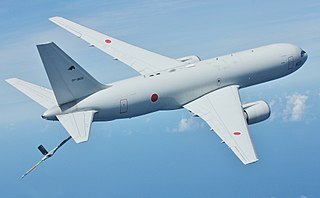
The Boeing KC-767 is a military aerial refueling and strategic transport aircraft developed from the Boeing 767-200ER. The tanker received the designation KC-767A, after being selected by the U.S. Air Force (USAF) initially to replace older KC-135Es. In December 2003, the contract was frozen and later canceled due to corruption allegations.
The Embraer EMB 110 Bandeirante is a Brazilian general purpose 15–21 passenger twin-turboprop light transport aircraft designed by Embraer for military and civil use.
OGMA – Indústria Aeronáutica de Portugal S.A. is a Portuguese aerospace company providing maintenance services and manufacture of aerostructures. Its share capital is retained in 65% by Airholding SGPS consortium, part of Embraer. The remaining 35% are owned by EMPORDEF, retained by the government of Portugal.
The Chilean Air Force is the air force of Chile, a branch of the Chilean military.
The Embraer EMB 312 Tucano is a low-wing, tandem-seat, single-turboprop, basic trainer with counter-insurgency capability developed in Brazil. The Brazilian Air Force sponsored the EMB-312 project at the end of 1978. Design and development work began in 1979 on a low-cost, relatively simple new basic trainer with innovative features which eventually became the international standard for basic training aircraft. The prototype first flew in 1980, and initial production units were delivered in 1983.
Embraer Unidade Gavião Peixoto Airport is a private airport located near Gavião Peixoto, São Paulo, Brazil. It is owned and operated by Embraer and used as for testing civil and military aircraft.
The Alenia C-27J Spartan is a military transport aircraft developed and manufactured by Leonardo's Aircraft Division. It is an advanced derivative of Alenia Aeronautica's earlier G.222, equipped with the engines and various other systems also used on the larger Lockheed Martin C-130J Super Hercules. In addition to the standard transport configuration, specialized variants of the C-27J have been developed for maritime patrol, search and rescue, C3 ISR, fire support and electronic warfare and ground-attack missions.
The Shaanxi Y-9 aircraft is a medium-sized, medium-range transport aircraft produced by Shaanxi Aircraft Company in China. The aircraft was developed as a stretched version of the Shaanxi Y-8F with greater payload and range originating from the Soviet Antonov An-12. The Y-9 is considered China's effort to build a C-130J class transport aircraft.
The Lockheed Martin C-130J Super Hercules is a four-engine turboprop military transport aircraft. The C-130J is a comprehensive update of the Lockheed C-130 Hercules, with new engines, flight deck, and other systems. The Hercules family has the longest continuous production run of any military aircraft in history. During more than 60 years of service, the family has participated in military, civilian, and humanitarian aid operations. The Hercules has outlived several planned successor designs, most notably the Advanced Medium STOL Transport contestants. As of February 2018, 400 C-130J aircraft have been delivered to 17 nations.
Galeão Air Force Base – BAGL is a base of the Brazilian Air Force located in Rio de Janeiro, Brazil. It is named after Praia do Galeão, located in front of the original passenger terminal of the airport and presently the passenger terminal of the Brazilian Air Force. It was at this beach that in 1663 the galleon Padre Eterno was built.
The Lockheed Martin KC-130 is the basic designation for a family of the extended-range tanker version of the C-130 Hercules transport aircraft modified for aerial refueling. The KC-130J is the latest variant operated by the United States Marine Corps, with 48 delivered out of 79 ordered. It replaced older KC-130F, KC-130R, and KC-130T variants, while one USMC reserve unit still operates 12 KC-130T aircraft.
The Boeing KC-46 Pegasus is a military aerial refueling and strategic military transport aircraft developed by Boeing from its 767 jet airliner. In February 2011, the tanker was selected by the United States Air Force (USAF) as the winner in the KC-X tanker competition to replace older Boeing KC-135 Stratotankers. The first aircraft was delivered to the Air Force in January 2019. The Air Force intends to procure 179 Pegasus aircraft by 2027.
The Antonov An-178 is a short-range medium-airlift military transport aircraft designed by the Ukrainian Antonov company and based on the Antonov An-158 (An-148-200). It was announced on 5 February 2010, rolled out on 16 April 2015 and the first flight was on 7 May 2015.
This is a list of aviation-related events in 2018.
Boeing Brasil–Commercial is a proposed joint venture between Boeing and Embraer to design, build, and sell commercial airliners worldwide. The partnership was established on February 26, 2019, after Boeing agreed to purchase an 80% stake in Embraer's commercial aircraft division. The deal has been approved by Embraer's shareholders and is expected to close by March 2020 pending antitrust reviews.
| Wikimedia Commons has media related to KC-390 . |