
Białowieża Forest is one of the last and largest remaining parts of the immense primeval forest that once stretched across the European Plain. The forest is home to 800 European bison, Europe's heaviest land animal. UNESCO’s Man and the Biosphere Programme designated the Polish Biosphere Reserve Białowieża in 1976 and the Belarusian Biosphere Reserve Belovezhskaya Puschcha in 1993. In 2015, the Belarusian Biosphere Reserve occupied the area of 216,200 ha, subdivided into transition, buffer and core zones. The forest has been designated a UNESCO World Heritage Site and an EU Natura 2000 Special Area of Conservation. The World Heritage Committee by its decision of June 2014 approved the extension of the UNESCO World Heritage site “Belovezhskaya Pushcha/Białowieża Forest, Belarus, Poland”, which became “Białowieża Forest, Belarus, Poland”. It straddles the border between Poland and Belarus, and is 70 kilometres north of Brest, Belarus and 62 kilometres southeast of Białystok, Poland. The Białowieża Forest World Heritage site covers a total area of 141,885 ha . Since the border between the two countries runs through the forest, there is a border crossing available for hikers and cyclists.
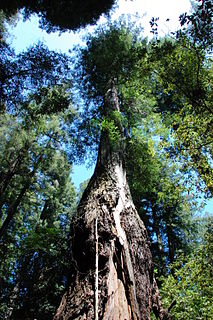
Armstrong Redwoods State Natural Reserve is a state park of California in the United States established to preserve 805 acres (326 ha) of coast redwoods. The reserve is located in Sonoma County, just north of Guerneville.
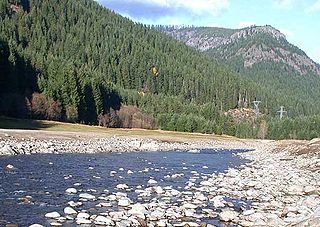
The Willamette National Forest is a National Forest located in the central portion of the Cascade Range of the U.S. state of Oregon. It comprises 1,678,031 acres (6,790.75 km2), making it one of the largest national forests. Over 380,000 acres are designated wilderness which include seven major mountain peaks. There are also several National Wild and Scenic Rivers within the forest. The forest is named for the Willamette River, which has its headwaters in the forest. The forest headquarters are located in the city of Springfield. There are local ranger district offices in McKenzie Bridge, Detroit, Sweet Home, and Westfir.

The Headwaters Forest Reserve is a group of old growth coast redwood groves, comprising about 7,472 acres (30.24 km2), managed by the Bureau of Land Management as part of the National Landscape Conservation System. Located in the Northern California coastal forests ecoregion near Humboldt Bay of the U.S. state of California, most of it was owned by the now defunct Pacific Lumber Company, which was owned by Charles Hurwitz and Maxxam Inc, as the result of a hostile takeover in 1985. Since that time the Headwaters Forest has been the site of many tree sits and anti-logging demonstrations, which ensued after Maxxam changed generations-old policies of sustained-yield logging at Pacific Lumber Company with clearcutting.

The Payette National Forest is a U.S. National Forest located in central western Idaho, in parts of Valley, Idaho, Adams, and Washington counties. The land area consists of approximately 2.3 million acres (9,300 km2) of federally managed lands. It is bordered by Hells Canyon National Recreation Area and the Hells Canyon to the west, Salmon-Challis National Forest to the east, Boise National Forest to the south, and the Nez Perce National Forest to the north. The Payette National Forest is a part of the Intermountain Region. It is under the jurisdiction of a forest supervisor in McCall and is divided into five ranger districts: McCall, Krassel, New Meadows, Council, and Weiser.
State Reserves of Azerbaijan refers to the state reserves in Azerbaijan, which preserve the fauna, flora and their ecosystems.
Today, forest and woodland cover in Uganda stands at 49,000 km² or 24% of the total land area. Of these 9,242.08 km² is tropical rainforest, 350.60 km² are forest plantations and 39,741.02 km² is woodland. 30% of these areas are protected as national parks, wildlife reserves or central forest reserves.

Anjanaharibe-Sud Reserve is a wildlife reserve in the north-east of Madagascar. The reserve was designated in 1958 and contains some of the last intact primary rainforest, along with several, rare and endemic animals and plants. The area was nominated to the UNESCO Tentative List of World Heritage Sites in Madagascar in 2008, as an extension of the rainforests of the Atsinanana.

Ancient and Primeval Beech Forests of the Carpathians and Other Regions of Europe is a transnational composite nature UNESCO World Heritage site, encompassing forests in 12 European countries.
The Kuru-Kol Forest Reserve is located in Ala-Buka District of Jalal-Abad Province of Kyrgyzstan. It was established in 1975 with a purpose of conservation of Schrenk's Spruce. Among other trees growing in the forest reserve are wild ash, maple, hawthorn, barberry, etc. The forest reserve occupies 348 hectares.
The Batrakhan Forest Reserve is located in Aksy District of Jalal-Abad Province of Kyrgyzstan at the area of Aflatun Forestry. It was established in 1975 with a purpose of conservation of Siberian Fir. Among other trees growing in the forest reserve are Schrenk's Spruce, Persian walnut, maple, wild apple, etc. The forest reserve occupies 304 hectares.
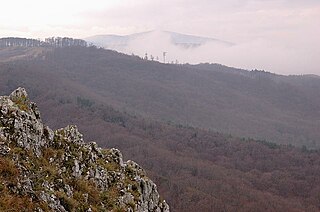
Zeya Nature Reserve is a Russian 'zapovednik' located over the mountainous headwaters of the Zeya River, on the eastern end of the Tukuringra Ridge in the Amur Region of the Russian Far East. It was created in part to serve as a "reference plot" for the study of the ecological impact of the Zeya Dam and the Zeya Reservoir which were built in the 1960s and 1970s. The ground cover in the reserve is primarily taiga, of mostly larch and Mongolian oak. The reserve is situated 13 km north of the city of Zeya, in the Zeysky District of Amur Oblast.

Kabardino-Balkarski Nature Reserve is a Russian 'zapovednik' on main ridge of the north Caucasus Mountains. It contains all of the mountains in Europe over 5,000 meters besides Mt. Elbrus and Mt. Kazbek, and contains the most glaciers. The ridge at the reserve forms the famous "Bezengi wall" consisting of the peaks Gestola, Katyntau, Dzhangi-Tau, Eastern Dzhangi-Tau and Shkhara. There are 256 glaciers in the reserve's boundaries. The reserve is situated in the Chereksky District of Kabardino-Balkar Republic; it was created in 1976, and covers an area of 82,507 ha (318.56 sq mi).

Central Siberia Nature Reserve is a Russian 'zapovednik'. With over 1 million hectares of protected area, it is one of the largest forest reserves in the world. The reserve is located in the middle Yenisei River and Podkamennaya Tunguska River valleys, of the Central Siberian Plateau. Notably, the territory covers both banks of the Yenisei for over 60 km. The reserve is situated in the Turukhansky District of Krasnoyarsk Krai.

Ussurisky Nature Reserve is a Russian 'zapovednik' that protects one of the remaining virgin mixed deciduous-conifer forests in the Primorsky (Maritime) region of the Russian Far East. The mountainous terrain is located on a southern spur of the Sikhote-Alin Mountains, in the upper reaches of the Komarovka River, about 50 km northeast of the city of Vladivostok. The reserve is named after Vladimir L. Komarov, an important early botanist and early explorer of the Primorsky region. The Ussursisky Reserve is situated in the Shkotovsky District of Primorsky Krai.

Little Sosva Nature Reserve is a Russian 'zapovednik' covering the basin of the Malaya Sosva River, on the east side of the Northern Ural Mountains in the territory of the West Siberian Plain. the Malaya Sosva is a right tributary of the North Sosva River, which flows into the Ob River on its way north to the Kara Sea. Are area of forested wetlands, the reserve protects flat lowlands with a broken relief, a significant incision of river valleys, and a developed river system. The reserve also protect cultural and architectural sites, including some related to the indigenous Khanty people. The southern two-thirds of the reserve is in the Sovetsky district in the Khanty-Mansi Autonomous District of Khanty-Mansi Autonomous Okrug; the northern sector is in the Beryozovsky District. The reserve was created in 1976, and covers an area of 225,562 ha (870.90 sq mi).

Visim Nature Reserve is a Russian 'zapovednik' protecting an area of southern taiga in the low Middle Ural Mountains. in 2001, it was named a UNESCO MAB Biosphere Reserve. It is named for the ancient village of Visim, which was home to the Russian writer Dmitry Mamin-Sibiryak, who wrote about rural life in the Urals. Most of the reserve is located on its western slope in the headwaters of the Sulёm River, a right tributary of the Chusovoi River, part of the vast Volga-Kama basin. Part, however is on the eastern slope in the Ob River watershed. The reserve thus straddles the Europe-Asia continental divide: water from the reserve flows into both the Caspian Sea through the Volga River, and the Kara Sea through the Ob River. The reserve is situated in the Kirovgrad District of Sverdlovsk Oblast, about 100 km northwest of Yekaterinburg.

Khopyor Nature Reserve is a Russian 'zapovednik' that protects a stretch of 50 km along the Khopyor River in the Voronezh Oblast. About 80% of the area is covered by forests, dominated floodplain and upland oak woods, small areas of steppes and meadows. There are about 400 lakes and oxbows. The reserve is situated in the Novokhopyorsky District of Voronezh Oblast.

Nora Nature Reserve is a Russian 'zapovednik' on the northeastern part of the Amur-Zeya lowland plain between the Nora River and the Selemdzha River. The reserve is known for its herd of Norsk roe deer, the largest migrating herd in the world, with 5,000-7,000 individuals migrating through every September. The terrain is half forested, and half wetland and bogs, in the meeting zone between Siberian, Okhotsk, and Mongolian plant and animal communities. The reserve is situated in the Selemdzhinsky District of Amur Oblast.

Caucasus Nature Reserve is a Russian 'zapovednik' covering a heavily mountainous section of the Northwest Caucasus Mountains. It is the largest and oldest in the territory of specially protected natural area in the Caucasus, having been created in 1924 as the Caucasian Bison Reserve. In 1979, the site was named a UNESCO Biosphere Reserve, and in 1999 included in a UNESCO World Heritage Site. In 2008 it was officially renamed after Khachatur (Christopher) G. Shaposhnikova the biologist who founded the reserve. The area is situated in the Mostovsky District of Krasnodar Krai, covering an area of 280,335 ha (1,082.38 sq mi).


