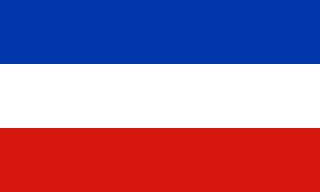
Schleswig-Holstein is the northernmost of the 16 states of Germany, comprising most of the historical duchy of Holstein and the southern part of the former Duchy of Schleswig. Its capital city is Kiel; other notable cities are Lübeck and Flensburg.

Flensburg is an independent town in the north of the German state of Schleswig-Holstein. Flensburg is the centre of the region of Southern Schleswig. After Kiel and Lübeck, it is the third largest town in Schleswig-Holstein.

Harburg is a borough of the city of Hamburg, Germany. It is also the name of a quarter in this borough, which used to be the capital of the district in Lower Saxony. The borough of Harburg lies on the southern banks of the river Elbe and covers parts of the port of Hamburg as well as residential and rural areas. It had a population of 163,771 as of 2016.

The Danish ethnic minority in Southern Schleswig, Germany, has existed by this name since 1920, when the Schleswig Plebiscite split German-ruled Schleswig into two parts: Northern Schleswig, with a Danish majority and a German minority was united with Denmark, while Southern Schleswig remained a part of Germany and had a German majority and Danish and Frisian minority populations. Their historic roots go back to the beginning of Danish settlement after the emigration of the Angles. One of the most common names they use to describe themselves is danske sydslesvigere.

The South Schleswig Voters' Association is a regionalist political party in Schleswig-Holstein in northern Germany. The party represents the Danish and Frisian minorities of the state.

The Hamburg state election, 2004 was conducted on 29 February 2004 to elect members to the Hamburgische Bürgerschaft of Hamburg. It was the 18th legislative period of the Hamburg Parliament.

Peter Harry Carstensen is a German politician, in the Christian Democratic Union (CDU) party.

Michael Naumann is a German politician, publisher and journalist. He was the German secretary of culture from 1998 until 2001. He is married to Marie Warburg, daughter of Eric Warburg and granddaughter of Max Warburg.
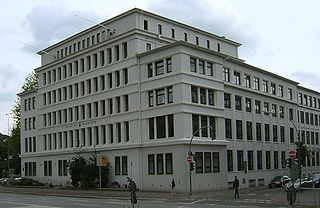
Wandsbek is the second-largest of seven boroughs that make up the city of Hamburg, Germany. The name of the district is derived from the river Wandse which passes through here. Wandsbek, which was formerly an independent city, is urban and, along with Eilbek and Marienthal, part of the city's economic and cultural core. In 2016 the population was 429,918.

Fuhlsbüttel (help·info) is an urban quarter in the north of Hamburg, Germany in the Hamburg-Nord district. It is known as the site of Hamburg's international airport, and as the location of a prison which served as a concentration camp in the Nazi system of repression. As a result of boundary changes, JVA Fuhlsbüttel prison is now in Ohlsdorf, Hamburg.
The government of Hamburg is divided into executive, legislative and judicial branches. Hamburg is a city-state and municipality, and thus its governance deals with several details of both state and local community politics. It takes place in two ranks – a citywide and state administration, and a local rank for the boroughs. The head of the city-state's government is the First Mayor and President of the Senate. A ministry is called Behörde (office) and a state minister is a Senator in Hamburg. The legislature is the state parliament, called Hamburgische Bürgerschaft, and the judicial branch is composed of the state supreme court and other courts. The seat of the government is Hamburg Rathaus. The President of the Hamburg Parliament is the highest official person of the Free and Hanseatic City of Hamburg. This is a traditional difference to the other German states. The president is not allowed to exert any occupation of the executive.
On 27 March 1966, elections for members of the sixth legislative period of the Hamburg Parliament after the Second World War were held in the German state of Hamburg. There were 1,375,491 eligible voters.

The Pirate Party Germany, commonly known as Pirates, is a political party in Germany founded in September 2006 at c-base. It states general agreement with the Swedish Piratpartiet as a party of the information society; it is part of the international movement of pirate parties and a member of the Pirate Parties International. In 2011/12, the party succeeded in attaining a high enough vote share to enter four state parliaments and the European Parliament. However, their popularity rapidly declined and by 2017 they had no representation in any of the German state parliaments. Their one European MEP, Julia Reda, has joined the Greens/EFA group.
On September 19, 1993, Hamburg state elections for members of the 15th legislative period of the Hamburg Parliament after the Second World War were held in the German state of Hamburg. There were 1,240,259 eligible voters.

The Statt Party is a minor political party in Germany.
A state election occurred in Schleswig-Holstein on 6 May 2012. All 69 seats in the Landtag of Schleswig-Holstein were contested in this election.

Torsten Albig is a German politician from the Social Democratic Party of Germany. From 2012 until 2017 he served as the 13th Minister President of Schleswig-Holstein.

Simone Lange is a German Social Democratic Party politician who has served as elected mayor of Flensburg since 2017.
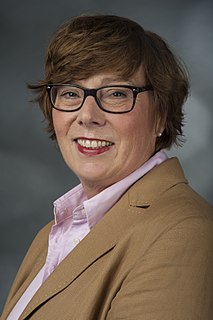
Sabine Sütterlin-Waack is a German politician (CDU). She was a member of the German Bundestag from 2013 to 2017 and has been Minister of Justice, Europe, Consumer Protection and Equality of Schleswig-Holstein since June 28, 2017.


