Hickory Grove Basalt

Last updated
Hickory Grove Basalt
USA Virginia location map.svg
Red pog.svg
Hickory Grove Basalt
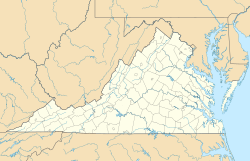
Hickory Grove Basalt (Virginia)
Stratigraphic range: ~201.5 Ma
TypeFlood Basalt lava flow
Unit of Newark Supergroup
Sub-units Culpeper Basin
Underlies Turkey Run formation
Overlies Midland Formation
Thicknessup to 700 ft (213 m) [1]
Location
Location Virginia
Coordinates 77°39′26″N38°49′46″W / 77.6571°N 38.8294°W / 77.6571; -38.8294
Region Mid-Atlantic (United States)
Country United States

The Hickory Grove Basalt is a large basaltic lava flow in the Culpeper Basin located in the US state of Virginia. Part of the larger Central Atlantic magmatic province associated with the break up of the supercontinent Pangea, the Hickory Grove Basalt was the second large outpouring of basaltic lava in the Culpeper Basin. The Mount Zion Church Basalt was the earliest and the Sanders Basalt was the last. [2] [3]

Contents

Extent

The wider Central Atlantic magmatic province (CAMP) was one of the largest eruptions in Earth's history; exceeding 2.5 million cubic kilometers of lava. This is comparable to the Siberian Traps or Deccan Traps. [4]

In places like the Culpeper Basin, lava exploited preexisting weakness left by the formation of Pangea. These suture zones provided an easy pathway for magma to travel up through. [5] The result was a long and expansive fissure system that were surprisingly short in duration. Many studies state that a single sync-eruption lasted no more than a century. [6]

Geology

The Hickory Grove Basalt erupted in the Culpeper Basin, which is part of the larger Newark Supergroup encompassing CAMP eruptions in North America. The Culpeper rift valley is characterized as a half graben. [7] Both freshwater and saline to hypersaline lakes were in the basin between eruptive events. [8]

The Hickory Grove Basalt was the second in the sequence of eruptions in the Culpeper Basin during the Mesozoic. Compared to the Mount Zion Church Basalt, Hickory Grove Basalt is characterized by lower MgO and a higher iron content. Being more iron rich means lava is found heavily eroded with a reddish-gray color breaking down into Saprolite. [9]

Age and relation to the end-Triassic extinction

Although the age of the Hickory Grove Basalt through 40Ar/39Ar has not been absolutely identified, its geochemistry closely matches that of the Preakness Basalt in the Newark Basin (which erupted at the same time). High-resolution mercury and carbon-isotope records from those basins group the Hickory Grove–Preakness flow sequence within the main pulse of Central Atlantic magmatism temporally coincident with the end-Triassic extinction event (ETE). [10]

Global stratigraphic compilations place the ETE at approximately 201.4 Ma, marked by a large negative carbon-isotope release and rapid decline of both aquatic and land animals. These records are widely interpreted as reflecting volatiles released from CAMP magmatism, with the Hickory Grove Basalt eruption forming one of the key events of the extinction. [11]

Later research using High-precision U–Pb zircon geochronology of CAMP diabase has been used to age lava units such as the Hickory Grove Basalt into this framework by geochemical correlation. This indicates that the Hickory Grove Basalt sequence erupted within a few hundred thousand years of 201.5 Ma. [12]

References

  1. Brezinski, David K; Kavage Adams, Rebecca (January 2021). "EXPOSED TRIASSIC BASINS AS PROXIES FOR THE UNDERSTANDING OF BURIED RIFT SUCCESSIONS" (PDF). mgs.md.gov. Maryland Geological Survey. Retrieved 29 November 2025.
  2. Tollo, Richard; Gottfrled, David; Froellch, Albert (1987). "Field Guide to the Igneous Rocks of the Southern Culpeper Basin, Virginia" (PDF). pubs.usgs.gov. Restin, VA: United States Geological Survey. Retrieved 29 November 2025.
  3. Le Pichon, Xavier; Şengör, A. M. Celal; Jellinek, Mark; Lenardic, Adrian; İmren, Caner (February 2023). "Breakup of Pangea and the Cretaceous Revolution". Tectonics. 42 (2). doi:10.1029/2022TC007489 . Retrieved 29 November 2025.
  4. Knight, K.B.; Nomade, S.; Renne, P.R.; Marzoli, A.; Bertrand, H.; Youbi, N. (November 2004). "The Central Atlantic Magmatic Province at the Triassic–Jurassic boundary: paleomagnetic and 40Ar/39Ar evidence from Morocco for brief, episodic volcanism". Earth and Planetary Science Letters. 228 (1–2): 143–160. doi:10.1016/j.epsl.2004.09.022 . Retrieved 29 November 2025.
  5. Dang, Zhuo; Zhang, Nan; Li, Zheng-Xiang; Huang, Chuan; Spencer, Christopher J.; Liu, Yebo (19 November 2020). "Weak orogenic lithosphere guides the pattern of plume-triggered supercontinent break-up". Communications Earth & Environment. 1 (1). doi:10.1038/s43247-020-00052-z . Retrieved 29 November 2025.
  6. Kent, Dennis V.; Olsen, Paul E.; Wang, Huapei; Schaller, Morgan F.; Et-Touhami, Mohammed (12 November 2024). "Correlation of sub-centennial-scale pulses of initial Central Atlantic Magmatic Province lavas and the end-Triassic extinctions". Proceedings of the National Academy of Sciences. 121 (46). doi:10.1073/pnas.2415486121 . Retrieved 29 November 2025.
  7. Woodruff, L.G.; Froelich, A.J.; Belkin, H.E.; Gottfried, David (March 1995). "Evolution of tholeiitic diabase sheet systems in the eastern United States: examples from the Culpeper Basin, Virginia-Maryland, and the Gettysburg Basin, Pennsylvania". Journal of Volcanology and Geothermal Research. 64 (3–4): 143–169. doi:10.1016/0377-0273(94)00085-U . Retrieved 29 November 2025.
  8. Woodruff, L.G.; Froelich, A.J.; Belkin, H.E.; Gottfried, David (March 1995). "Evolution of tholeiitic diabase sheet systems in the eastern United States: examples from the Culpeper Basin, Virginia-Maryland, and the Gettysburg Basin, Pennsylvania". Journal of Volcanology and Geothermal Research. 64 (3–4): 143–169. doi:10.1016/0377-0273(94)00085-U . Retrieved 29 November 2025.
  9. "Field Book for Describing and Sampling Soils" (PDF). www.nrcs.usda.gov. U.S. Department of Agriculture Natural Resources Conservation Service. November 2024. Retrieved 29 November 2025.
  10. Percival, Laura M. E.; Ruhl, Micha; Hesselbo, Stephen P.; Singer, Bradley S.; Jenkyns, Hugh C.; Mcarthur, John M. (2017). "Mercury evidence for pulsed volcanism during the end-Triassic mass extinction". Proceedings of the National Academy of Sciences of the United States of America. 114 (30): 7929–7934. doi:10.1073/pnas.1705378114 . Retrieved 29 November 2025.
  11. Whiteside, Jessica H.; Olsen, Paul E.; Kent, Dennis V.; Fowell, Sarah J.; Mcleod, Kenneth L.; Hoke, G. D. (2010). "Compound-specific carbon isotopes from Earth's largest flood basalt eruptions directly linked to the end-Triassic mass extinction". Proceedings of the National Academy of Sciences of the United States of America. 107 (15): 6721–6725. doi:10.1073/pnas.1001706107 . Retrieved 29 November 2025.
  12. Blackburn, T. J.; Olsen, P. E.; Bowring, S. A.; Mchone, J. G.; Ramezani, J.; Terranova, N. (2013). "Zircon U–Pb geochronology links the end-Triassic extinction with the Central Atlantic Magmatic Province" (PDF). Science. 340 (6135): 941–945. doi:10.1126/science.1234204 . Retrieved 29 November 2025.