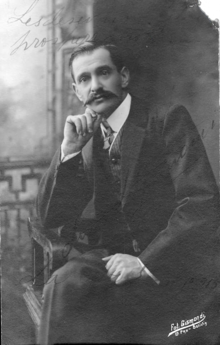
Bolivia, officially the Plurinational State of Bolivia, is a landlocked country located in western-central South America. It is bordered by Brazil to the north and east, Paraguay to the southeast, Argentina to the south, Chile to the southwest, and Peru to the west. The seat of government and administrative capital is La Paz, which contains the executive, legislative, and electoral branches of government, while the constitutional capital is Sucre, the seat of the judiciary. The largest city and principal industrial center is Santa Cruz de la Sierra, located on the Llanos Orientales, a mostly flat region in the east of the country.
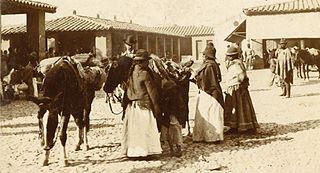
The Aymara or Aimara people are an indigenous people in the Andes and Altiplano regions of South America; about 2.3 million live in northwest Argentina, Bolivia, Chile, and Peru. Their ancestors lived in the region for many centuries before becoming a subject people of the Inca in the late 15th or early 16th century, and later of the Spanish in the 16th century. With the Spanish-American wars of independence (1810–1825), the Aymaras became subjects of the new nations of Bolivia and Peru. After the War of the Pacific (1879–1883), Chile annexed territory with the Aymara population.
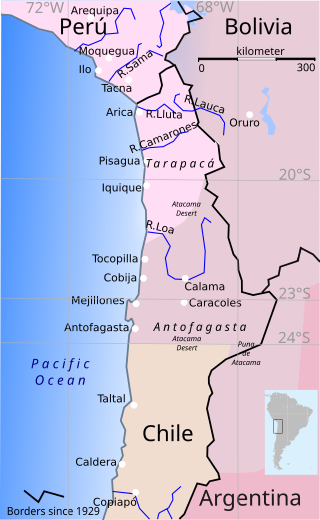
The War of the Pacific, also known as the Saltpeter War and by multiple other names, was a war between Chile and a Bolivian–Peruvian alliance from 1879 to 1884. Fought over Chilean claims on coastal Bolivian territory in the Atacama Desert, the war ended with a Chilean victory, which gained for the country a significant amount of resource-rich territory from Peru and Bolivia.

Martín Chambi Jiménez was a Peruvian photographer, originally from Puno, in southern Peru. He was one of the first major Indigenous Latin American photographers.

Piura is a city in northwestern Peru located in the Sechura Desert on the Piura River. It is the capital of the Piura Region and the Piura Province. Its population was 484,475 as of 2017.

The 2004 Copa América was the 41st edition of the Copa América, the South-American championship for international association football teams. The competition was organized by CONMEBOL, South America's football governing body, and was held in Peru, who hosted the tournament for the sixth time, from 6 to 25 July.

Ismael Montes Gamboa was a Bolivian general and political figure who served as the 26th president of Bolivia twice nonconsecutively from 1904 to 1909 and from 1913 to 1917. During his first term, the Treaty of Peace and Friendship with Chile was signed on October 20, 1904.
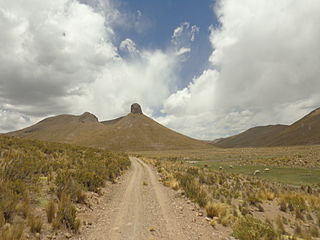
José Manuel Pando is a province in the La Paz Department in Bolivia. It was founded on April 22, 1986, during the presidency of Víctor Paz Estenssoro. The province was named after José Manuel Pando (1848-1917) who was the president of Bolivia from 1899 till 1904. Its capital is Santiago de Machaca.

José Manuel Inocencio Pando Solares was a Bolivian soldier and explorer who served as the 25th President of Bolivia from 1899 to 1904. During his government, the Acre War (1899-1903) began, in which Bolivia clashed with Brazil.

Severo Fernández Alonso Caballero was a Bolivian lawyer and politician who served as the 24th president of Bolivia from 1896 to 1899 and as the tenth vice president of Bolivia from 1892 to 1896. He is best remembered as the last president of the 15-year period of Conservative Party hegemony (1884–99).

Marina Núñez del Prado was a celebrated Bolivian sculptor.
Catacora is a location in the La Paz Department in Bolivia. It is the location of the Catacora Municipality, the second municipal section of the José Manuel Pando Province.
Paulina Lavista is a Mexican photographer, noted for her controversial work which has tested the limits of the field. She is the daughter of a composer and a painter, beginning a career in modeling and cinema before moving into photographic work in the 1960s. She began with portrait work, with one of her first clients being longtime partner Salvador Elizondo, and later breaking into more artistic work with a series of nudes for the magazine Su Otro Yo. She has photographed many subjects from the Mexican art scene as well as images of people in every day activity, mostly in Mexico. She is a member of the Salón de la Plástica Mexicana.

The Bolivian Civil War, also known as the Federal War was a civil war in Bolivia fought from 1898 to 1899. The war saw two factions, a conservative side supported by the political, economic and religious elite of the country with control of the armed forces and who defended a unitary state, and a liberal faction opposed to the policies set by the state and that intended to transform the country into a federation, with support of the peasantry, the indigenous peoples and small Catholic businesses.
The Vargas Brothers Art Studio was an iconic photographic studio operated by the brothers Carlos and Miguel Vargas in Arequipa, Peru. Winning numerous awards for their photography and techniques, the negatives of the studio have been preserved in digital format.
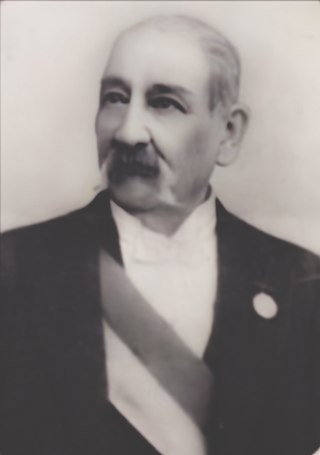
Serapio Reyes Ortiz was a Bolivian lawyer, professor, and politician who served as acting President of Bolivia in 1879, after the death of Pedro José de Guerra and the continued absence of Hilarión Daza, and as the ninth Vice president of Bolivia from 1888 to 1892. A member of the Conservative Party, he served as second vice president alongside first vice president José Manuel del Carpio during the administration of Aniceto Arce.

The 2021 Bolivian regional elections were held on 7 March 2021. Departmental and municipal authorities were elected by an electorate of approximately 7 million people. This was the third regional election under the 2009 constitution. It was postponed from the expected date of 2020 due to the 2019 Bolivian political crisis and delays in holding the 2020 Bolivian general election. All elected authorities assumed office on 3 May.

Herbert Salvatierra Becerra is a Bolivian lawyer and politician who served as a member of the Chamber of Deputies from Pando, representing circumscription 66 from 2010 to 2015. Salvatierra pertains to a generation of conservative parliamentarians who entered the political arena in the heat of the conflicts of the late 2000s, agitating for regional autonomy for the eastern departments and pushing for the rejection of the new, progressive Constitution ratified during the first Evo Morales administration. Polarization over these issues reached its breaking point in Pando, resulting in the Porvenir massacre, which dealt a heavy blow to the department's opposition-controlled prefecture and civic committee. In the aftermath, Salvatierra was propelled to the presidency of the reconstituted Pando Civic Committee, remaining an ally of the department's jailed prefect, Leopoldo Fernández, for the duration of his political career.

Italian Bolivians are Bolivian-born citizens who are fully or partially of Italian descent, whose ancestors were Italians who emigrated to Bolivia during the Italian diaspora, or Italian-born people in Bolivia.