
Nijmegen is the largest city in the Dutch province of Gelderland and the tenth largest of the Netherlands as a whole. Located on the Waal River close to the German border, Nijmegen is one of the oldest cities in the Netherlands and the first to be recognized as such in Roman times. In 2005, it celebrated 2,000 years of existence.

Ubbergen is a village and former municipality in the eastern Netherlands, in the province of Gelderland. On 1 January 2015 it merged into the enlarged municipality of Groesbeek, renamed Berg en Dal from 1 January 2016.
Notre Dame, French for "Our Lady", a title of Mary, mother of Jesus, most commonly refers to:

NEC Nijmegen, commonly known as NEC, is a professional Dutch association football club based in Nijmegen. The club currently competes in the Eredivisie, the top tier of Dutch football, following promotion from the 2020–21 Eerste Divisie.
SBV Vitesse Arnhem, widely known as Vitesse or internationally known as Vitesse Arnhem, is a Dutch professional football club located in the municipality of Arnhem. Established on 14 May 1892, they currently play in the Eerste Divisie following relegation from the 2023–24 Eredivisie. Since 1998, the club has played its home games at the GelreDome.
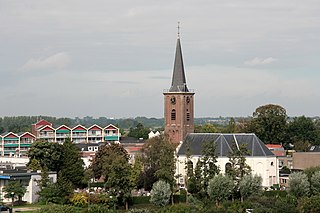
Mijdrecht is a town in the Netherlands with about 16,000 residents. It is located in the municipality of De Ronde Venen, about 7 kilometres (4.3 mi) west of the main A2 motorway, between Utrecht and Amsterdam.

Leuth is a village in the Dutch province of Gelderland. It is located in the municipality of Berg en Dal, about 10 km east of Nijmegen.

The Catholic Church in the Netherlands is part of the worldwide Catholic Church under the spiritual leadership of the Pope in Rome. Its primate is the Metropolitan Archbishop of Utrecht, since 2008 Willem Jacobus Eijk. In 2015 Catholicism was the single largest religion of the Netherlands, forming some 23% of the Dutch people, based on in-depth interviewing, down from 40% in the 1960s.

The Chapel of Notre Dame des Anges is a Roman Catholic church located near Lurs, Alpes-de-Haute-Provence, France. The chapel is a miraculous shrine and place of pilgrimage. It is in the Gothic and Romanesque architectural traditions.

Corneli(u)s Rudolphus Theodorus, Baron Krayenhoff was a physicist, artist, general, hydraulic engineer, cartographer and – against his will and for only a short time – Dutch Minister of War.

La Balme-les-Grottes is a commune in the Isère department in the Auvergne-Rhône-Alpes region of south-eastern France.

Located at 6, rue Notre-Dame-des-Victoires, in the 2nd arrondissement of Paris, The Basilica of Notre-Dame-des-Victoires is one of ten minor basilicas located in the Île-de-France region of France. It was begun as an Abbey church, and constructed between 1629 and 1740 in the French classical style. Its name was given by King Louis XIII, who dedicated it to his victory over the Protestants at La Rochelle in 1628 during the French Wars of Religion. Notre-Dame-des-Victoires is famous for the ex voto offerings left there by the faithful. Over 37,000 devotional plaques, silver and gold hearts, as well as military decorations, have been left at the basilica. The closest Métro station is 'Bourse'.
Dutch dialects are primarily the dialects that are both cognate with the Dutch language and spoken in the same language area as the Dutch standard language. They are remarkably diverse and are found within Europe mainly in the Netherlands and northern Belgium.

The Hôpital-Général de Québec is a Canadian medical facility located in the tiny municipality of Notre-Dame-des-Anges, Quebec, surrounded by the La Cité-Limoilou borough of Quebec City. It was classified as an historic site in 1977 by the Quebec government. Additionally, an archeological site listed on the Inventaire des sites archéologiques du Québec is located there.

Geertruida Wijsmuller-Meijer was a Dutch resistance fighter who brought Jewish children and adults into safety before and during the Second World War. Together with other people involved in the pre-war Kindertransport, she saved the lives of more than 10,000 Jewish children, fleeing anti-Semitism. She was honored as Righteous among the Nations by Yad Vashem. After the war she served on the Amsterdam city council.
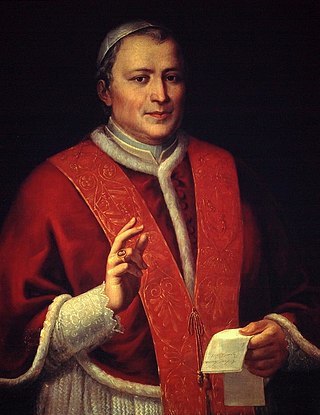
On 4 March 1853, Pope Pius IX restored the episcopal hierarchy in the Netherlands with the papal bull Ex qua die arcano, after the Dutch Constitutional Reform of 1848 had made this possible. The re-establishment of the episcopal hierarchy led to the April movement protest in 1853.
The following is a timeline of the history of the municipality of Nijmegen, Netherlands.
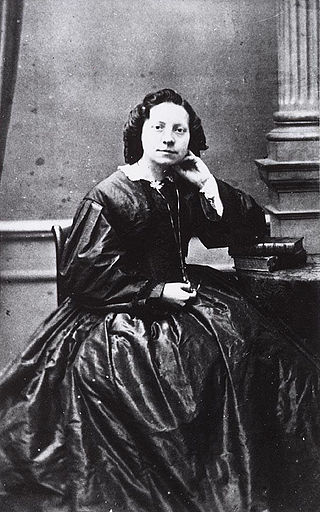
Christina Elizabeth (Betsy) Perk, was a Dutch author of novels and plays, and a pioneer of the Dutch women's movement, who wrote under the pen names Philemon, Liesbeth van Altena, and Spirito. She is known as the founding member of the Algemeene Nederlandsche Vrouwenvereeniging Arbeid Adelt in 1871, the women's magazine Onze Roeping, and the weekly magazine for women Ons Streven in 1869, the latter publication being the country's first women's periodical. In later years, her influence and activism diminished due to poor health, and she mainly focused on writing historical novels. From 1880 to 1890, she lived in Belgium. She is buried at the cemetery Rustoord in Nijmegen.

Anne Vegter is a Dutch poet, playwright, and writer of children's literature. She is the first woman to hold the position of Dichter des Vaderlands.
The evacuation of Arnhem was the departure, forcibly conducted by the German Wehrmacht, of tens of thousands of inhabitants of the Dutch city of Arnhem and nearby places from 23 to 25 September 1944 during the Battle of Arnhem in World War II. The occupying German forces decided to evacuate almost the entire civilian population in order to better defend the city against the Allied Operation Market Garden. After the city was evacuated, many houses and other buildings were looted by various groups of organised and unorganised German soldiers and pro-German collaborators.


