Prasat Ta Krabey

Last updated

Prasat Ta Krabey
Religion
Affiliation Hinduism
Deity Shiva
Location
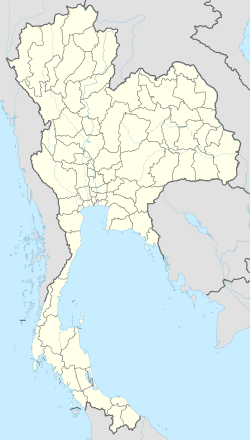
Location Cambodia–Thailand border
Thailand adm location map.svg
Om symbol.svg
Shown within Thailand
Cambodia adm location map.svg
Om symbol.svg
Prasat Ta Krabey (Cambodia)
Coordinates 14°21′10″N103°22′24″E / 14.35278°N 103.37333°E / 14.35278; 103.37333 [1]
Architecture
Type Khmer
Completed11th century

Prasat Ta Krabey (Khmer : ប្រាសាទ​តា​ក្របី​) [a] or Prasat Ta Khwai (Thai : ปราสาทตาควาย) is a temple built under the Khmer kings Suryavarman I and Udayadityavarman II during the Angkor period. The 11th–century religious site was dedicated to the Hindu god Shiva.

Contents

Before the Cambodian–Thai border dispute in 2025, this temple was an tourist attraction in both Cambodia and Thailand.

Etymology

Prasat Ta Khwai or Prasat Ta Krabey both literally mean "Grandfather Buffalo Temple".

The word "Prasat" in both (Thai : ปราสาท) and (Khmer : ប្រាសាទ) is derived from the Sanskrit word (prāsāda) (Sanskrit : प्रासाद), meaning temple. The word "Ta" (Thai : ตา) and (Khmer : តា) means grandfather, while "Khwai" in (Thai : ควาย) and "Krabei" in (Khmer : ក្របី) mean buffalo.

Plan and features

Ta Krabey temple consists of a single central sanctuary, which houses a Shiva Linga, named Svayabhuva Linga, which means the self-emergence Linga and four gopuras face to all four directions in total area of 900 square meters. This laterite temple was decorated with some carvings, especially the depiction of god Yama mounts on a buffalo as his vehicle, however the construction work of the temple was unfinished as most of the exterior surface of the central tower has no carving. [6]

Location

The temple is located in the Dangrek mountain range, along the disputed Cambodia—Thailand border.

From the Cambodia side, it is about 85km from the capital of Oddar Meanchey province. [7] From the Thailand side, it lies within Ban Thai Niyom Phatthana, Village No. 17, Bak Dai Subdistrict, Phanom Dong Rak district, Surin province, approximately 12 km east of another Angkorian temple, Prasat Ta Muen Thom. [8] [9]

History

Early history

According to its architectural style, The temple was built in the 12th or 13th century in the Bayon architectural style, although it is believed that construction began in the 11th century. The temple is located on the Dangrek mountain range, and its surroundings are now covered by jungle. [10]

Border disputes

Ownership of the temple has been subject to the Cambodian–Thai border dispute, and military clashes near the temple occurred in 2008 and 2011. [11] [12]

On July 24, 2025, Cambodian forces reportedly occupied the Temple. [13] Three days later, on July 27, both countries claimed sovereignty over the area. [14] Subsequently, on July 30, a Thai army spokesman acknowledged that the Cambodian army had seized control of the temple grounds following clashes. [15]

However, on 15 December 2025, Thailand was able to retake the temple, and there are plans to restore it in the future following the resolution of the Cambodia–Thailand border dispute. [16] [17] [18] On 27 December 2025, Cambodia and Thailand agreed to a ceasefire, halting military operations in the area. [19] [20] The temple sustained damage during the clashes, and subsequent assessments indicated that it remains technically restorable once stable civilian control and security conditions are in place. [21]

See also

Notes

  1. Sometimes it is also spelled Prasat Ta Krabey, Prasat Ta Kuai, and Prasat Ta Kwai. [2] [3] [4] [5]

References

  1. "Google Earth". 8 September 2010. Archived from the original on 8 September 2010. Retrieved 25 November 2018.
  2. "Prasat Ta Krabey". Destination Cambodge (in French). Archived from the original on 18 December 2025. Retrieved 18 December 2025.
  3. "Where Is Prasat Ta Kwai and Who Owns It Today". expatsinthai. 29 July 2025. Archived from the original on 18 December 2025. Retrieved 18 December 2025.
  4. Choomanee, Bright (23 July 2025). "Visitors flock to Prasat Ta Kwai for offerings and lucky numbers". The Thaiger. Archived from the original on 18 December 2025. Retrieved 18 December 2025.
  5. Times, Khmer (10 December 2025). "Cambodia Outraged as Thai Military Destroys 11th-Century Ta Krabey Temple". Khmer Times.
  6. "ប្រាសាទតាមាន់ធំ និង តាក្របី ក្នុងសភាពស្ងប់ស្ងាត់" [Ta Moan Thom and Ta Krabei temples in a peaceful setting]. CamNews. 14 August 2012. Archived from the original on 15 March 2018. Retrieved 10 May 2020.
  7. កែវ, និមល (8 February 2012). "ប្រាសាទ តាក្របី និង តាមាន់ ទាក់ទាញ ទេសចរ" [Ta Krabei and Ta Moan temples attract tourists]. Radio Free Asia. Archived from the original on 18 December 2025. Retrieved 25 November 2018.
  8. Yasothara Siriphaprapagon, Ph.D, Suriya Klangrit, Kroekwut Kanthiang, Ph.D., Titima Mechang, and Phra Athilan Praat Sitthisi (2022). "A study of Archaeological Groups that Play a role in the way of Territorial Communities Between the Kingdom of Thailand and the Kingdom of Cambodia". ASEAN Journal of Religious and Cultural Research. 5 (2): 24. Retrieved 19 December 2025.{{cite journal}}: CS1 maint: multiple names: authors list (link)
  9. "ประวัติ "ปราสาทตาควาย" อยู่ที่ไหน เป็นของใคร จุดปะทะเดือดชายแดนไทย-กัมพูชา" [What is the history of "Prasat Ta Kwai"? Where is it located? To whom does it belong? It's a site of fierce border clashes between Thailand and Cambodia]. Thairath (in Thai). 29 July 2025. Archived from the original on 18 December 2025. Retrieved 16 November 2025.
  10. កែវ, និមល (8 February 2012). "ប្រាសាទ តាក្របី និង តាមាន់ ទាក់ទាញ ទេសចរ" [Ta Krabei and Ta Moan temples attract tourists]. Radio Free Asia. Archived from the original on 18 December 2025. Retrieved 25 November 2018.
  11. Chhay, Channyda (22 April 2011). "New fighting at border". The Phnom Penh Post . Reuters. Archived from the original on 27 July 2025. Retrieved 16 March 2018.
  12. Pavin Chachavalpongpun (2013). "Thai-Cambodian Conflict: The Failure of ASEAN's Dispute Settlement Mechanism" (PDF). Asian Journal of Peacebuilding. 1 (1): 65-86. doi:10.18588/201305.000005 . Retrieved 19 December 2025.
  13. "Ministry of National Defense Spokesperson: Ta Krabey Temple, Mom Bei Area, Ta Moan Thom Temple successfully occupied by Cambodian army". Khmer Times . 24 July 2025. Retrieved 18 December 2025.{{cite news}}: CS1 maint: url-status (link)
  14. Sopha, Mao (24 July 2025). "អ្នកនាំពាក្យអះអាងថា កងទ័ពកម្ពុជា វ៉ៃយកប្រាសាទតាមាន់តូច-តាមាន់ធំ-តាក្របី និងតំបន់មុំបី មកកាន់កាប់ទាំងស្រុងហើយ" [The military spokesman claims that the Cambodian army has completely captured the Ta Moan Thom-Ta Krabey temples and the Mom Bei area]. SBM Press (in Khmer). Archived from the original on 26 July 2025. Retrieved 18 December 2025.
  15. ""วินธัย" รับไทยยึดตัวปราสาทตาควายไม่ได้ แต่ครองพื้นที่ยุทธศาสตร์ได้มากกว่าเดิม-ด้าน ทภ.2 แจงทั้งสองฝ่ายคุมคนละด้านห่างกัน 50 เมตร" ["Winthai" admits Thailand did not seize the Ta Kwai temple itself, but controls more strategic area than before - while the 2nd Army Area Command explains that both sides control different sides, 50 meters apart]. MGR Online (in Thai). 31 July 2025. Archived from the original on 7 October 2025. Retrieved 18 December 2025.
  16. Jahner, Björn (16 December 2025). "Thailand erobert Tempel Ta Khwai zurück" [Thailand recaptures Ta Khwai temple]. Der Farang (in German). Archived from the original on 18 December 2025. Retrieved 16 November 2025.
  17. Hoài, Linh (16 December 2025). "Thái Lan tuyên bố giao tranh với Campuchia sẽ không kéo dài" [Thailand declares that fighting with Cambodia will not last long]. VietNamNet (in Vietnamese). Archived from the original on 18 December 2025. Retrieved 16 November 2025.
  18. "戰事升級 泰軍空襲柬2彈藥庫" [The conflict escalates as Thai forces bomb two Cambodian ammunition depots]. TCN (in Chinese). 16 December 2025. Archived from the original on 18 December 2025. Retrieved 16 November 2025.
  19. Wee, Sui-Lee (26 December 2025). "Thailand and Cambodia Reach Cease-Fire in Brutal Border War". The New York Times . Archived from the original on 2 January 2026. Retrieved 2 January 2026.
  20. Head, Jonathan; Wilson, Tabby (28 December 2025). "Thailand-Cambodia ceasefire begins after weeks of deadly clashes". BBC . Archived from the original on 2 January 2026. Retrieved 2 January 2026.
  21. Dogliani, Jenny (29 December 2025). "Cambogia–Thailandia, i templi khmer dopo la tregua sul confine" [Cambodia–Thailand: Khmer temples after the border truce]. Il Giornale dell'Arte (in Italian). Archived from the original on 2 January 2026. Retrieved 2 January 2026.