Royal service
Justiciar, 1239–1240
In 1239, at the start of the war with the papacy, Ruggero was appointed justiciar of the island of Sicily "across the river Salso", that is, its western half. He probably took office on 10 September, the start of the indictional year. He is recorded for the first time as justiciar on 10 October 1239, when the emperor informed him that all the Sicilian members of the court had been ordered to return to Sicily. Ruggero was to confiscate the properties of any courtiers who disobeyed and to inform the court.
On 10 November 1239, the emperor ordered Ruggero to provide the names of all the men serving in positions of responsibility under him. That same day, he ordered him to assist Amaury de Montfort on his way through Sicily on the Barons' Crusade. On 18 November, he ordered him to arrest two priests and a monk accused of murdering the prior of Saint Peter's at Campogrosso [ it ]. Although this violated their right to be tried by an ecclesiastical court, such rights were suspended during the war with the papacy. Ruggero took other actions against the church. On 16 November, he was ordered to collect the collecta generalis (general tax) in his province, even from the church. In December, Ruggero ordered the Franciscans out of Palermo and exiled other supporters of the papacy and their families from his jurisdiction. He granted an exemption, however, to a certain Thomas Ferentini of Palermo, a son-in-law of Bishop Aldoin of Cefalù, whose other relatives were exiled.
In February 1240, Frederick ordered Ruggero to ensure that the diplomatic mission to the Emirate of Tunis, which was sailing from Palermo, had the required number of men and that any ill member was replaced. On 1 February, he ordered him to arrest all the citizens of the rebellious city of Spoleto in his justiciarate. On 8 February, he ordered him to assure that both horses and mules were being bred for the campaign against the papacy. Ruggero also had the responsibility of enforcing a ban on the export of horses.
As justiciar, Ruggero helped complete the liquidation of the communities of Centorbi and Capizzi, which had rebelled in 1232. The cities had been razed and the inhabitants removed to Palermo. Ruggero captured all those inhabitants still at large in his jurisdiction, provided their names to the emperor and resettled them in Palermo. He also began the relocation of the Muslims of Sicily to Lucera, which was completed in the next decade.
Captain, 1240–1241
In May 1240, Frederick placed Ruggero in charge of the entire island of Sicily and the Calabrian peninsula with the title "captain and master justiciar". The same position in the kingdom north of Calabria had already been created in October 1239 for Andrea di Cicala and the powers of the captain expanded at the diet held in Foggia on 8 April 1240. In his letter of appointment on 3 May 1240, he was instructed to assist the master chamberlain of Calabria to collect taxes in that region. He was also instructed how to handle widows whose husbands had been arrested or had their property confiscated. On 5 May, a supplementary instruction ordered that no one could act as a judge, notary, lawyer, physician or surgeon without imperial permission.
Ruggero remained as captain and master justiciar until the end of 1241.
Ambassador, 1241–1242
Towards the end of 1241, Ruggero was picked to lead an embassy to the new sultan of Egypt, al-Malik al-Ṣāliḥ, whose father, al-Kāmil, had recently died. Frederick and al-Kāmil had signed the treaty of Jaffa in 1229, bringing to end the Sixth Crusade and turning Jerusalem over to Frederick. The purpose of Ruggero's embassy was to negotiate an extension to the treaty of 1229, the expiry of which in 1239 had led to the Barons' Crusade.
Ruggero and another envoy travelled to Alexandria aboard the ship Mezzomondo (in Arabic, Niṣf al-Dunyā, lit. 'half the world'). They brought sumptuous gifts and were received with pomp by the sultan in Cairo, but no source relates the results of their negotiations. The embassy is recorded in the Annales siculi , which place it in 1240–1241. The only eastern source to mention the embassy is the Arabic History of the Patriarchs of the Egyptian Church , which dates it to year 958 of the Era of the Martyrs or between 29 August 1241 and 28 August 1242. [11] According to the History of the Patriarchs, the envoys, with permission, toured the country before coming to Cairo, visiting Faiyum and the Egyptian pyramids, and crossing the Nile at Giza. They remained in Egypt for some months, returning to Sicily in the spring of 1242.
Poetry
Rugger belonged to the first generation of the Sicilian school of vernacular Sicilian poetry. [13] At least one poem can be confidently attributed to him: Sovente Amor n'ha riccuto manti. It contains four stanzas, each of nine hendecasyllables and three heptasyllables. Its theme is the popular one of the "service of love". It lacks originality in both thought and form.
Other poems are attributed to Ruggero with less certainty. [14] The modern editor of the Sicilian school, Bruno Panvini, accepts Dolze cominciamento as a work of Ruggero, although it is more commonly attributed to Giacomo da Lentini. It contains a reference to the area "from the Agri to Messina", which is reminiscent of the way in which Ruggero's captainate in Calabria was described in official Latin: a porta Roseti usque ad Pharum, "from Porta Roseti to Faro". Another poem attributed to Ruggero in one manuscript, Lo mio core che si stava, [15] contains what may be internal confirmation. Lamenting his separation from his love in the tornada (closing stanza), the poet refers to his departure from the kingdom, possibly a reference to Ruggero's embassy. The common attribution, however, is to Bonagiunta da Lucca.
Both Sovente Amor and Lo mio core can be found in the chansonnier Vat. lat. 3793.

Frederick II was King of Sicily from 1198, King of Germany from 1212, King of Italy and Holy Roman Emperor from 1220 and King of Jerusalem from 1225. He was the son of emperor Henry VI of the Hohenstaufen dynasty and Queen Constance of Sicily of the Hauteville dynasty.

Roger II or Roger the Great was King of Sicily and Africa, son of Roger I of Sicily and successor to his brother Simon. He began his rule as Count of Sicily in 1105, became Duke of Apulia and Calabria in 1127, then King of Sicily in 1130 and King of Africa in 1148.

Frederick II ; 13 December 1272 – 25 June 1337) was the regent of the Kingdom of Sicily from 1291 until 1295 and subsequently King of Sicily from 1295 until his death. He was the third son of Peter III of Aragon and served in the War of the Sicilian Vespers on behalf of his father and brothers, Alfonso ΙΙΙ and James ΙΙ. He was confirmed as king by the Peace of Caltabellotta in 1302. His reign saw important constitutional reforms: the Constitutiones regales, Capitula alia, and Ordinationes generales.

Constance I was reigning Queen of Sicily from 1194–98, jointly with her spouse from 1194 to 1197, and with her infant son Frederick II, Holy Roman Emperor, in 1198. She is particularly notable for her actions against her own family, the Norman kings of Sicily; she played an important role in the end of the Hauteville presence in Sicily. She was also Holy Roman Empress and later Dowager by marriage to Henry VI, Holy Roman Emperor.

The Kingdom of Sicily was a state that existed in Sicily and the south of the Italian Peninsula plus, for a time, in Northern Africa from its founding by Roger II of Sicily in 1130 until 1816. It was a successor state of the County of Sicily, which had been founded in 1071 during the Norman conquest of the southern peninsula. The island was divided into three regions: Val di Mazara, Val Demone and Val di Noto.

Roger of Lauria (c. 1245 – 17 January 1305), was a Calabrian knight who served the Crown of Aragon as admiral of the Aragonese navy during the War of the Sicilian Vespers. He was probably the most successful and talented naval tactician of the Middle Ages. He is known as Ruggero or Ruggiero di Lauria in Italian and Roger de Llúria in Catalan.
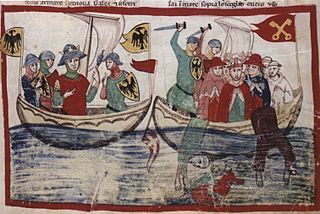
The naval Battle of Giglio was a military clash between a fleet of the Holy Roman Emperor Frederick II and a fleet of the Republic of Genoa in the Tyrrhenian Sea. It took place on Friday, May 3, 1241 between the islands of Montecristo and Giglio in the Tuscan Archipelago and ended with the victory of the Imperial fleet.

The War of the Sicilian Vespers, also shortened to the War of the Vespers, was a conflict waged by several medieval European kingdoms over control of Sicily from 1282 to 1302. The war, which started with the revolt of the Sicilian Vespers, was fought over competing dynastic claims to the throne of Sicily and grew to involve the Crown of Aragon, Angevin Kingdom of Naples, Kingdom of France, and the papacy.
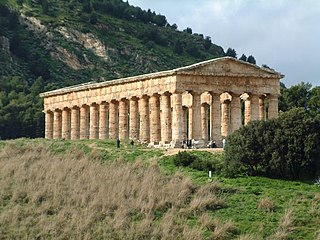
The history of Sicily has been influenced by numerous ethnic groups. It has seen Sicily controlled by powers, including Phoenician and Carthaginian, Greek, Roman, Vandal and Ostrogoth, Byzantine, Arab, Norman, Aragonese, Spanish, Austrians, British, but also experiencing important periods of independence, as under the indigenous Sicanians, Elymians, Sicels, the Greek-Siceliotes, and later as County of Sicily, and Kingdom of Sicily. The Kingdom was founded in 1130 by Roger II, belonging to the Siculo-Norman family of Hauteville. During this period, Sicily was prosperous and politically powerful, becoming one of the wealthiest states in all of Europe. As a result of the dynastic succession, the Kingdom passed into the hands of the Hohenstaufen. At the end of the 13th century, with the War of the Sicilian Vespers between the crowns of Anjou and Aragon, the island passed to the latter. In the following centuries the Kingdom entered into the personal union with the Spaniard and Bourbon crowns, while preserving effective independence until 1816. Sicily was merged with the Kingdom of Italy in 1861. Although today an Autonomous Region, with special statute, of the Republic of Italy, it has its own distinct culture.
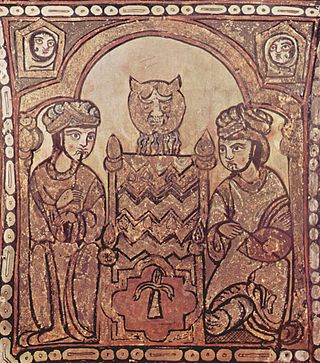
The history of Islam in Sicily and southern Italy began with the first Arab settlement in Sicily, at Mazara, which was captured in 827. The subsequent rule of Sicily and Malta started in the 10th century. The Emirate of Sicily lasted from 831 until 1061, and controlled the whole island by 902. Though Sicily was the primary Muslim stronghold in Italy, some temporary footholds, the most substantial of which was the port city of Bari, were established on the mainland peninsula, especially in mainland southern Italy, though Muslim raids, mainly those of Muhammad I ibn al-Aghlab, reached as far north as Naples, Rome and the northern region of Piedmont. The Arab raids were part of a larger struggle for power in Italy and Europe, with Christian Byzantine, Frankish, Norman and local Italian forces also competing for control. Arabs were sometimes sought as allies by various Christian factions against other factions.

Lu rebellamentu di Sichilia, fully Cronica di lu rebellamentu di Sichilia contra re Carlu, is a Sicilian historical chronicle of the War of the Vespers written around 1290. The anonymous Rebellamentu, probably written at Messina, was ascribed to Atanasiu di Iaci by Pasquale Castorina in 1883. Though the Rebellamentu sometimes adds valuable details to the history of the Vespers, it is frequently untrustworthy. Its monastic provenance is evident in its moralising tone. The antiquity of its language has placed its authenticity beyond doubt, despite its lack of an early manuscript tradition. This has not prevented speculation that it was written contemporarily with events: one verb in one manuscript is found in the first-person present; this may represent the author inadvertently stepping out of his usual frame of reference, or merely an error in that manuscript.

The Muslim settlement of Lucera was the result of the decision of the King of Sicily Frederick II of the Hohenstaufen dynasty (1194–1250) to move 20,000 Sicilian Muslims to Lucera, a settlement in Apulia in southern Italy. The settlement thrived for about 75 years. In 1300, it was sacked by the Christian forces of Charles II of Naples and its Muslim inhabitants were exiled or sold into slavery.

The Battle of Cerami was fought in June 1063 and was one of the most significant battles in the Norman conquest of Sicily, 1060–1091. The battle was fought between a Norman expeditionary force and a Muslim alliance of Sicilian and Zirid troops. The Normans fought under the command of Roger de Hauteville, the youngest son of Tancred of Hauteville and brother of Robert Guiscard. The Muslim alliance consisted of the native Sicilian Muslims under the Kalbid ruling class of Palermo, led by Ibn al-Hawas, and Zirid reinforcements from North Africa led by the two princes, Ayyub and 'Ali. The battle was a resounding Norman victory that utterly routed the opposing force, causing divisions amongst the Muslim aristocracy which ultimately paved the way for the eventual capture of the Sicilian capital, Palermo, by the Normans and subsequently the rest of the island.

Jordan Lupin was the first count of Bovino in the Norman kingdom of Sicily. He played a major role in the final years of Norman rule and first years of the Staufer dynasty. Twice he was involved in opposing crusader armies passing through Sicily. In the second instance, he led a revolt, apparently in the hope of seizing the throne. He was successful in attracting significant support, and was even crowned anti-king, but was ultimately captured and executed.
Conrad of Antioch was a scion of an illegitimate branch of the imperial Staufer dynasty and a nobleman of the Kingdom of Sicily. He was the eldest son of Frederick of Antioch, imperial vicar of Tuscany, and Margherita di Poli. He was thus a grandson of the Emperor Frederick II, a nephew of King Manfred of Sicily (1258–66) and cousin of King Conradin (1266–68). His surname, which is contemporary, comes from his paternal grandmother, a mistress of Frederick II from Antioch. He may be called "Conrad I" to distinguish him from his descendants with the same given name.
Henry of Morra was a nobleman, judicial official and sometime regent of the Kingdom of Sicily, which at the time covered both the island of Sicily and the mainland southern Italy. As master justiciar of the Magna Curia from 1223 until his death, he was the most prominent official in the Sicilian court of Frederick II, King of Sicily and Holy Roman Emperor.
Andrew of Cicala, known in Italian as Andrea di Cicala or Andrea Cicala, was a nobleman and administrator in the Kingdom of Sicily under the king-emperor Frederick II. He was the lord of Golisano from before 1231 and the lord of Polizzi from 1236.
Aldoin, also spelled Arduin or Harduin, was the bishop of Cefalù from 1217 until his death. He is best known for his three exiles and his trial for maladministration in 1223–1224.

Berard of Castagna was a prelate and diplomat of the Kingdom of Sicily, who served as the archbishop of Bari (1207–1213) and archbishop of Palermo (1213–1252). Throughout his career he was a close ally of King Frederick II, who was also Holy Roman Emperor after 1220. He played a prominent role in the Sixth Crusade, both in the diplomatic preliminaries and in Frederick's visit to Jerusalem.
Lando was the archbishop of Reggio in Calabria from 1218 to 1232, and archbishop of Messina from 1232 until his death.
