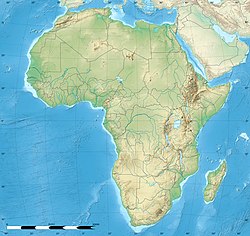
Giza[a] is the third-largest city in Egypt by area and sixteenth-largest city in Africa by population. It is the capital of Giza Governorate with a total population of 4,458,135 as of 2023.[2] It is located on the west bank of the Nile opposite central Cairo, and is a part of the Greater Cairo metropolis.[3] Giza lies less than 30 kilometres (20 miles) north of Memphis (Men-nefer, today the village of Mit Rahina), which was the capital city of the unified Egyptian state during the reign of pharaoh Narmer, roughly 3100 BC.
In 2025, Giza was visited by 14.7 million tourists, becoming the most popular tourist destination in Egypt.[4][5] Its historic centre is listed by UNESCO as a World Heritage Site.[6] Giza also hosts the headquarters of several Egyptian multinational companies and banks.[7] Rich in ancient Egyptian heritage, hotels, restaurants, and bazaars, Giza is considered an important economic, scientific, and tourism centre of Egypt and Africa. The Giza Zoo, the first zoo built in Africa, is located in Giza. The city also is the home of the association football club Zamalek SC.
Districts and population
The city of Giza is the capital of the Giza Governorate, and is located near the northeast border of this governorate.
2017 population and administrative divisions
Giza city is a municipal division and capital of Giza governorate with an appointed city head.[8] It comprises nine districts (ahya', singl. hayy) and five new towns(mudun jadidah) administered by the New Urban Communities Authority (NUCA).
The districts/qisms fully subsume to the city head and according to the 2017 census had 4,872,448 residents:[9][10]
The new towns are mostly administered by the national level New Urban Communities Authority (NUCA), with some public services under the jurisdiction of Giza. They are confusingly named madina (city), however they are not administratively incorporated as such where many are formed of a single district or qism. Ones not in the 2017 census as they were not yet incorporated, or inhabited at that time are:
The city's population was reported as 2,681,863 in the 2006 national census,[16][17] while the governorate had 6,272,571 at the same census, without specifying what the city is. The former figure corresponds to the sum of nine districts/qisms.
Region
(Population)
Area km2
2006
Giza, 9 kisms (contiguous)
2,681,863
98.4
Giza, 10 kisms (not contiguous)
2,822,271
115.7
Giza, 10 kisms + Giza markaz (contiguous)
3,063,777
187
Giza, 10 kisms + Giza, Kerdasa, Ossim markaz (contiguous)
–
338.9
Geography and climate
Giza's most famous landform and archaeological site, the Giza Plateau, holds some major monuments of Egyptian history, and is home to the Great Sphinx. Once thriving with the Nile that flowed right into the Giza Plateau, the pyramids of Giza were built overlooking the ancient Egyptian capital city of Memphis, across the river from modern day Cairo. The Great Pyramid of Giza at one time was advocated (1884) as the location for the Prime Meridian, a reference point used for determining a base longitude.[18]
Climate
Giza experiences a hot desert like arid climate (Köppen: BWh). Its climate is similar to Cairo, owing to its proximity. Windstorms can be frequent across Egypt in spring, bringing Saharan dust into the city during the months of March and April. High temperatures in winter range from 16 to 20°C (61 to 68°F), while nighttime lows drop to below 7°C (45°F). In summer, the highs are 40°C (104°F), and the lows can drop to about 20°C (68°F). Rain is infrequent in Giza; snow is extremely rare.
Up to August 2013, the highest recorded temperature was 46°C (115°F) on 13 June 1965, while the lowest recorded temperature was 2°C (36°F) on 8 January 1966.[19]
As ancient Egypt passed under several conquests under the Persians, Greeks, Romans and Byzantines, so did the area in what is now Giza. A Byzantine village named Phylake (Greek: Φυλακή) or Terso (Coptic: ϯⲣⲥⲱ, meaning "the fortress", now Tersa) was located south of Giza and should not be confused with it.[21][22][23]
As Muslims of the fledgling Islamiccaliphate went on with their conquest of Egypt from the Byzantine Empire beginning in 639 AD, three years after their victory at the battle of Yarmouk in 636 AD, they conquered all of the land by the time they captured the city of Alexandria in 641 AD. A year later in 642 AD (year 21 in Islamic calendar), they founded the city of Giza. The exact etymology of its name is unknown. Al-Maqrizi suggested an irregular Arameo-Arabic root meaning "edge, side" to be the source. Everett-Heath suggested Ancient Egyptian: r-gs-ḥr "on the side of the height (pyramid)". Peust also suggests a Persian etymology of the word from Middle Persian: 𐭣𐭦, romanized:diz, lit.'fortress, castle', which Persians could have given to the pyramids or a fortress they found in the area.[30]
Administration
The city is managed by an appointed City Head (President of the City) and the Governor of Giza, who is appointed by the Prime Minister of Egypt. The current Governor of Giza is Major General Adel El-Ghadban (taking office in 2024).
The administration is divided into Executive Council, which is the appointed body that implements government policies and the Local People’s Council, which is historically an elected body meant for local oversight (though its functions are largely centralized).[31]
Giza City is divided into 9 urban districts, which are the primary units for day-to-day governance and public services:
Many regional and national government entities have offices within Giza to serve the Greater Cairo area such as; the Giza Governorate Headquarters, Health Affairs Directorate, Giza Elementary Court, and Foreign Ministry Legalization Office.
Economy
Industries in Giza include film making, the city is considered a hub of Egyptian studios such as Studio Misr and El-Ahram Studio, and several movie production companies have their headquarters in Giza.[32][33][34]
A vital revenue source, with millions of visitors coming to see the Giza Pyramids and ancient artifacts. Tourism revenues reached $15.3 billion nationally in 2024.
Giza Plateau has several remains from the 26th century BC such as temples and monuments to Egyptian Pharaohs including the Great Sphinx, and the Great Pyramids of Giza.[36] The Giza Plateau also includes Saqqara, the ancient burial ground which served as the necropolis for the Ancient Egyptian capital of Memphis. It features numerous pyramids, including the world's oldest standing step pyramid, as well as a number of mastabas.[37]
The Giza Zoo was established on March 1, 1891, it holds the distinction of being Africa's first zoo and the world's third oldest zoological garden.[41] Located on approximately 80 acres (32 hectares), the zoo was originally designed as a botanical garden and features several historical architectural elements.[42]
Historical features
The zoo contains several notable architectural and cultural landmarks:
A suspension bridge designed by Gustave Eiffel (1875-1879), considered the world's first elevated zoo viewing platform[43]
The Japanese Kiosk, constructed in 1924 during King Fuad's reign
Original gates from the Khedive's Palace and Haramlik Palace
Roads paved with black stone imported from Trieste
Mosaic-decorated footpaths
A marble island known as Tea Island
Animal collection
The zoo houses approximately 4,000 animals representing over 175 species,[44] including:
Large mammals: Lions, tigers, giraffes, rhinoceros, hippopotamuses
Primates: Various monkey and ape species
Birds: Native and exotic species including flamingos and rare birds
Reptiles: Including Egyptian cobras and Nile crocodiles
Recent developments
In 2023, the Egyptian government announced plans to expand the number of animal species from 71 to 186.[45] The renovation project includes:
Creation of specialized zones: Asia, Africa, America, Family Zone, Safari Trips
The garden covers about 28 acres. Today, the garden contains a rock garden, a rose garden, cactus gardens, and probably the most notable feature, the lotus pond. small botanical museum attached to the garden shelters herbaria dating from the Khedive Ismail and furniture from the king Farouk.[46]
Infrastructure
Giza has seen many changes over time. Changes in infrastructure during thousands of years of Egyptian history.[47] Giza is a thriving centre of Egyptian culture and is quite heavily populated, with many facilities and buildings in the current area. Giza saw much attention in particular to its vast amount of ancient Egyptian heritage on the Giza Plateau, and has astonished millions of visitors and tourists over the years.
Giza's learning institutions include Cairo University, which was moved to Giza in 1924. The city is a hub of education and educational services not only for Egypt but also for the entire Mediterranean Region. Giza has numerous schools, kindergartens, and institutes of higher learning.
Healthcare services are widely available in Giza, ranging from private to public facilities, including internationally accredited hospitals, clinics, and numerous local pharmacies.[56][57] The Egyptian government has prioritized improving healthcare through investment in the development of public hospitals.[58][59] Private hospitals and medical centers in Giza include; ABC Hospital, AL Kawkab Hospital, Sphinx Specialized Hospital, Gannah Hospital, Al Assema Hospital, El Safa Hospital, El Salam Hospital El Haram, Giza Specialized Hospital, and El Shorouk Hospital.[60][61]
Bashteel Railway Station, also called Upper Egypt Railway Station, is a major railway station, and the main railway station in Giza. It is located in Bashteel district. It is intended to serve as a new major railway hub in Greater Cairo and to relieve congestion at Ramses Station.[65]
Giza shares with Cairo a subway system, officially called the "Metro (مترو)", a fast and efficient way of getting around. An extensive road network connects Giza with 6th of October City, Cairo and other cities. There are flyovers and bridges such as the 15th. Traffic in Giza is known to be overwhelming and overcrowded.
Roads
An extensive road network connects Giza with other Egyptian cities. There is a Ring Road that surrounds the outskirts of the Cairo metropolitan area. There are flyovers, tunnels and bridges, such as the Saft El Laban axis that, when the traffic is not heavy, allow fast means of transportation from one side of the city to the other. Giza traffic is known to be overwhelming and overcrowded.
There are two types of buses in Giza, the minibuses and public buses. Bus lines are spread all over the Greater Cairo area, and are considered the main mean of transport for many Cairenes.[68][69]
All of the collection of the Museum of Egyptian Civilization, including the Tutankhamun collection, are slated to be moved to the new Grand Egyptian Museum, under construction in Giza, and was due to open by the end of 2020.[70][71] Dedicated to Ancient Egypt and its culture, society, and artifacts, the GEM is the largest museum in the world for a single civilization. The museum also includes a conservation center, a conference center, and various dining and shopping areas.[72][73]
The Egyptian Agricultural Museum is a museum complex built primarily to showcase the history of agriculture in Egypt throughout its various eras. Located in the Dokki district of Giza, the museum was initially named the "Fouad I Agricultural Museum," it was housed in the palace of Princess Fatima Ismail.[74] The museum later expanded to include several other buildings and museums, encompassing eight museums in one, covering an area of over 30 acres (approximately 175,000 square meters), interspersed with green spaces and gardens. It is considered one of the first and largest agricultural museums in the world and houses 1,451 registered artifacts, in addition to other collections.[75][76]
The Mohamed Mahmoud Khalil Museum and Palace is an Egyptian museum located in the Giza district of Cairo. It was founded by Mohamed Mahmoud Khalil. The palace was first opened as a museum in 1962, then moved to the Prince Amr Ibrahim Palace in Zamalek in 1971, before reopening in Zamalek in 1979.[77][78][79]
The Taha Hussein Museum is Taha Hussein's villa, also known as "Ramtan," which the Egyptian Ministry of Culture converted into a museum to commemorate the Dean of Arabic Literature. The museum villa consists of two floors and a library.[80]
The Mohamed Nagy Museum is a historical photography museum located at Mahmoud El Gendy Street near the Giza Plateau, in the Haram district of Giza, in southwest Greater Cairo. It was founded in 1952 by Mohamed Nagy as his studio, as he was a pioneer of modern Egyptian photography in modern Egypt.[7][8] After his death, he converted the studio into a museum, which was officially opened by the Egyptian Minister of Culture, Tharwat Okasha, on July 13, 1968. The museum was renovated in 1991.[4][6]
The Imhotep Museum is an archaeological museum located at the foot of the Saqqara necropolis complex, near Memphis in Lower Egypt.[81] The museum was established to honor and commemorate the ancient Egyptian architect Imhotep, the builder of King Pyramid of Djoser, as the first to construct a pyramid and the first to use stone in the construction of massive buildings.[82][83] The museum consists of several halls housing more than 500 rare artifacts unearthed from the Saqqara archaeological site. The museum's exhibits include a model of King Djoser's funerary complex, and one of the halls is designed as a complete tomb displaying a mummy, a wooden coffin, and a number of pottery and alabaster vessels. The museum also houses the library of the EgyptologistJean-Philippe Lauer.[84][85]
Music
Music in Giza is characterized by high-profile international concerts at the Pyramids, historic residency shows, and a vibrant local nightlife scene in the surrounding district. The Pyramids Sound and Light Show is a nightly performance where the Great Sphinx narrates the history of ancient Egypt, accompanied by dramatic music and laser projections.[86][87]
Giza Governorate's National Day is celebrated on March 31st each year, commemorating the struggle of Giza's people against the British occupation, specifically the Battle of Nazlet El-Shobak in Badrasheen in 1919, where the locals confronted a train of occupation soldiers and sacrificed martyrs for their country.[92] Cultural celebrations, events, and project inaugurations are held to honor this anniversary. The city also celebrates a mix of Islamic, Coptic Christian, and national holidays, featuring vibrant festivals like the Eid holidays such as Eid al-Fitr, Eid al-Adha, religious observances like Coptic Christmas on January 7th and Mawlid al-Nabi, and national days such as Revolution Day on January 25th and Armed Forces Day on October 6th, alongside cultural events like Sham El-Nessim and unique spectacles offering diverse cultural experiences year-round. Ramadan is the holy month of fasting, observed with special meals and community focus.[93][94]
Painting and sculpture
Egypt's Renaissance Statue is a living symbol of modern Egyptian art.
Giza is a destination for both ancient and contemporary art, housing monumental sculptures and dedicated painting museums, located primarily on the Giza Plateau. The Great Sphinx of Giza is the oldest known monumental sculpture in Egypt, this limestone statue depicts a reclining sphinx with the head of a Pharaoh. Evidence suggests it was once painted in bright colors.[95][96]
The Egypt’s Renaissance Statue, located near the Cairo University bridge, the 1928 sculpture by Mahmoud Mokhtar is a key symbol of modern Egyptian identity, blending Egyptian style with 20th-century nationalism. Giza has yielded world-famous works like the Bust of Prince Ankhhaf and the Pair Statue of King Menkaure and Queen, which are celebrated for their realistic portraiture.[97][98] Modern Giza hosts large-scale international art events that place contemporary sculpture in dialogue with the pyramids.[99][100]
Giza is a global center for media production and is currently expanding its infrastructure with massive 2025 projects. The Egyptian Media Production City (EMPC) is located in 6th of October City, a satellite city in the Giza Governorate, the EMPC is the primary media hub for Egypt.[104] It covers approximately 35 million square meters and features 114 studios equipped for cinematography, TV, and video production.[105][106]
The Media Public Free Zone was established to attract investment, this zone offers specialized infrastructure, including satellite broadcasting stations and technical service centers for media projects.[107] Besides the United for Media Services, the leading media production companies in Giza include Birdmilk, Big Move Agency, Vision Egypt, and Sway Media.[108]
Several newspapers are based in Giza, such as the Daily News Egypt, the country's only independent English-language daily newspaper, with its headquarters are located in Dokki. Also the El Watan News, which is a comprehensive daily online portal and printed newspaper with its address in Dokki as well.[109] Also the El Wafd, associated with Egyptian Wafd Party. The Egypt Today Magazine and media production company is also located in Giza.[110]
In November 2025, Giza was officially listed in the UNESCO Creative Cities Network in recognition of its deep-rooted legacy in the film and arts industry.[111]
Sport
The city is home to the 20th century most successful sports club in Africa, the Zamalek Sporting Club, an Egyptian giant, located in the Meet Okba neighborhood near the Mohandiseen district in Giza.[112] Beside the Zamalek Sporting Club, there are other clubs like El Tersana SC and Egyptian Shooting Club which is one of the elite clubs in Egypt, located in Dokki neighborhood.[113]
↑"Giza, Egypt". 11 February 2011. Archived from the original on 21 February 2019. Retrieved 21 February 2019.
↑"The Canary Islands and the Question of the Prime Meridian: The Search for Precision in the Measurement of the Earth", Wilcomb E. Washburn. linkArchived 29 May 2007 at the Wayback Machine
↑موسوعة " القاموس الجغرافى للبلاد المصرية " – محمد رمزى بك (قسم ثانى ج3 – ص4): مركز وثائق وتاريخ مصر المعاصر الهيئة المصرية العامةللكتاب ط 1994
↑جغرافية مصر في العصر القبطى – الفرنسى أميلينو: الهيئة المصرية العامة للكتاب2013 ترجمة ميخائيل مكسى إسكندر – استدراكات العلامة محمد رمزى على الكتاب في الجزء الثالث من ص 274: نشر المعهد العلمى الفرنسى
Der Manuelian, Peter. 2017. Digital Giza: Visualizing the Pyramids. Cambridge, Massachusetts: Harvard University Press.
Hawass, Zahi A. 2010. Wonders of the Pyramids: The Sound and Light of Giza. Cairo: Misr Company for Sound, Light, & Cinema.
--. 2011. Newly-Discovered Statues From Giza, 1990–2009. Cairo: Ministry of State for Antiquities.
Magli, G. 2016. "The Giza 'written' landscape and the double project of King Khufu." Time & Mind-the Journal of Archaeology Consciousness and Culture 9, no.1: 57–74.
Khattab, Hind A. S., Nabil Younis, and Huda Zurayk. 1999. Women, Reproduction, and Health In Rural Egypt: The Giza Study. Cairo, Egypt: American University in Cairo Press.
Kormysheva, Ė. E., Svetlana Malykh, and Sergey Vetokhov. 2010. Giza, Eastern Necropolis: Russian Archaeological Mission In Giza. Moscow: Institute of Oriental Studies, Russian Academy of Sciences.
Lawton, Ian, and Chris Ogilvie-Herald. 2000. Giza: The Truth: the People, Politics and History Behind the World's Most Famous Archaeological Site. Rev. ed. London: Virgin.
Lehner, Mark, and Zahi A. Hawass. 2017. Giza and the Pyramids: The Definitive History. Chicago: The University of Chicago Press.
This page is based on this Wikipedia article Text is available under the CC BY-SA 4.0 license; additional terms may apply. Images, videos and audio are available under their respective licenses.


 Egypt
Egypt 


