
Aleimma loeflingiana is a moth of the family Tortricidae. It is found in Europe and the Near East.

Parapoynx stratiotata, the ringed china-mark, is a moth of the family Crambidae. The species was first described by Carl Linnaeus in his 1758 10th edition of Systema Naturae. It is found in Europe where the distribution area extends in the north to the British Isles including Ireland and in the south to Sardinia, Sicily and Greece. The species is also found across the Palearctic in North Africa, Lebanon, Turkey, Azerbaijan, Kyrgyzstan, Uzbekistan and China..

Falcaria lacertinaria, the scalloped hook-tip, is a moth of the family Drepanidae. The species was first described by Carl Linnaeus in his 1758 10th edition of Systema Naturae It is found in Europe and Anatolia then east to Eastern Siberia.

Acleris rhombana, the rhomboid tortrix, is a moth of the family Tortricidae. It is found in the Palearctic realm, from Europe to the Caucasus, Armenia, and Turkmenistan.

Paraswammerdamia lutarea is a moth of the family Yponomeutidae. It is found in Europe.

Plutella porrectella is a moth of the family Plutellidae found in Europe, the Caucasus, southern Siberia and Asia Minor.

Izatha metadelta is a moth of the family Oecophoridae. It is endemic to New Zealand, where it is known from the North Island only. It is rare north of Waikato and the Bay of Plenty.
Phaeosaces lindsayae is a species of moth in the family Depressariidae. It is endemic to New Zealand. It is classified as "Data Deficient" by the Department of Conservation.

Elachista sagittifera is a species of moth in the family Elachistidae. It was described by Alfred Philpott in 1927. It is endemic to New Zealand and is known from Arthur's Pass. It is similar in appearance to Elachista thallophora. Adults are on the wing in February.
Agonopterix rosaciliella is a moth in the family Depressariidae. It was described by August Busck in 1904. It is found in North America, where it has been recorded from Alaska and western Saskatchewan through Washington to California and Arizona.
Nites betulella, the black-dotted birch leaftier moth, is a moth in the family Depressariidae. It was described by August Busck in 1902. It is found in North America, where it has been recorded from Nova Scotia, southern Canada, the north-eastern United States, British Columbia and Wisconsin.
Trycherodes albifrons is a moth in the family Depressariidae. It was described by Lord Walsingham in 1912. It is found in Mexico, Guatemala and Panama.
Trycherodes chilibrella is a moth in the family Depressariidae. It was described by August Busck in 1914. It is found in Panama.

Hierodoris stella is a species of moth in the family Oecophoridae. This species is endemic to New Zealand and occurs in Auckland, Taranaki, Hawkes Bay, Bay of Plenty and Wellington. As at 2005 the larvae of this species is unknown as is its host plant. The adult moth frequents forest and are on the wing in January and February. It is classified as "At Risk, Relict'" by the Department of Conservation.
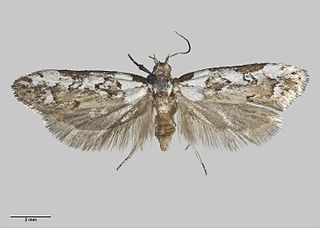
Trachypepla festiva is a moth of the family Oecophoridae and was first described by Alfred Philpott in 1930. It is endemic to New Zealand and has been collected in the northern parts of the North Island.

Mallobathra cana is a moth of the family Psychidae. This species is endemic to New Zealand.

Tingena afflicta is a species of moth in the family Oecophoridae. It is endemic to New Zealand.

Tingena anaema is a species of moth in the family Oecophoridae. It is endemic to New Zealand and has been collected at Lake Wakatipu, Invercargill and Stewart Island / Rakiura. The adults of the species are on the wing in December.
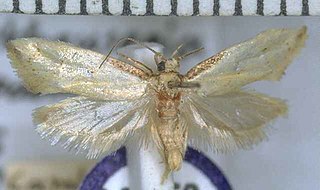
Tingena apanthes is a species of moth in the family Oecophoridae. It is endemic to New Zealand and found in the North Island. The adults are on the wing from October to December. It appears associated with Leptospermum species and it has been hypothesised that the appearance of the adults of this species imitates faded Leptospermum leaves.

Tingena horaea is a species of moth in the family Oecophoridae. It is endemic to New Zealand and have been observed in both the North and South Islands. The adults are on the wing in January.

