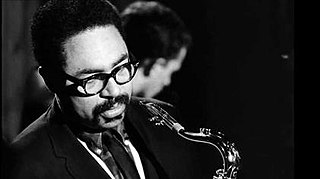
Booker Telleferro Ervin II was an American tenor saxophone player. His tenor playing was characterised by a strong, tough sound and blues/gospel phrasing. He is remembered for his association with bassist Charles Mingus.
Horace Parlan was an American pianist and composer known for working in the hard bop and post-bop styles of jazz. In addition to his work as a bandleader Parlan was known for his contributions to the Charles Mingus recordings Mingus Ah Um and Blues & Roots.

Sonny Stitt was an American jazz saxophonist of the bebop/hard bop idiom. Known for his warm tone, he was one of the best-documented saxophonists of his generation, recording more than 100 albums. He was nicknamed the "Lone Wolf" by jazz critic Dan Morgenstern because of his tendency to rarely work with the same musicians for long despite his relentless touring and devotion to the craft. Stitt was sometimes viewed as a Charlie Parker mimic, especially earlier in his career, but gradually came to develop his own sound and style, particularly when performing on tenor saxophone and even occasionally baritone saxophone.

John Arnold Griffin III was an American jazz tenor saxophonist. Nicknamed "the Little Giant" for his short stature and forceful playing, Griffin's career began in the mid-1940s and continued until the month of his death. A pioneering figure in hard bop, Griffin recorded prolifically as a bandleader in addition to stints with pianist Thelonious Monk, drummer Art Blakey, in partnership with fellow tenor Eddie "Lockjaw" Davis and as a member of the Kenny Clarke/Francy Boland Big Band after he moved to Europe in the 1960s. In 1995, Griffin was awarded an Honorary Doctorate of Music from Berklee College of Music.
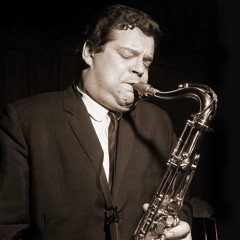
Edward Brian "Tubby" Hayes was a British jazz multi-instrumentalist, best known for his virtuosic musicianship on tenor saxophone and for performing in jazz groups with fellow sax player Ronnie Scott and trumpeter Jimmy Deuchar. He is widely considered to be one of the finest jazz saxophonists to have emerged from Britain.
Richard Edwin Morrissey was a British jazz musician and composer. He played the tenor saxophone, soprano saxophone and flute.
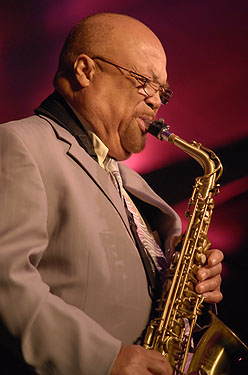
James Wesley "Red" Holloway was an American jazz saxophonist.
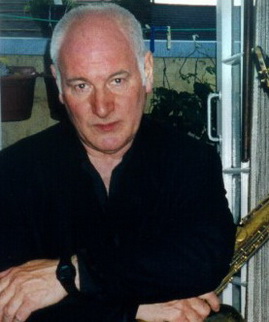
Stan Robinson was an English jazz tenor saxophonist and flautist.

Sonny Meets Hawk! is a 1963 album by jazz saxophonist Sonny Rollins, with Coleman Hawkins appearing as guest artist. It was recorded at RCA Victor Studio B in New York City on July 15 and 18, 1963. The album features some of Rollins's most avant-garde playing.
Simon Richard Spillett is a British jazz tenor saxophonist. He has won the BBC Jazz Awards Rising Star (2007), Jazz Journal's Critics' Choice album of the Year (2009), the British Jazz Awards Top Tenor Saxophonist (2011), and Services to British Jazz award (2016).

Sonny Rollins and the Big Brass is an album by jazz saxophonist Sonny Rollins, recorded for the MetroJazz label, later reissued on Verve Records as Sonny Rollins/Brass - Sonny Rollins/Trio.
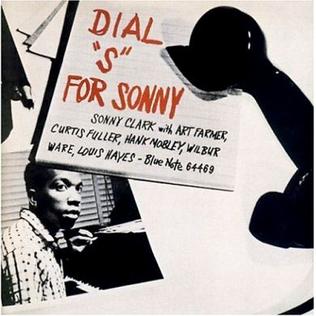
Dial "S" for Sonny is the debut studio album by the American jazz pianist Sonny Clark. It was released in November 1957 through Blue Note Records. The recording was made on July 21, 1957 with a septet assembled for the session consisting of horn section Art Farmer, Curtis Fuller, and Hank Mobley and rhythm section Wilbur Ware and Louis Hayes.
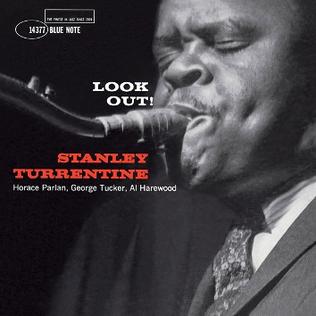
Look Out! is an album by jazz saxophonist Stanley Turrentine featuring his earliest recordings as a leader on the Blue Note label performed by Turrentine with Horace Parlan, George Tucker and Al Harewood.
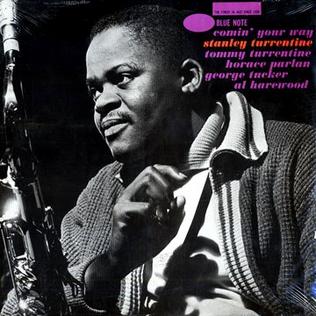
Comin' Your Way is an album by jazz saxophonist Stanley Turrentine recorded for the Blue Note label and performed by Turrentine with his brother Tommy Turrentine, Horace Parlan, George Tucker and Al Harewood. Selections from this album had previously been issued, with additional tracks later appeared as Jubilee Shout!!! (1986), as Jubilee Shouts.
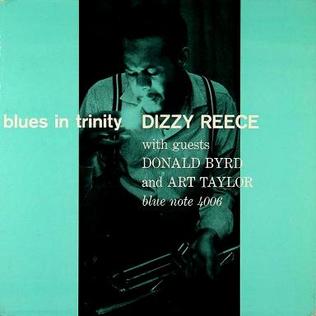
Blues in Trinity is an album by Jamaican-born England-based jazz trumpeter Dizzy Reece, recorded on August 24, 1958 and released on Blue Note the following year—his debut for the label.
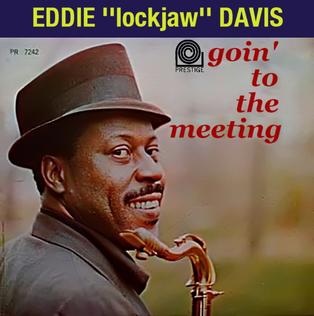
Goin' to the Meeting is an album by saxophonist Eddie "Lockjaw" Davis recorded in 1962 for the Prestige label.
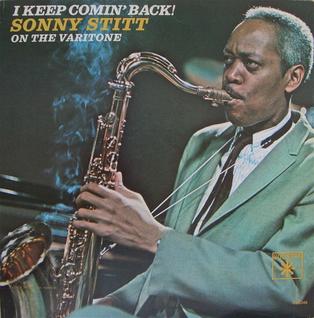
I Keep Comin' Back! is an album by saxophonist Sonny Stitt recorded in 1966 and released on the Roulette label. The album represents Stitt's second album featuring the varitone, an electronic amplification device which altered the saxophone's sound.

Miles Davis with Sonny Rollins is a 1954 10 inch LP album by Miles Davis, released by Prestige Records. The four tracks on this LP, along with a second take of "But Not For Me", were recorded at Rudy Van Gelder's Studio, Hackensack, New Jersey, on June 29, 1954.

Return Visit! is an album by British jazz saxophonist Tubby Hayes, recorded in June 1962 and released on Fontana Records in 1963. Produced by Quincy Jones and featuring the "All Stars" of Roland Kirk, James Moody, Walter Bishop, Jr., Sam Jones, and Louis Hayes, the session is notable for being Hayes's second to be recorded in the United States, following Tubbs in N.Y. in 1962. The line-up unusually includes three tenor saxophonists, all of whom double on other instruments.

Tubbs is an album by British jazz saxophonist Tubby Hayes. Recorded in June 1961 and released later the same year, Tubbs was the first studio album Hayes recorded under his recording contract with Fontana Records. The album features Hayes in both a quartet and big band setting, and includes two tracks on which Hayes moves to vibraphone.


