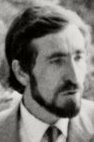
1991 Madrid municipal election

Last updated
1991 Madrid municipal election
Bandera de la ciudad de Madrid.svg
  1987 26 May 1991 1995  

All 57 seats in the City Council of Madrid
29 seats needed for a majority
Opinion polls
Registered2,524,947 Increase2.svg 6.3%
Turnout1,493,617 (59.2%)
Decrease2.svg 10.9 pp
 First partySecond partyThird party
  (Alvarez del Manzano) Jose Maria Aznar recibe al alcalde de Madrid. Pool Moncloa. 19 de junio de 1996 (cropped).jpeg (Juan Barranco) Felipe Gonzalez pasea con el alcalde de Madrid por los jardines del palacio de la Moncloa. Pool Moncloa. 2 de mayo de 1986 (cropped) (cropped).jpeg Portrait placeholder.svg
Leader José María Álvarez del Manzano Juan Barranco Francisco Herrera
Party PP PSOE IU
Leader since10 October 198619 January 19867 June 1990
Last election20 seats, 34.0% [a] 24 seats, 40.5%3 seats, 6.1%
Seats won30216
Seat changeIncrease2.svg 10Decrease2.svg 3Increase2.svg 3
Popular vote702,834510,556144,640
Percentage47.2%34.3%9.7%
SwingIncrease2.svg 13.2 pp Decrease2.svg 6.2 pp Increase2.svg 3.6 pp

 Fourth party
  Jose Ramon Lasuen 2014b (cropped).jpg
Leader José Ramón Lasuén
Party CDS
Leader since22 March 1991
Last election8 seats, 15.1%
Seats won0
Seat changeDecrease2.svg 8
Popular vote43,112
Percentage2.9%
SwingDecrease2.svg 12.2 pp

Mayor before election

Agustín Rodríguez Sahagún
CDS

Elected Mayor

José María Álvarez del Manzano
PP

A municipal election was held in Madrid on Sunday, 26 May 1991, to elect the 4th City Council of the municipality. All 57 seats in the City Council were up for election. It was held concurrently with regional elections in thirteen autonomous communities and local elections all across Spain.

Contents

The People's Party (PP), People's Alliance new electoral brand, went on to win a City Council election in Madrid for the first time with an absolute majority of seats. The Spanish Socialist Workers' Party (PSOE) continued its decline in the city and lost 3 seats and around 150,000 votes, while United Left (IU) recovered from its 1987 debacle and, for the first time since 1979, increased in seats and votes. The ruling Democratic and Social Centre (CDS), whose local leader Agustín Rodríguez Sahagún had announced his intention not to run for re-election, all but disappeared from the Council after failing to meet the required 5% threshold.

As a result of the election, José María Álvarez del Manzano was elected Mayor unopposed, a post he would retain until 2003, becoming the longest-serving democratically elected Mayor of Madrid.

Overview

Under the 1978 Constitution, the governance of municipalities in Spain—part of the country's local government system—was centered on the figure of city councils (Spanish : ayuntamientos), local corporations with independent legal personality composed of a mayor, a government council and an elected legislative assembly. [1] [2] In the case of Madrid, the top-tier administrative and governing body was the City Council of Madrid. [3]

Electoral system

Voting for local assemblies was on the basis of universal suffrage, which comprised all nationals over 18 years of age, registered and residing in the municipality of Madrid and in full enjoyment of their political rights (provided that they were not sentenced—by a final court ruling—to deprivation of the right to vote, nor being legally incapacitated), as well as resident non-nationals whose country of origin allowed Spanish nationals to vote in their own elections by virtue of a treaty. [2] [4] [5]

Local councillors were elected using the D'Hondt method and a closed list proportional voting system, with an electoral threshold of five percent of valid votes (which included blank ballots) being applied in each municipality. [6] Each municipality constituted a multi-member constituency, entitled a number of seats based on the following scale: [7]

PopulationCouncillors
<2505
251–1,0007
1,001–2,0009
2,001–5,00011
5,001–10,00013
10,001–20,00017
20,001–50,00021
50,001–100,00025
>100,001+1 per each 100,000 inhabitants or fraction
+1 if total is an even number

The law did not provide for by-elections to fill vacated seats; instead, any vacancies that occurred after the proclamation of candidates and into the legislative term were to be covered by the successive candidates in the list and, when required, by the designated substitutes. [8]

The mayor was indirectly elected by the local assembly. [2] A legal clause required candidates to earn the vote of an absolute majority of councillors, or else the candidate of the most-voted party was to be automatically appointed to the post. In the event of a tie, the appointee was to be determined by lot. [9]

Election date

The term of city councils in Spain expired four years after the date of their previous election, with amendments earlier in 1991 fixing election day for the fourth Sunday of May every four years (as of 2025, this has been the year before a leap year). The election decree was required to be issued between the fifty-fourth and sixtieth day prior to the scheduled election date and published on the following day in the Official State Gazette (BOE). [10] The previous local elections were held on 10 June 1987, setting the date for election day on the fourth Sunday of May four years later, which was 26 May 1991.

Local councils could not be dissolved before the expiry of their term, except in cases of mismanagement that seriously harmed the public interest and implied a breach of constitutional obligations, in which case the Council of Ministers could—optionally—agree to call a by-election. [11]

Elections to local councils were officially called on 2 April 1991 with the publication of the corresponding decree in the BOE, setting election day for 26 May. [12]

Parties and candidates

The electoral law allowed for parties and federations registered in the interior ministry, alliances and groupings of electors to present lists of candidates. Parties and federations intending to form an alliance ahead of an election were required to inform the relevant electoral commission within ten days of the election call, whereas groupings of electors needed to secure the signature of a determined amount of the electors registered in the municipality for which they sought election, disallowing electors from signing for more than one list of candidates. In the case of Madrid, as its population was over 1,000,001, at least 8,000 signatures were required. [13]

Below is a list of the main parties and electoral alliances which contested the election:

CandidacyParties and
alliances
Leading candidateIdeologyPrevious resultGov.Ref.
Vote %Seats
PSOE (Juan Barranco) Felipe Gonzalez pasea con el alcalde de Madrid por los jardines del palacio de la Moncloa. Pool Moncloa. 2 de mayo de 1986 (cropped) (cropped).jpeg Juan Barranco Social democracy 40.5%24Dark Red x.svg [14]
PP
List
(Alvarez del Manzano) Jose Maria Aznar recibe al alcalde de Madrid. Pool Moncloa. 19 de junio de 1996 (cropped).jpeg José María Álvarez del Manzano Conservatism
Christian democracy

34.0%
[a]
20Check-green.svg [15]
CDS Jose Ramon Lasuen 2014b (cropped).jpg José Ramón Lasuén Centrism
Liberalism
15.1%8Check-green.svg [16]
[17]
[18]
IU Portrait placeholder.svg Francisco Herrera Socialism
Communism
6.1%3Dark Red x.svg

Opinion polls

The tables below list opinion polling results in reverse chronological order, showing the most recent first and using the dates when the survey fieldwork was done, as opposed to the date of publication. Where the fieldwork dates are unknown, the date of publication is given instead. The highest percentage figure in each polling survey is displayed with its background shaded in the leading party's colour. If a tie ensues, this is applied to the figures with the highest percentages. The "Lead" column on the right shows the percentage-point difference between the parties with the highest percentages in a poll.

Voting intention estimates

The table below lists weighted voting intention estimates. Refusals are generally excluded from the party vote percentages, while question wording and the treatment of "don't know" responses and those not intending to vote may vary between polling organisations. When available, seat projections determined by the polling organisations are displayed below (or in place of) the percentages in a smaller font; 29 seats were required for an absolute majority in the City Council of Madrid (28 in the 1987 election).

Results

Summary of the 26 May 1991 City Council of Madrid election results
MadridCouncilDiagram1991.svg
Parties and alliancesPopular voteSeats
Votes%±pp Total+/−
People's Party (PP)1702,83447.23+13.2430+10
Spanish Socialist Workers' Party (PSOE)510,55634.31−6.1621−3
United Left (IU)144,6409.72+3.616+3
Democratic and Social Centre (CDS)43,1122.90−12.150−8
Ruiz-Mateos Group (ARM)23,4041.57New0±0
The Greens (LV)18,9471.27+0.590±0
The Ecologists (LE)5,0510.34New0±0
Green Union (UVE)24,3350.29−0.010±0
Workers' Socialist Party (PST)2,9490.20New0±0
Madrilenian Independent Regional Party (PRIM)2,6100.18New0±0
Party of Madrid (PAM)2,3930.16New0±0
Spanish Phalanx of the CNSO (FE–JONS)1,9620.13−0.150±0
Citizen Independent Group Gray Panthers (ACI)1,7450.12New0±0
Revolutionary Workers' Party of Spain (PORE)8590.06−0.010±0
Left Platform (PCE (m–l)–CRPE)37400.05−0.030±0
Alliance for the Republic (AxR)47280.05−0.020±0
Independent Spanish Phalanx (FEI)6050.04New0±0
Spanish Catholic Movement (MCE)5810.04New0±0
Commoners' Land (TC)5630.04New0±0
United Republican Action (ARU)5340.04New0±0
Carlist Party (PC)3410.02New0±0
Generational Integration (IG)2950.02New0±0
Political Natural Power Party (PPNP)2580.02New0±0
Blank ballots18,0551.21+0.18
Total1,488,09757+2
Valid votes1,488,09799.63+0.75
Invalid votes5,5200.37−0.75
Votes cast / turnout1,493,61759.15−10.91
Abstentions1,031,33040.85+10.91
Registered voters2,524,947
Sources [19] [20] [21] [22]
Footnotes:
Popular vote
PP
47.23%
PSOE
34.31%
IU
9.72%
CDS
2.90%
ARM
1.57%
LV
1.27%
Others
1.78%
Blank ballots
1.21%
Seats
PP
52.63%
PSOE
36.84%
IU
10.53%

Aftermath

Government formation

Investiture
Ballot →5 July 1991
Required majority →29 out of 57
30 / 57
Yes check.svg
21 / 57
X mark.svg
Francisco Herrera (IU)
  • IU (6)
6 / 57
X mark.svg
Abstentions/Blank ballots
0 / 57
Absentees
0 / 57
Sources [19] [23] [24]

Notes

  1. 1 2 Results for AP (33.8%, 20 seats) and PDP (0.2%, 0 seats) in the 1987 election.
  2. 1 2 3 4 5 6 7 8 9 10 11 12 13 14 15 16 17 18 19 20 21 22 Within PP.

References

Opinion poll sources
  1. 1 2 3 "Las elecciones de 26-5-91". CEPC (in Spanish). August 1991.
  2. "El PP consolida su victoria en el Ayuntamiento de Madrid, donde el CDS obtendría tres concejales". ABC (in Spanish). 18 May 1991.
  3. "Según una encuesta, el PP roza la mayoría absoluta". ABC (in Spanish). 9 May 1991.
  4. "El ascenso del PP hace peligrar al PSOE en Madrid, Sevilla y Valencia". El País (in Spanish). 19 May 1991.
  5. "Ficha técnica". El País (in Spanish). 19 May 1991.
  6. "El PP, al borde de la mayoría absoluta en Madrid". ABC (in Spanish). 10 May 1991.
  7. "Manzano, al borde de la mayoría absoluta, según una encuesta". ABC (in Spanish). 9 May 1991.
  8. "Encuesta de Demoscopia". El País (in Spanish). 20 October 1990.
Other
  1. Constitution (1978) , art. 140.
  2. 1 2 3 LBRL (1985) , art. 19.
  3. LBRL (1985) , add. prov. 6.
  4. Constitution (1978) , art. 13.
  5. LOREG (1985) , arts. 2–3 & 176.
  6. LOREG (1985) , arts. 163 & 180.
  7. LOREG (1985) , art. 179.
  8. LOREG (1985) , arts. 46, 48 & 182.
  9. LOREG (1985) , art. 196.
  10. LOREG (1985) , arts. 42 & 194.
  11. LBRL (1985) , art. 61.
  12. Real Decreto 391/1991, de 1 de abril, de convocatoria de elecciones locales (PDF) (Royal Decree 391/1991). Official State Gazette (in Spanish). 1 April 1991. Retrieved 27 November 2025.
  13. LOREG (1985) , arts. 44 & 187.
  14. Sánchez-Mellado, Luz (29 January 1991). "Leguina y Barranco, candidatos por Madrid". El País (in Spanish). Madrid. Retrieved 29 November 2025.
  15. Montoliú, Pedro (27 July 1990). "El PP opta por la misma candidatura de hace tres años para la alcaldía y la Comunidad de Madrid". El País (in Spanish). Madrid. Retrieved 29 November 2025.
  16. "Suárez confirma a Rodríguez Sahagún como candidato del CDS a la alcaldía". El País (in Spanish). Madrid. EFE. 26 June 1990. Retrieved 29 November 2025.
  17. "Confusión en el CDS mientras intenta buscar un sustituto para Rodríguez Sahagún". El País (in Spanish). Madrid. 8 April 1991. Retrieved 29 November 2025.
  18. "La ejecutiva del CDS ratifica a Lasuén como candidato por Madrid". El País (in Spanish). Madrid. 11 April 1991. Retrieved 29 November 2025.
  19. 1 2 Lozano, Carles. "Elecciones Municipales en Madrid (desde 1979)". Historia Electoral.com (in Spanish). Retrieved 4 November 2025.
  20. "Elecciones al Ayuntamiento de Madrid y a la Asamblea de Madrid de 26 de mayo de 1991" (PDF). City Council of Madrid (in Spanish). Retrieved 26 November 2025.
  21. "Elecciones celebradas. Resultados electorales" (in Spanish). Ministry of the Interior . Retrieved 5 November 2025.
  22. "Resumen de los resultados de las elecciones locales convocadas por Real Decreto 391/1991, de 1 de abril, y celebradas el 26 de mayo de 1991, según los datos que figuran en las actas remitidas por cada una de las Juntas Electorales de Zona" (PDF). Official State Gazette (in Spanish) (173 (Supplement)): 1–1052. 20 July 1991. ISSN   0212-033X . Retrieved 26 November 2025.
  23. "El PSOE logra cinco de las 10 capitales pendientes". El País. Madrid. 6 July 1991. Retrieved 29 November 2025.
  24. "Álvarez del Manzano fija su objetivo en trabajar por "un Madrid más justo y libre"". La Vanguardia . Madrid. Agencias. 6 July 1991. Retrieved 29 November 2025.

Bibliography