Related Research Articles
This article is about the demographic features of the population of Denmark, including population density, ethnicity, education level, health of the populace, economic status, religious affiliations and other aspects of the population.

The demography of Germany is monitored by the Statistisches Bundesamt. According to the first census since reunification, Germany's population was 80,219,695, making it the sixteenth-most populous country in the world and the most populous in the European Union. The total fertility rate was rated at 1.57 in 2018. In 2008, fertility was related to educational achievement. In 2011, this was no longer true for Eastern Germany, where more highly educated women now had a somewhat higher fertility rate than the rest of the population. Persons who said they had no religion tend to have fewer children than those who identify as Christians, and studies also found that conservative-leaning Christians had more children compared to liberal-leaning Christians.

This article is about the demographic features of the population of Belgium, including ethnicity, education level, health of the populace, economic status, religious affiliations and other aspects of the population. All figures are from the National Institute for Statistics unless otherwise indicated.

This article is about the demographic features of the population of Algeria, including population density, ethnicity, education level, health of the populace, economic status, religious affiliations and other aspects of the population.
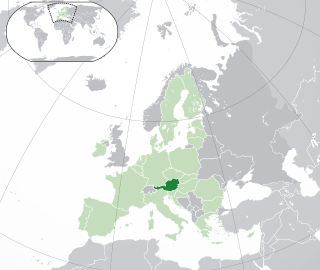
Lesbian, gay, bisexual, and transgender (LGBT) rights in Austria have advanced significantly in the 21st century. Both male and female same-sex sexual activity are legal in Austria. Registered partnerships were introduced in 2010, giving same-sex couples some of the rights of marriage. Stepchild adoption was legalised in 2013, while full joint adoption was legalised by the Constitutional Court of Austria in January 2015. On 5 December 2017, the Austrian Constitutional Court decided to legalise same-sex marriage, and the ruling went into effect on 1 January 2019.
Germany is the second most popular migration destination in the world, after the United States of America. By UN estimates, as of 2017, 12,165,083 people living in Germany are immigrants or their descendants, or about 14.8% of the German population. The majority of immigrants in Germany are from Eastern Europe, Southern Europe and Middle East.

This is a list of countries banning non-human ape experimentation. The term non-human ape here refers to all members of the superfamily Hominoidea, excluding Homo sapiens. Banning in this case refers to the enactment of formal decrees prohibiting experimentation on non-human apes, though often with exceptions for extreme scenarios.

The Federal Criminal Police Office of Germany is the federal investigative police agency of Germany, directly subordinated to the Federal Ministry of the Interior. It is headquartered in Wiesbaden, Hesse, and maintains major branch offices in Berlin and Meckenheim near Bonn. It has been headed by Holger Münch since December 2014.

Italians in Germany consist of ethnic Italian migrants to Germany and their descendants, both those originating from Italy as well as from among the communities of Italians in Switzerland. Most Italians moved to Germany for reasons of work, others for personal relations, study, or political reasons. Today, Italians in Germany form one of the largest Italian diasporas in the world and account for one of the largest immigrant groups in Germany.

Syrian diaspora refers to Syrian migrants and their descendants who, whether by choice or coercion, emigrated from Syria and now reside in other countries as either immigrants or refugees of the Syrian Civil War.
Immigration and crime refers to perceived or actual relationships between crime and immigration. The academic literature provides mixed findings for the relationship between immigration and crime worldwide, but finds for the United States that immigration either has no impact on the crime rate or that it reduces the crime rate. A meta-analysis of 51 studies from 1994–2014 on the relationship between immigration and crime in the United States found that overall immigration reduces crime, but the relationship is very weak. Research suggests that people tend to overestimate the relationship between immigration and criminality, and that the media tends to erroneously depict immigrants as particularly crime-prone.
Immigration to Europe has a long history, but increased substantially in the later 20th century. Western Europe countries, especially, saw high growth in immigration after World War II and many European nations today have sizeable immigrant populations, both of European and non-European origin. In contemporary globalization, migrations to Europe have accelerated in speed and scale. Over the last decades, there has been an increase in negative attitudes towards immigration, and many studies have emphasized marked differences in the strength of anti-immigrant attitudes among European countries.

Crime in Germany is combated by the German Police and other agencies.
Arab Germans are German citizens of Arab descent. They form the second-largest predominantly Muslim immigrant group in Germany after the large German–Turkish community.
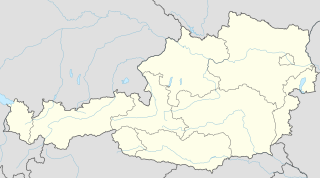
Michaelerberg-Pruggern is a municipality in the district of Liezen in Styria, Austria. It was created on 1 January 2015 as part of the Styria municipal structural reform, when the former municipalities of Michaelerberg and Pruggern were merged.
Crimes may be committed both against and by immigrants in Germany. Crimes involving foreigners have been a longstanding theme in public debates in Germany. In November 2015, a report that was released by the Federal Criminal Police (BKA) stated that "While the number of refugees is rising very dynamically, the development of crime does not increase to the same extent." Interior Minister Thomas de Maizière (CDU) noted that "refugees are on average as little or often delinquent as comparison groups of the local population." A 2018 statistical study by researchers at the University of Magdeburg using 2009-2015 data argued that, where analysis is restricted to crimes involving at least one German victim and one refugee suspect and crimes by immigrants against other immigrants are excluded, there is no relationship between the scale of refugee inflow and the crime rate. In 2018 the interior ministry under Horst Seehofer (CSU) published, for the first time, an analysis of the Federal Police Statistic, which includes all those who came via the asylum system to Germany. The report found that the immigrant group, which makes up about 2% of the overall population, contains 8.5% of all suspects, after violations against Germany's alien law are excluded.
Somalis in Germany are citizens and residents of Germany who are of Somali descent. According to the Federal Statistical Office of Germany, as of 2016, there are a total 33,900 Somalia-born immigrants living in Germany. Of those, 7,985 individuals were granted asylum status.
Moroccans in Germany are residents of Germany who are of Moroccan descent. According to the Federal Statistical Office of Germany, as of 2018, there are total 76,200 Moroccan citizens living in Germany without German citizenship. Of those, 505 individuals were granted asylum status.

The Missions Abroad and Special Operations is a specialized unit within the German Federal Criminal Police Office (BKA). The ASE is composed of specially selected and trained BKA personnel that typically operate in high-threat environments.
References
- 1 2 "Ausländische Bevölkerung und Schutzsuchende nach Regionen und Herkunftsländern". Statistics Germany. Retrieved 15 November 2017.
- ↑ "Kriminalität im Kontext von Zuwanderung - Bundeslagebild 2017". BKA. 2018. p. 13. Archived from the original on 2018-08-02. Retrieved 2018-12-26.
Algerian diaspora | ||
|---|---|---|
 | ||