The Monongahela National Forest is a national forest located in the Allegheny Mountains of eastern West Virginia, US. It protects over 921,000 acres of federally managed land within a 1,700,000 acres proclamation boundary that includes much of the Potomac Highlands Region and portions of 10 counties.

First Landing State Park offers recreational opportunities at Cape Henry in the independent city of Virginia Beach, Virginia. As the first planned state park of Virginia, First Landing is listed on the National Register of Historic Places as Seashore State Park Historic District. A portion of the park is listed as a National Natural Landmark as part of the Seashore Natural Area.

Roan Mountain State Park is a Tennessee state park in Carter County, in Northeast Tennessee. It is close to the Tennessee-North Carolina border and near the community of Roan Mountain, Tennessee. Situated in the Blue Ridge of the Appalachian Mountains, the park preserves 2,006 acres (8.12 km2) of mostly hardwood forest. The park is in close proximity to 6,285-foot (1,916 m) Roan Mountain and the Appalachian Trail, both of which are owned and managed by the US Forest Service. On exceptionally clear days, the Charlotte skyline can be photographed from the peak. Most of the town of Roan Mountain is privately owned by the residence, and much of the land in Roan Mountain has been family owned for many generations, being passed down generation after generation through the years.

Sky Meadows State Park is a 1,862-acre (754 ha) park in the Virginia state park system. In addition to preserved woodland, meadow and swamp, sections of the park are farmed, in part because it contains the former Mt. Bleak-Skye Farm which was listed on the National Register of Historic Places in 2004. Located in extreme northwest Fauquier County, Virginia in the Blue Ridge Mountains, near Paris, Virginia off U.S. 17, one mile (1.6 km) south of U.S. 50 and seven miles (11 km) north of Interstate 66, it is a International Dark Sky Park located about an hour outside the Washington, D.C. metro region.

Watoga State Park is a state park located near Seebert in Pocahontas County, West Virginia. The largest of West Virginia's state parks, it covers slightly over 10,100 acres (41 km2). Nearby parks include the Greenbrier River Trail, which is adjacent to the park, Beartown State Park, and Droop Mountain Battlefield State Park. Also immediately adjacent to the park is the 9,482-acre Calvin Price State Forest. It is one of the darkest night skies of all of West Virginia State Parks.

Kanawha State Forest is a 9,300-acre (38 km2) recreation area located near the community of Loudendale, West Virginia, which is about 7 miles (11 km) from downtown Charleston, West Virginia, United States. It is managed by the West Virginia Department of Natural Resources.

Coopers Rock State Forest is a 12,747-acre (52 km2) state forest in Monongalia and Preston counties in the U.S. state of West Virginia. Its southern edge abuts Cheat Lake and the canyon section of Cheat River, a popular whitewater rafting river in the eastern United States.

Westmoreland State Park lies within Westmoreland County, Virginia. The park extends about one and a half miles along the Potomac River and covers 1,321 acres. The Horsehead Cliffs provide visitors with a panoramic view of the Potomac River, and lower levels feature fossils and beach access. The park offers hiking, camping, cabins, fishing, boating and swimming, although mechanical issues have kept the swimming pool closed since 2021. Located on the Northern Neck Peninsula, the park is close to historical sites featuring earlier eras: George Washington's birthplace and Stratford Hall, the birthplace of Robert E. Lee.

Camp Washington-Carver Complex, formerly known as West Virginia 4-H Camp for Negroes, is a historic camp and national historic district located near Clifftop, Fayette County, West Virginia. The district encompasses four contributing buildings and two contributing structures, the most notable being the Great Chestnut Lodge, a log building of unusual size and structural character. It is the largest log structure built entirely of chestnut in West Virginia. It was built in 1941–1942, and is a 1 1/2 story building in the form of a modified Latin cross with a gabled block and a gabled wing or ell. Also on the property are a log cottage (1940), two frame dormitories (1942), a water tower (1940), and a small pond (1940). The camp was established by an act of the West Virginia legislature in 1937, and developed as a project of the Works Progress Administration starting in 1939.
Hopkins Mountain Historic District is a national historic district located in the Monongahela National Forest near Alvon, Greenbrier County, West Virginia. The district encompasses two contributing buildings, one contributing site, and two contributing structures. It includes the Mountain Tower Road, fire tower and the fireman'sresidence. They were all constructed by the members of Camp Alvon of the Civilian Conservation Corps (CCC) in 1935. The house is a Bungalow style, gable roofed dwelling measuring 14 by 20 feet. Located nearby is a contemporary privy with board-and-batten siding and a gable roof, also built by the CCC. The property also includes the Civil War Trail. It was used by the Virginia 26th Battalion under the command of Lt. Colonel George M. Edgar for its retreat from the Battle of Droop Mountain on November 6 and 7, 1863. Also on the property is a logging tramway in use from about 1908 to the 1920s.

Jackson's Mill State 4-H Camp Historic District, also known as West Virginia University Jackson's Mill, is a historic 4-H camp and national historic district near Weston, Lewis County, West Virginia. The district includes 23 contributing buildings, 4 contributing sites, 4 contributing structures, and 2 contributing objects. The camp was established in 1921 as the first statewide 4-H camp in the United States. The district includes buildings related to the site's inception as a homestead and agricultural area as well as its current manifestation as a youth camp facility and conference center.
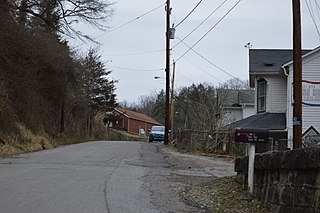
Bramwell Additions Historic District is a national historic district located at Bramwell, Mercer County, West Virginia. The district originally included 151 contributing buildings, 8 contributing sites, 5 contributing structures, and 2 contributing objects. The boundary increase added 27 contributing buildings and 1 contributing structure. The non-contiguous district encompasses formerly independent coal mining oriented communities now incorporated into Bramwell. These communities include Freeman, Ramey Addition, Simmons, and Cooper. The district is characterized by company houses built as residences for miners.

Cooper's Rock State Forest Superintendent's House and Garage is a historic home and garage located at Cooper's Rock State Forest near Morgantown, Monongalia County, West Virginia. The house was built between 1938 and 1940, and is a two-story, symmetrical log building, measuring 35 feet by 43 feet. Also on the property is a contributing garage also of log construction. Both buildings were built by the Civilian Conservation Corps, CCC camp number 3527, Camp Rhododendron.

Reed's Mill is a historic grist mill and national historic district located at Secondcreek, Monroe County, West Virginia. The district includes two contributing buildings and eight contributing structures. It was one of the original mill complexes of Secondcreek. The main mill building was built about 1791, and is a mortise and tenon frame structure held together with wooden pins, and sits atop a raised cut stone basement. A tall three-story section with basement was added in 1949. The district also includes the mill dam, wing-dam, mill race lined with rock and ending in the mill pond, and concrete mill race that carries water to the turbine (1872) which operates the grinding wheels in the mill. It remains an operating mill.

"Edemar", also known as Stifel Fine Arts Center, is a historic house and national historic district located at Wheeling, Ohio County, West Virginia. The district includes two contributing buildings and two contributing structures. The main house was built between 1910 and 1914, and is a 2+1⁄2-story, brick-and-concrete Classical Revival mansion with a steel frame. The front facade features a full-width portico with pediment supported by six Corinthian order columns. Also on the property are a contributing brick, tiled-roofed three-bay carriage barn/garage; fish pond; and formal garden. The Stifel family occupied the home until 1976, when the family gave it to the Oglebay Institute to be used as the Stifel Fine Arts Center.

Elm Hill, also known as the Campbell-Bloch House, is a historic house and national historic district located near Wheeling, Ohio County, West Virginia. The district includes two contributing buildings and one contributing site. The main house was built about 1850, and is a 2+1⁄2-story, brick house with a low 2-story wing in the Greek Revival style. It has an L-shaped plan, a 3-bay entrance portico, and hipped roof with an octagonal bell-cast central cupola. The interior has a central formal hall plan. Also on the property are a contributing brick, spring house / smoke house and a small cemetery dating to about 1835.

The Mawavi Historic District, Chopawamsic RDA Camp 2 near Triangle, Virginia, United States, dates from 1942. It was listed on the National Register of Historic Places in 1989.

The Orenda/SP-26 Historic District, Chopawamsic RDA Camp 3, near Triangle, Virginia dates from 1934. It was a Recreational Demonstration Area camp that includes work designed by the National Park Service and built by the Civilian Conservation Corps. Building styles within the district include NPS rustic architecture.

The Main Street Banking Historic District is a national historic district located in downtown Richmond, Virginia. The district encompasses 19 contributing buildings located south of the Virginia State Capitol and west of the Shockoe Slip Historic District. It is the location of a number of buildings built for or occupied by banking institutions. The district includes representative examples of the Late Victorian and International Style architecture built between about 1865 and 1965. Notable buildings include the Virginia Employment Commission Building (1960), the 700 Building (1964), the Ross Building (1964), the Fidelity Building (1965). Located in the district is the separately listed First National Bank Building.

Lacey-Keosauqua State Park is located southwest of Keosauqua, Iowa, United States. The park is located along the Des Moines River in Van Buren County. First dedicated in 1921, it is the largest state park in size in Iowa. In 1990, three areas were named nationally recognized historic districts and listed on the National Register of Historic Places.