
Echinopsis is a large genus of cacti native to South America, sometimes known as hedgehog cactus, sea-urchin cactus or Easter lily cactus. One small species, E. chamaecereus, is known as the peanut cactus. The 128 species range from large and treelike types to small globose cacti. The name derives from echinos hedgehog or sea urchin, and opsis appearance, a reference to these plants' dense coverings of spines.

Echinopsis peruviana, the Peruvian torch cactus, is a fast-growing columnar cactus native to the western slope of the Andes in Peru, between about 2,000–3,000 m (6,600–9,800 ft) above sea level.

Echinopsis lageniformis, the Bolivian torch cactus, is a fast-growing columnar cactus from the high deserts of Bolivia. Among the indigenous populations of Bolivia, it is sometimes called achuma or wachuma, although these names are also applied to related species such as Echinopsis pachanoi which are also used for their psychedelic effects.
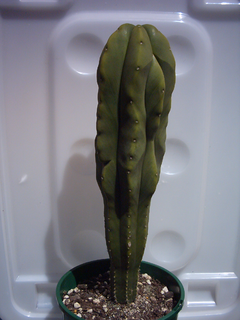
Echinopsis scopulicola is a type of cactus native to Bolivia, which contains psychedelic compounds. Many claimed this species contained mescaline. This was confirmed in 2010 in a study of well-documented individual living plants of the subgenus Trichocereus of the genus Echinopsis. E. scopulicola was noted to contain 0.82% mescaline by dry weight in the outer green layer.

Echinopsis pachanoi — known as San Pedro cactus — is a fast-growing columnar cactus native to the Andes Mountains at 2,000–3,000 m (6,600–9,800 ft) in altitude. It is found in Argentina, Bolivia, Colombia, Chile, Ecuador and Peru, and it is cultivated in other parts of the world. Uses for it include traditional medicine and traditional veterinary medicine, and it is widely grown as an ornamental cactus. It has been used for healing and religious divination in the Andes Mountains region for over 3,000 years. It is sometimes confused with its close relative Echinopsis peruviana.

Echinopsis schickendantzii is a cactus found in Northwestern Argentina in provinces of Salta and Tucumán at elevations of 1600 to 3200 meters.
Many cacti are known to be psychoactive, containing phenethylamine alkaloids such as mescaline. However, the two main ritualistic (folkloric) genera are Echinopsis, of which the most psychoactive species is the San Pedro cactus, and Lophophora, with peyote being the most psychoactive species. Several other species pertaining to other genera are also psychoactive, though not always used with a ritualistic intent.

Echinopsis terscheckii, commonly known as the cardon grande cactus or Argentine saguaro, is a large cactus native to South America and popular in cultivation.

Echinopsis formosa, is a species of Echinopsis found in South America.

Echinopsis aurea, is a species of Echinopsis found in Argentina.
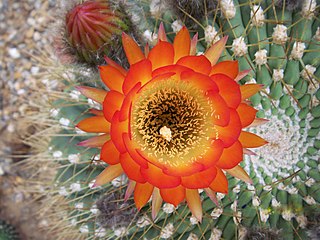
Echinopsis bruchii, is a species of Echinopsis found in Argentina.
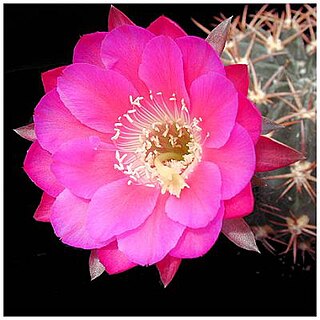
Echinopsis obrepanda, is a species of Echinopsis found in Bolivia.
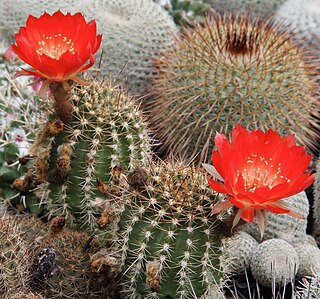
Echinopsis hertrichiana, is a species of Echinopsis found in Bolivia and Peru.
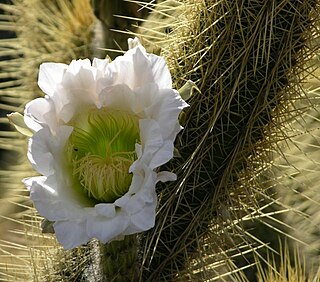
Echinopsis camarguensis, is a species of Echinopsis found in Bolivia.

Echinopsis klingleriana, is a species of Echinopsis found in Bolivia.

Echinopsis strigosa, is a species of Echinopsis found in Argentina.

Echinopsis pampana, is a species of Echinopsis found in Peru.

Echinopsis tubiflora, is a species of Echinopsis found in Argentina.

Echinopsis chrysantha, is a species of Echinopsis found in Argentina.
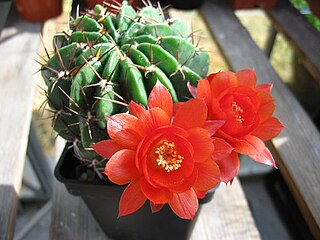
Echinopsis maximiliana, is a species of Echinopsis found in Bolivia and Peru.


