A native of Nottinghamshire, Herring was educated at Christ's College, Cambridge (B.A. 1585, M.A. 1589). On 3 July 1599, then a doctor of medicine of Cambridge of two years' standing, he was admitted a fellow of the College of Physicians of London. He was censor in 1609, 1618, 1620, 1623, 1624, 1626, and 1627. He was named an elect on 5 June 1623, and died in the beginning of 1628.[1][2]
Works
Mischeefes Mysterie by Francis Herring, translated by John Vicars, 1617
He translated from the Latin of Johann Oberndoerffer, The Anatomyes of the True Physition and Counterfeit Mounte-banke: wherein both of them are graphically described, and set out in their Right and Orient Colours, London, 1602; adding, as appendix, A short Discourse, or Discouery of certaine Stratagems, whereby our London-Empericks haue bene obserued strongly to oppugne, and oft times to expugne their Poore Patients Purses. Herring's other writings were:[1]
In fœlicissimum … Jacobi primi, Angliæ … Regis, … ad Anglicanæ Reip. gubernacula Ingressum, Poema Gratulatorium, London, 1603.
Certaine Rules, Directions or Advertisements for this time of Pestilentiall Contagion: with a Caveat to those that weare about their Neckes impoisoned Amulets as a Preservative from the Plague … reprinted … Whereunto is added certaine directions for the poorer sort of people, London, (1603, revised 1625).[3] Another edition, entitled Preservatives against the Plague, was published in 1665.
A modest Defence of the Caveat given to the wearers of impoisoned Amulets, as Preservatives from the Plague. … Likewise that unlearned … opinion, that the Plague is not infectious, … is … refuted by way of preface, London, 1604. Peter Turner had responded to the previous work with a pamphlet defending the medical properties, particularly against the plague, of amulets containing arsenical compounds. Here Herring replied on behalf of the College of Surgeons.
Pietas Pontificia, seu, Conjurationis illius prodigiosæ, … in Jacobum … Regē … Novembris quinto, … 1605 … brevis adumbratio poetica, 1606. This was a Latin poem in 493 hexameters, on the Gunpowder Plot and popery.[4] An English verse translation by A. P. was published with the title of Popish Pietie in 1610.
Pietas Pontificia … ab authore recognita … Accessit Venatio Catholica sive secunda Historiæ pars, &c. (In Jesuitas Epigramma, &c.), London, 1609.
Under the title of Mischeefes Mysterie both parts of Herring's poem on the Gunpowder plot, with A Psalme of Thankesgiving, and An Epigram against Jesuites, were translated into English by John Vicars London, 1617. Another edition, entitled The Quintessence of Cruelty, appeared in 1641.[1]
Thomas Dekker was an English Elizabethan dramatist and pamphleteer, a versatile and prolific writer, whose career spanned several decades and brought him into contact with many of the period's most famous dramatists.
Sir James Whitelocke SL was an English judge and politician who sat in the House of Commons between 1610 and 1622.
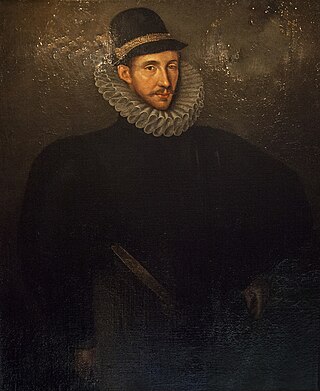
Fulke Greville, 1st Baron Brooke was an Elizabethan poet, dramatist, and statesman who served in the House of Commons at various times between 1581 and 1621, when he was raised to the peerage.
Simon Patrick was an English theologian and bishop.
Dudley Carleton, 1st Viscount Dorchester was an English art collector, diplomat and Secretary of State.
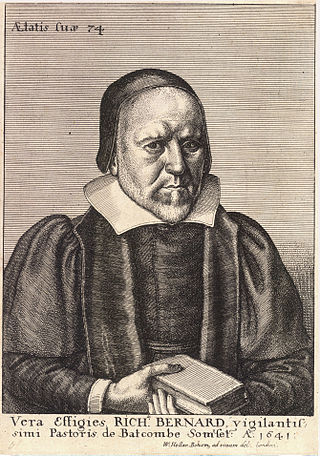
Richard Bernard (1568–1641) was an English Puritan clergyman and writer.
Nationality words link to articles with information on the nation's poetry or literature.
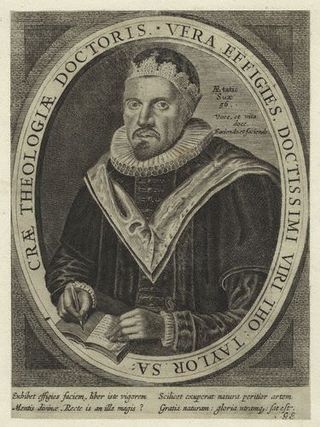
Thomas Taylor (1576–1632) was an English cleric. A Calvinist, he held strong anti-Catholic views, and his career in the church had a long hiatus. He also attacked separatists, and wrote copiously, with the help of sympathetic patrons. He created a group of like-minded followers.
Matthew Gwinne was an English physician.
John Harington, 2nd Baron Harington of Exton, of Burley-on-the-Hill, Rutland was a young English peer and politician. He was the Lord Lieutenant of Rutland and Baron Harington of Exton.
William Phiston or Fiston, was an English translator and author. He describes himself as "a student of London", and had some leading figures of the time as patrons. The Oxford Dictionary of National Biography points out that a William Phiston matriculated at Magdalene College, Cambridge in 1572. It also notes the strong Protestant tone to the Testimonie, intended as a cheaper substitute for the Actes and Monuments.
Sir Hugh Plat (1552–1608) was an English writer on agriculture and inventor, known from his works The Jewell House of Art and Nature (1594) and his major work on gardening Floraes Paradise (1608).
Abraham Holland was an English poet. He was the son of the translator, Philemon Holland, and the brother of the printer, Henry Holland. His best known work is the Naumachia, a poem on the Battle of Lepanto in 1571.
Raphael Thorius M.D. was a London physician of Huguenot and Flemish background, known as a poet and humanist.
Peter Turner M.D. (1542–1614) was an English physician, known as a follower of Paracelsus. He also was a Member of Parliament, during the 1580s.
Sir Thomas Cademan (1590?–1651) was an English recusant physician.
Thomas Moundeford M.D. (1550–1630) was an English academic and physician, President of the London College of Physicians for three periods.
William Whately (1583–1639) was an English Puritan cleric and author.
Nathaniel Henshaw M.D. was an English physician and original Fellow of the Royal Society.
John Hildrop was an English cleric, known as a religious writer and essayist. Hildrop authored one of the earliest works on animal rights.
This page is based on this Wikipedia article Text is available under the CC BY-SA 4.0 license; additional terms may apply. Images, videos and audio are available under their respective licenses.