Hecate Depression | |
|---|---|
physiographic section | |
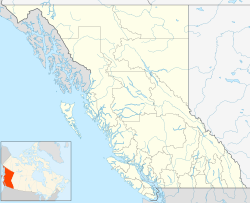  Approximate Center Approximate Center of Hecate Depression | |
| Coordinates: 53°30′N131°00′W / 53.5°N 131.0°W | |
| Location | British Columbia, Canada |
| Range | Pacific Coast Ranges |
| Part of | Coastal Trough |
Hecate Depression is a major physiographic and geological depression on the Pacific Coast of British Columbia, Canada, it forms the northern portion of the larger Coastal Trough and lies between the mainland Coast Mountains and the outer mountain ranges including the Queen Charlotte Mountains of Haida Gwaii. [1]