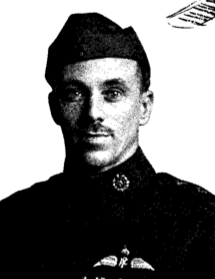
Wheeler married Kathleen Russell Gunning, daughter of Daniel Russell Gunning, on 4 January, 1905 [6] in Dehli, Bengal, India and had one son, George Trevor Wheeler, born 4 April, 1906, Bengal, India [7] who was killed in Eritrea in 1941 [8] leaving a wife and young son.
Hugh Wheeler, known to the family as "Trevor" died in Midhurst, Sussex,[9] on 11 February 1949.[10]
Notes
↑ Ecclesiastical NewsThe Times (London, England), Tuesday, Aug 12, 1930; pg. 13; Issue 45589
Vital statistics is accumulated data gathered on live births, deaths, migration, foetal deaths, marriages and divorces. The most common way of collecting information on these events is through civil registration, an administrative system used by governments to record vital events which occur in their populations. Efforts to improve the quality of vital statistics will therefore be closely related to the development of civil registration systems in countries. Civil registration followed the practice of churches keeping such records since the 19th century.
The General Register Office for England and Wales (GRO) is the section of the United Kingdom HM Passport Office responsible for the civil registration of births, adoptions, marriages, civil partnerships and deaths in England and Wales and for those same events outside the UK if they involve a UK citizen and qualify to be registered in various miscellaneous registers. With a small number of historic exceptions involving military personnel, it does not deal with records of such events occurring within the land or territorial waters of Scotland, Northern Ireland or the Republic of Ireland; those entities' registration systems have always been separate from England and Wales.
A parish register, alternatively known as a parochial register, is a handwritten volume, normally kept in the parish church of an ecclesiastical parish in which certain details of religious ceremonies marking major events such as baptisms, marriages, and burials are recorded. Along with these events, church goods, the parish's business, and notes on various happenings in the parish may also be recorded. These records exist in England because they were required by law and for the purpose of preventing bigamy and consanguineous marriage.
Cree is a surname which has several separate origins in England, Scotland and Ireland. It occurs in all those countries today and also in Australia, Canada, New Zealand and the United States. It is of Medium Frequency in Scotland and Northern Ireland (Spathaky 1998).
Harriet Anne Scott, Lady Scott (1816–1894), was a British novelist, born in India, and of Scottish descent.
Claude Martin Blagden was an eminent Anglican bishop in the first half of the 20th century.
Alfred William Begbie (1801–1873) was a British civil servant in India.
William Stuart MacPherson was an eminent Anglican priest in the second half of the 20th century.
Michael Bolton Furse, KCMG was an eminent Anglican bishop in the first half of the 20th century.
Admiral Sir Vernon Harry Stuart Haggard, KCB, CMG was a Royal Navy officer who went on to be Commander-in-Chief, America and West Indies Station. His career in the Royal Navy spanned forty-four years, from his entry as a youth in 1888 to his promotion to admiral in 1932.
Michael Martin Harvey was an English actor. He was the son of the stage actor/manager Sir John Martin-Harvey and brother of actress Muriel Martin-Harvey.
Harold Hamilton Burkitt was an Irish civil servant of the Indian civil service. Burkitt Road in the neighbourhood of T. Nagar in Chennai is named after him.
Sydney March (1876–1968) was an English sculptor. His primary focus was portrait busts and other sculptures of British royalty and contemporary figures, as well as war memorials. The second-born of eight artists in his family, he and his siblings completed the National War Memorial of Canada after the death of their brother Vernon March in 1930, who had created the winning design. It is the site in Ottawa of annual Remembrance Day ceremonies.
Captain John Herbert Hedley was a World War I British flying ace credited with eleven aerial victories. The observer ace claimed to have survived a bizarre flying mishap which earned him the moniker "The Luckiest Man Alive." Hedley also survived uninjured after his plane was shot down in 1918, and he became a prisoner of war. After his immigration to the United States in 1920, he became a regular on the lecture circuit, enthralling American audiences with the stories of his military service.
Major Alexander Rolls was a native of Swansea, Glamorganshire, Wales. A member of the renowned Rolls family of The Hendre at Llangattock-Vibon-Avel near Monmouth, Monmouthshire, his life in public service included four terms as Mayor of Monmouth. He was an officer in the Royal Monmouthshire Militia and the 4th Royal Irish Dragoon Guards. Rolls married twice; the widower's second marriage was to a divorcée, English actress Helen Barry.
Sir Arthur Gaitskell was a British administrator of the East Africa Royal Commission.
James William Grant FRSE FRAS, 3rd Laird of Wester Elchies (1788–1865) was a Scottish astronomer and landowner. On 23 July 1844 he was the first person to observe and record the existence of the star Antares B.
Gabrielle Margaret Lambrick MA, FRHist Soc was a British senior civil servant, educator and historian. After a distinguished career in the civil service during World War II she married and became a historian on medieval Abingdon in Oxfordshire and its environs. She was elected a Fellow of the Royal Historical Society in 1967.
Cecil Echlin Gerahty was an English journalist for the Daily Mail.
General Sir Charles Reid was an officer in the East India Company and later Indian Army, and aide-de-camp to Queen Victoria.
This page is based on this Wikipedia article Text is available under the CC BY-SA 4.0 license; additional terms may apply. Images, videos and audio are available under their respective licenses.